Monday, 4 April 2022

Applications & Benefits of AI in Banking

AI is a technology that has impacted every industry vertical including the banking and finance sector. AI in banking reduces expenses by boosting productivity and making the decision process fast, and accurate. According to a report by Business Insider, almost 80%of banks are aware of the potential benefits of AI in the banking sector. It also says that by 2023, banks are estimated to save roughly $447 billion by deploying AI applications. The applications of AI in banking are many and so does the benefits of AI in banking.  Let’s take a look at some of them.
AI in Banking

Applications of AI in Banking and Finance

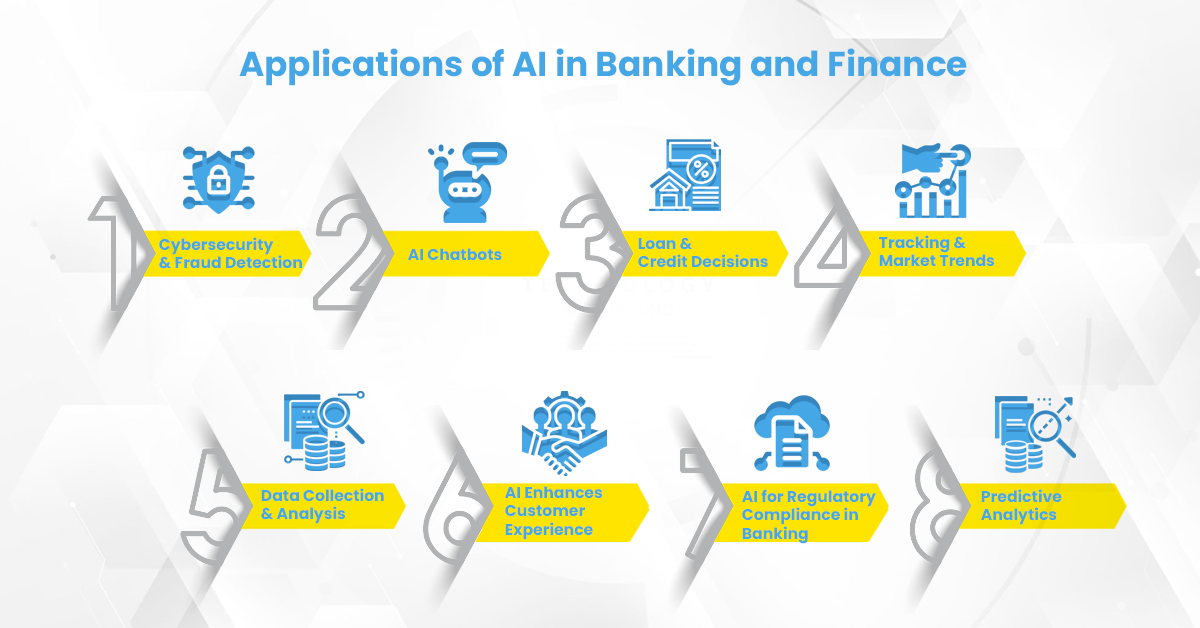
Initially, AI was majorly used for increasing operational efficiency. This has changed post-pandemic where AI is used for automating processes and deriving insights. Here are the 8 major applications of AI in banking.
Applications of AI in Banking and Finance

Cybersecurity & Fraud Detection

AI along with machine learning is capable of easily identifying fraudulent activities and alerting customers and banks. In 2019, the financial sector was the most targeted industry for cyberattacks accounting for 29% of the total. AI can be a game-changer in the finance sector to stop cyberattacks. 

AI Chatbots

By combining chatbots with banking apps, the banks will be available for the customers round the clock 24*7. Chatbots’ capability to comprehend customer behavior helps in offering personalized customer support and recommending the right financial services and products accordingly.

Read More>>

Monday, 14 March 2022

13 Benefits of Cloud Computing for Your Business


Cloud computing has been one of the most revolutionary trends in the tech world. Being a key player in the digital transformation of all the business verticals, it has earned widespread use over the last few years. According to Gartner’s report, the global spending on cloud services is predicted to surpass $482 billion in 2022, up from $313 billion in 2020 due to the many benefits of cloud computing for businesses.
Benefits of Cloud Computing for Your Business

With data dominating business success in the 21st century, it has become challenging for organizations to store, maintain, and secure their critical information and systems up and running on an in-house IT infrastructure. The solution to all this is migrating to Cloud computing. Cloud computing is a method of delivering a computing environment encompassing servers, storage space, databases, networking, software over the internet.

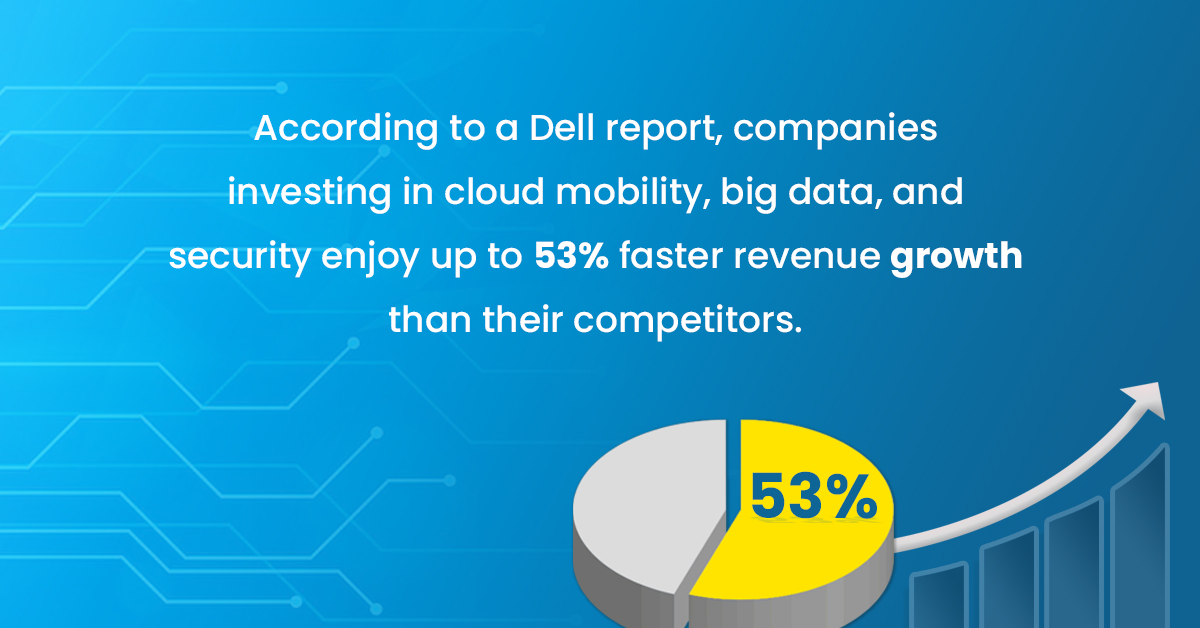
Though tech giant Dell’s study says companies that have invested in big data, cloud, mobility, and security have experienced 53% faster revenue growth than their competitors, many organizations are still unsure about migrating to cloud-computing solutions for their organizations. So, we’d want you to read these key benefits of cloud computing for businesses.

Benefits of Cloud Computing for Your Business 1

13 Benefits of Cloud Computing for Businesses

1. Cost Savings

Cloud computing is likely the most cost-efficient method to use, maintain, and upgrade your IT infrastructure. Additionally, the subscription-based model of cloud computing cut down on capital expenditure.

According to Multisoft, mid-size businesses find that using third-party cloud platforms resulted proved to be 40% more cost-effective than maintaining an in-house system.

Read More>>

Thursday, 3 March 2022

Best Data Recovery Solutions and Services 2022

If ever you are dealing with electronic devices or servers, you may experience data loss and if not, thank god! Possibly your cellphone, laptop, computer, pen drive, or server carrying information just suddenly lost the data due to some mishap, leaving you clueless. If that ever happens, here is a solution you can follow for data recovery.
Best Data Recovery Solutions and Services

There are free and paid data recovery software and tools available in the market that helps you recover the deleted data from devices or servers.

Data loss is undoubtedly a nerve-racking experience, be it because of hardware or software.

Organizations these days store all the vital information on cloud servers or hard drives. Saving data certainly reduces the risk of permanent data loss if an accident happens. 

You can read: How needy are your servers for Backups

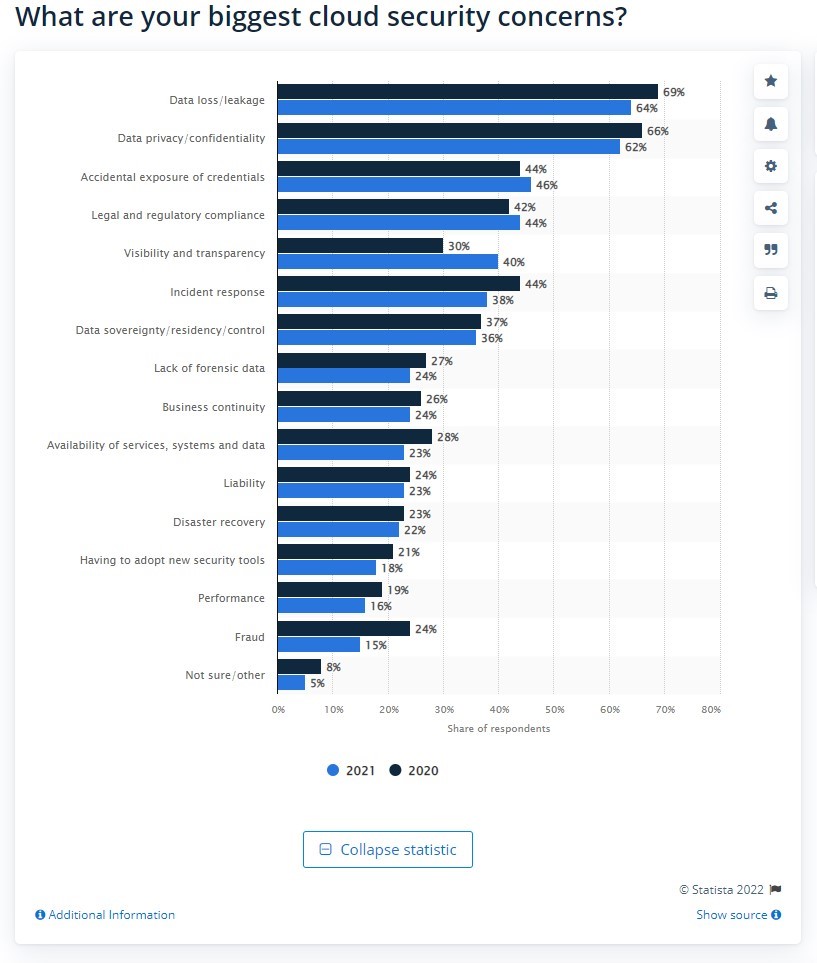
If you consider the following graph, it is clear that the percentage of data loss and leakage is the highest amongst other security issues.

Data Recovery Solutions and Services 1
Source: Statista


How does Data Loss Happen?

Data loss may occur due to multiple reasons, including human error, software or hardware failure, virus attacks, power failure, etc.

What is Data Recovery?

Data recovery is a process that deals with acquiring the information stored on storage devices that is either deleted, lost or inaccessible. Data recovery only implies over the data written on the device. If you are trying to recover unwritten data, data recovery techniques may not work eventually.

 Read More>>

Wednesday, 2 March 2022

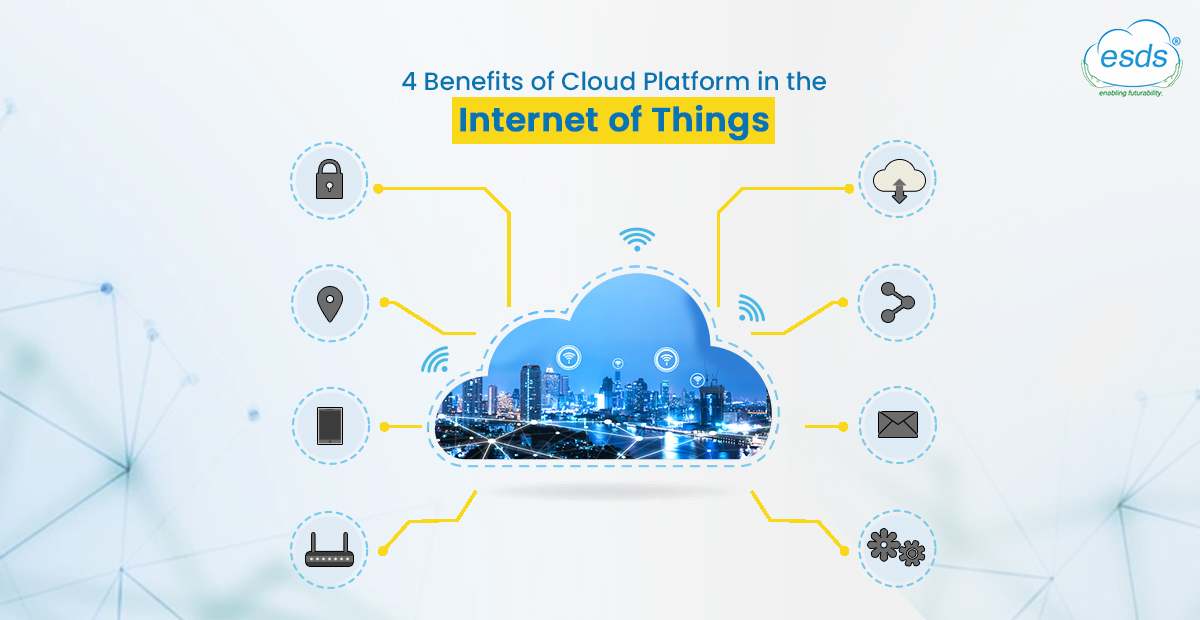
4 Benefits of Cloud Platform in the Internet of Things

What if I tell you the Internet of Things (IoT) alone does not offer many benefits? Yes, that is true to some extent. IoT is a network of billions of physical devices having processing ability, and are embedded with sensors and software. These devices collect and share a massive amount of data per second over the internet. This raw data when analyzed interprets meaningful information useful for smart decision making.
Benefits of Cloud Platform

As per IDC, by 2025 there will be 41.6 billion connected IoT devices that will generate 79.4 zettabytes (ZB) of data. Storing, processing, and managing the flow of such a vast amount of data is a complex task for businesses. In such a case, the Cloud platform acts as a catalyst by providing storage space and cloud computing allows the analysis, processing, and managing of the data enabling IoT systems to work more efficiently.

4 Benefits of Cloud Platform

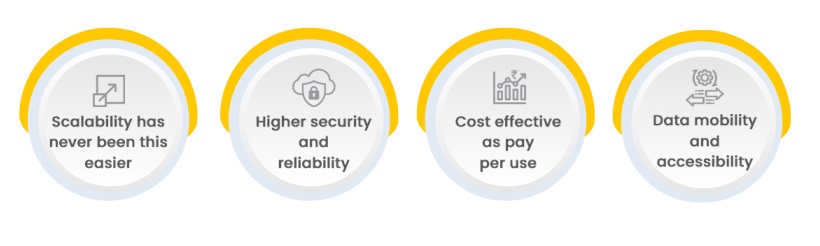
4 Major Benefits of Cloud Platform in the Internet of Things

4 Major Benefits of Cloud Platform in the Internet of Things

Cloud platforms and cloud computing can bring ease to your business operations and drive its growth.  Here are 4 major benefits when you switch to a cloud platform:

Scalability

One of the biggest benefits of deploying IoT systems in a cloud is scalability. Think of a situation where your organization needs to upscale the network infrastructure for IoT deployment. In the case of on-premise network infrastructure, such deployments require purchasing hardware,

Read More>>

Tuesday, 1 March 2022

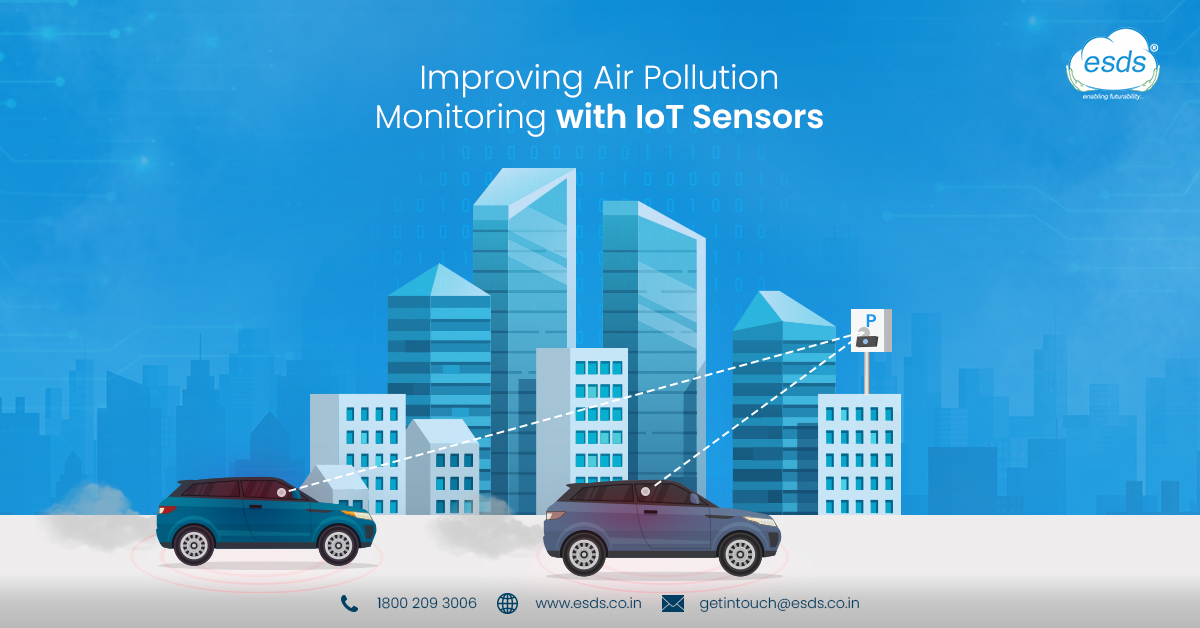
Improving Air Pollution Monitoring with IoT Sensors

Technology has given us the gift of numerous luxuries to make our lives simpler. Year on year this advanced technology introduces us to mind-blowing innovations and creations that help us improve our daily lives in several ways. The internet, GPS, smartphones, self-driving cars, among the many technology creations have shown us the possibility to achieve more. While this technology has showered us with an abundance of comfort, this has come at a cost.

Improving Air Pollution Monitoring with IoT Sensors

One of the biggest challenges today we are facing is the decreasing air quality and its harmful effects on not just human life but the planet as well. Transportation, industries, offices, housing among others are various sources of degrading air quality. According to recent data from the World Health Organization WHO, every year over 7million premature deaths are caused due to the air quality effects.

The notoriously famous COVID-19 has surely taught us the value and importance of being able to breathe and too in the fresh air. As we speak of COVID-19, according to scientists and doctors the world can expect much worse diseases in the coming years which can be airborne and hazardous. Masks, sanitizers, social distancing are going to be there for a long time but only these won’t be enough. The best solution to make this world a better place for the coming generations is to improve the air quality and the IoT Internet of Things looks like a promising option.

Read More>>

Monday, 28 February 2022

A Look At Docker & Containers Technology

 Docker & Containers Technology

Virtualisation is the process of running virtual instances of computer systems, abstracted from the actual underlying hardware. You can have multiple Operating Systems (OS) running simultaneously on single hardware where each OS is a virtual instance isolated from other. These OSs are termed as virtual machines (VM) which can be stored as an instance for backup, used for software testing in various environments, migrated to another location altogether.

Example: An enterprise server OS crashes along with the hardware. As the OS was a VM, the system administrator of the enterprise easily picks-up its backup VM (VMs are stored as image files — a snapshot of the original instance) and deploys it on other working hardware in minutes.

VM creates a whole OS. But we can also create virtualised application packages that can run on different platforms same as a VM does irrespective of platform, using ‘Docker and Containers’.

What is Docker?

Docker is an open source ecosystem of tools to create, manage and deploy applications for any platform. The general idea is to create applications, package them together into containers and ship them for deployment. Docker is a virtualisation technology. It allows applications to use the OS of the computer on which it is deployed (Client) and ships only that parts of the application (that is, the libraries, dependencies, supporting applications, etc.) that are not available on the Client. With the help of docker, we create containers containing applications that are consistent irrespective of the platform. Docker is available for the Linux, Windows and Mac environment.

Read More>>

Sunday, 27 February 2022

Make Your Endpoint Security A Reality

In the initial days of the internet, when companies newly started using computing technologies, the local network had a very rigid perimeter. Servers and repositories were physically present in the same office. Today, due to a massive shift to cloud hosting, SaaS, and the ongoing pandemic, the situation has turned 180 degrees. The organizational workforce, partners, and vendors are connected to enterprise networks remotely from their devices.
Make Your Endpoint Security A Reality

These remotely connected personal devices pose a cybersecurity risk that malicious attackers can take advantage of to rob corporate data. According to research by Check Point, throughout 2021, the weekly average of ransomware attacks focused on company networks expanded by 50% in comparison to 2020.  It is now critical for businesses to deploy robust endpoint security solutions that protect their data stored across endpoints.

What Is Endpoint Security?

Endpoint security is the method of protecting endpoint devices such as desktops, laptops, mobile phones, and tablets from cyberattacks. These endpoints are the gate to access the organization’s network which can then be used by malicious attackers for cyberattacks.

Read More>>

Monday, 21 February 2022

Digital Transformation In Logistic Industry: Where Does India Stand?

Logistics as a sector of any economy is like the veins in the human body, various body parts will start suffering if the veins are affected in one way or the other. Now, considering the logistics sector then it has certainly been hit hard by the pandemic. The resultant butterfly effect is certainly visible in the form of the performance of the Indian economy amidst the pandemic. The conclusion for the same can be drawn from two different reports.
Digital Transformation In Logistic Industry

First, there was a survey by McKinsey Global Institute (MGI) in 2019 which predicted the expansion of the Indian Logistics sector at a CAGR of above 10% from 2020 to 2025, but post-pandemic the situation seems to be unfavorably changing for the sector, which as per a recent report by UK-based research firm Technavio is almost 8%. Amidst all this, the need of the hour is a complete overhaul with the digital transformation of the Indian logistics industry. The next question that arises then is, where does the Indian industry stand when it comes to digital transformation in the logistics market in the country? To understand it first, we need to understand the sector status in detail.

So, let us consider in detail the Indian Logistics sector in terms of its present situation and the road ahead.

The present state of Warehousing & Transportation

Warehousing and Transportation are two crucial functions of the logistics sector and pandemics have impacted both on a large scale. This has created major hurdles and challenges in forecasting the demand, assigning specific capacity, and allocating products across various sectors and regions.

Read More>>

Sunday, 13 February 2022

Determining Why Your Organization Needs Web Application Security

If you are a CIO or a key decision-maker of your organization, having a well-defined web security mechanism can be extremely beneficial. Web application security depicts an array of processes, technologies, and methods implemented for protecting an end-user’s web servers, web applications, and web services from all forms of online threats & malware. Having a robust web application security mechanism in place becomes essential for enterprises. This security technique protects users’ and enterprises’ data from all forms of data theft and obstacles that hinder business continuity.
Web application security

Understanding Web Application Security

Web application security is a broad term, and it encapsulates an array of methods and strategies for securing web browsers and applications. The techniques help secure an organization’s digital assets against various cyber threats. Most web application security threats arise due to exploited weaknesses by pushing vulnerabilities through these weaknesses. Cybercriminals deploy malicious techniques to determine these ‘loopholes’ in security mechanisms & get away with user-critical data to have personal gains.

Understanding Web Application Security

Some common targets of these web-based attacks initiated by cybercriminals include content management system tools, database administration tools, along SaaS applications. These systems are often targeted because these hold high business, and a single cyberattack can lead to substantial monetary & non-monetary losses.

Common Web Application Vulnerabilities

Web application vulnerabilities occur in the absence of defined inputs/outputs that cybercriminals exploit for manipulating source codes or gaining illegal access to sensitive data. These vulnerabilities open the scope for an array of attacks, comprising of the following.

Read More>>

Wednesday, 2 February 2022

Top 5 SaaS Trends to look out for in 2022

 Since we are living in a digitalized world, the SaaS industry has progressed remarkably against the pandemic and its challenges. Today, SaaS (Software-as-a-Service) solutions are a chunk of almost every commercial workflow. It’s a given because of these offerings’ accessibility, versatility, cost-effectiveness, and agility. With SaaS trends taking over the industry, a lot is set to change in the technology world. We have curated relevant facts about SaaS mechanisms and trends so that you don’t have to!

Top 5 SaaS Trends to look out for in 2022

Today, Software-as-a-Service (SaaS) solutions are a part of nearly each business workflow. However, a lot is unfolding with SaaS coming into play – pricing policies are changing, new technologies such as AI and Machine Learning are shaping up the near future. Some of these changes seem superficial, but they may have a significant impact on the operational costs of a business. Others are critical and require close monitoring to see how they pan out.

During the ordeal of the pandemic, SaaS – in FinTech, Databases, Multimedia, Automation, cyber security, and the IT sector overall – saw a stable capital flow, whereas the entertainment, travel, sports, and hospitality industries saw a hit. However, online banking, payments, online delivery apps, OTP Platforms, and various online portals saw a visible surge. This made sure that the SaaS Industry drew sharp attention from investors across the globe. The compliance requirements shaped by the GDPR and CCPA unlocked new investment opportunities for SaaS vendors who quickly incorporated privacy regulations into their applications. A notable trend to focus on is that SaaS sellers will include more free trials in their pricing plans. Typically, organizations use more free apps than paid ones; but there has been a great transition to paid customers for trial periods in recent times.

Read More>>