Showing posts with label cloud. Show all posts

Thursday, 4 July 2024

Navigating Cloud Migration Services: Ensuring Seamless Transitions

 In the rapidly developing advanced scene, organizations will progressively use distributed computing to smooth out tasks, improve versatility, and encourage development. Cloud relocation administrations assume an urgent role in this groundbreaking excursion, empowering associations to productively change their applications, information, and framework from on-premises conditions to cloud-based stages. This blog investigates the crucial ideas of cloud relocation, the significance of server farm movement, and systems for effective execution.


Grasping Cloud Relocation

Cloud movement includes the method involved with moving computerized resources, applications, and responsibilities from a conventional on-premises framework to cloud conditions facilitated by third-party suppliers, for example, Amazon Web Services (AWS), Microsoft Sky Blue, or Google Cloud Stage (GCP). The essential inspirations driving cloud relocation incorporate expense investment funds, further developed adaptability, and access to cutting-edge cloud administrations like computerized reasoning (artificial intelligence), AI (ML), and enormous information investigation.

Key Contemplations for Cloud Movement
Fruitful cloud relocation requires cautious preparation and consideration of a few elements:

1.      Data Migration Strategies: Employing appropriate strategies such as lift-and-shift, re-platforming, or refactoring to ensure minimal disruption and maximum performance in the cloud environment.

2.      Choosing the Right Cloud Model: Choosing between open, private, or half-breed cloud models given safety prerequisites, versatility requirements, and consistency considerations.

3.      Assessment and Arranging: Directing an extensive evaluation of existing IT foundations, applications, and information to decide movement practicality and recognize conditions.

Cloud Data Migration

Cloud data migration focuses on transferring structured and unstructured data from on-premises databases and storage systems to cloud-based repositories. Techniques such as batch transfers, real-time data replication, and hybrid approaches are used to maintain data integrity and consistency throughout the migration process.

Data Center Migration

Data center migration involves relocating physical servers, storage devices, and networking equipment from on-premises data centers to cloud or colocation facilities. This process requires meticulous planning, risk assessment, and coordination to minimize downtime and ensure business continuity.

Benefits of Cloud Migration

  • Scalability and Flexibility: Cloud environments offer on-demand scalability to accommodate fluctuating workloads and business growth.
  • Cost Efficiency: Reduced capital expenditures on hardware and infrastructure maintenance, coupled with pay-as-you-go pricing models, optimize cost management.
  • Enhanced Security and Compliance: Cloud providers invest heavily in security measures and compliance certifications to protect data and meet regulatory requirements.

Conclusion

In conclusion, cloud migration services represent a strategic imperative for organizations aiming to leverage the benefits of cloud computing while enhancing operational efficiency and agility. By embracing cloud data migration and data center migration strategies, businesses can navigate digital transformation effectively and capitalize on the opportunities presented by modern cloud technologies.

Visit us: https://www.esds.co.in/cloud-migration-services

For more information, contact Team ESDS through -
Email: getintouch@esds.co.in | Toll-Free: 1800 209 3006 | Website: 
https://www.esds.co.in/

Tuesday, 29 November 2022

Application Modernization – Why is it a must for your business?

Application modernization is the process of repurposing, restructuring, or consolidating existing business applications to better match their requirements with those of the market and its competitors. A legacy app can be made more modern by upgrading its technology stack, improving its application architecture, moving to a new, more current platform, or simply adding cutting-edge functionality using edge technologies.

Application Modernization

The majority of firms believe that modernizing applications is only necessary for organizations using outdated legacy systems. However, it is a presumption that needs to be disproved to confine modernization to legacy apps.

Applications that are out-of-date or on the approach of expiring cannot be the only ones that are modernized. Even a recently developed enterprise application might be seen through a more contemporary and futuristic lens. It makes sense that today’s freshly released enterprise systems are also aiming for digital transformation by developing into next-generation apps or augmenting into business- and customer-centric processes and applications that use AI and VR.

It makes sense that the market for application modernization services is expected to increase from $11.4 billion in 2020 to $24.8 billion in 2025. Undoubtedly, it is now a top issue for many business owners.

Still not convinced that modernizing applications is a good idea? Continue reading to learn more.

Why does your business need to modernize applications?

The term “digital transformation” has gained popularity in recent years. However, as most companies discovered the value of being digitally present to meet the needs of clients who are digitally conscious while physically distant, the epidemic increased its use. Companies moved even closer to this after Microsoft said it would “see two years’ worth of digital transformation in two months.”

However, enterprises seeking digital transformation face significant difficulty due to the monolithic design used by outdated systems. In a time when business applications were thriving in Low-Code/No-Code settings, these programs were still running on dated, heavy technologies. While more recent programs employed microservices and APIs to communicate with one another, even the smallest third-party integration for these legacy systems required complete development teams. Businesses obviously needed a makeover. Application modernization provided this, too.

Read More>>

Tuesday, 1 March 2022

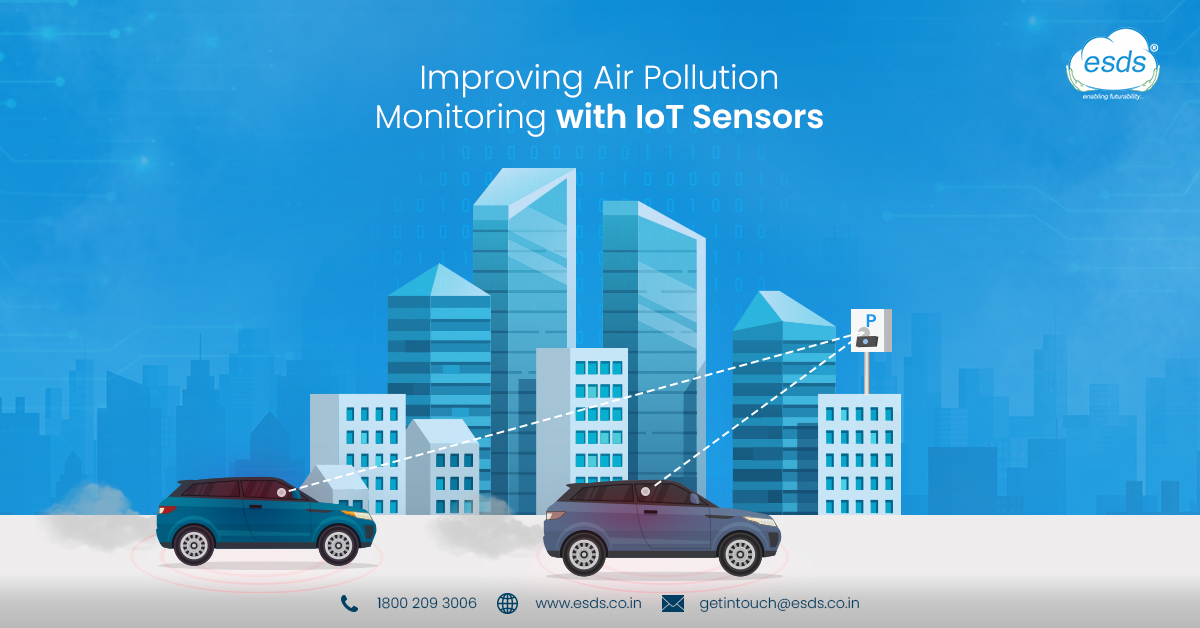
Improving Air Pollution Monitoring with IoT Sensors

Technology has given us the gift of numerous luxuries to make our lives simpler. Year on year this advanced technology introduces us to mind-blowing innovations and creations that help us improve our daily lives in several ways. The internet, GPS, smartphones, self-driving cars, among the many technology creations have shown us the possibility to achieve more. While this technology has showered us with an abundance of comfort, this has come at a cost.

Improving Air Pollution Monitoring with IoT Sensors

One of the biggest challenges today we are facing is the decreasing air quality and its harmful effects on not just human life but the planet as well. Transportation, industries, offices, housing among others are various sources of degrading air quality. According to recent data from the World Health Organization WHO, every year over 7million premature deaths are caused due to the air quality effects.

The notoriously famous COVID-19 has surely taught us the value and importance of being able to breathe and too in the fresh air. As we speak of COVID-19, according to scientists and doctors the world can expect much worse diseases in the coming years which can be airborne and hazardous. Masks, sanitizers, social distancing are going to be there for a long time but only these won’t be enough. The best solution to make this world a better place for the coming generations is to improve the air quality and the IoT Internet of Things looks like a promising option.

Read More>>

Sunday, 30 January 2022

Latest Mobile Application Development Trends to look out for in 2022

We are heading deep into the digital transformation era and becoming more anchored to our smartphone devices and laptops/systems now more than ever. Thanks to the work-from-home environment that we are embracing for the past 2 years, almost everything has become digital and accessible from your smartphone. You name it and we have it, be it office work, online education, shopping, meetings, doctor’s appointment, so much more has become digitized since the lockdown. As of 2021, the Indian smartphone market has reached a whopping 173 million units.
Latest Mobile Application Development Trends

According to a report, Indian smartphone users on average spend around 4.8 hours daily on their phones browsing through various apps. The growth of mobile applications is growing rapidly and vastly. As for businesses to stay on top of their game, they are constantly adapting to the latest technology trends in the application development zone. A user’s attention span is very fragile and for businesses to ensure continuous entertainment is a must. The globally mobile apps market is high in demand and is expected to pique in 2022. According to a report, by 2025 the global revenue of the mobile apps market is expected to reach around $613 billion.

With so much potential and growth, organizations are going all-in to provide a smooth experience for their users. Businesses are investing heavily into creating mobile apps to offer their products and services and continuously innovating in line with the latest trends to provide a quality user experience. Developers and engineers the key players in the making of these apps are thoroughly aware of the ever-evolving market demands. Businesses and software developers are investing time and money into understanding and analyzing the needs and patterns of the target market and are working on strategies to meet those demands with the help of the latest technology.

Read More>>

Thursday, 13 January 2022

Decoding the Success of Netflix on Cloud

Netflix has grown as a dominant company from a DVD-renting website with mere 30 employees to a universal streaming service with more than 38 million subscribers. It has been generating annual revenue of approx. $11 billion and has significantly changed the way entertainment is served. Netflix is a major user of cloud having 38 million subscribers from over 40 countries; streaming a monthly content of several billion hours.

Besides that, it generates a service from the history of users to show them which shows they could watch as per the study of their personalised likings. Similarly Amazon Prime has also been a provider of entertaining shows since 2007 and music services since 2012. This has been possible due to strong cloud support.

Netflix has a content-delivery platform, titled as Open Connect which manages the pairing relationships with all the ISPs (Internet Service Providers) to the movies and shows reach out to all the end users.

Being one of the largest group of cloud users, Netflix has learned some lessons from its several functions.

Read More>>

Monday, 21 June 2021

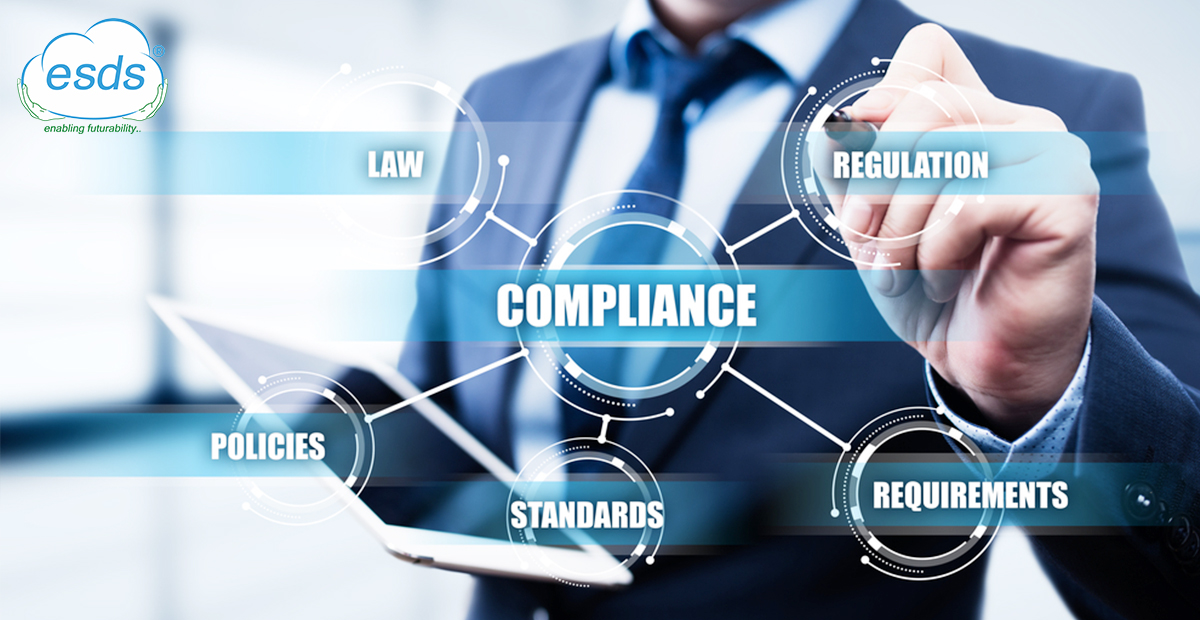
Cloud Compliances – The Modern-Day Success Mantra

After going through the topic, one might wonder how Cloud-based compliances have a role to play in the success of an organization. Read the upcoming section to understand why Cloud compliances are considered the modern-day success mantra for any organization.
Cloud Compliances

Ensuring Cloud compliances has been a significant challenge for many organizations. The inevitable demand for Cloud compliances rises as soon as a user migrates his critical data and applications to cloud hosting. Earlier, the Cloud Service Providers or CSPs didn’t throw weight on the data security or whether they aligned to industry compliances and regulations. Their main focus centered around offering data storage in the Cloud to the end-users. With the increasing demand for strict data laws across nations, Cloud Service Providers are now offering their Cloud hosting services in line with the latest industry compliances.

Determining Success with Cloud Compliances

1. Well-Defined Understanding of Regulations and Guidelines

A critical aspect of Cloud Computing involves various industry standards and regulations that everyone must adhere to. These regulations can be local, national, or even globally accepted ones. The local and national compliances may be true for a particular nation or group of nations, but the global ones need to be mandatorily followed. With advancements in technologies, CSPs are dealing with Cloud Compliances through expert teams. Such dedicated compliance teams ensure all compliance requirements of a business are met.

From the user’s perspective, he must be well aware of compliance policies and procedures. User’s CSP needs to be consistently compliant with the latest standards and must have all the supporting documents for these compliances and standards.

2. Restricting Access Controls

The absence of improper authentication and privileged access often become the primary source of data breaches taking place within an organization. MFA or Multi-Factor Authentication strategies are often apprehended as complicated and time-consuming. Advanced security mechanisms like MFA can be highly beneficial in avoiding all major security threats. Single Sign-On or SSO is a convenient option to consider but can also elevate hacking chances if the user credentials are compromised or hacked.

Read More>>

Thursday, 22 October 2020

The Contribution of IoT in Automation Industry

 Growing technologies and expediting innovations are constantly changing the makeover of the world in some form or the other. One such technology is IoT (Internet of Things). This blog/article discusses the growth of IoT in the automation industry.

It is quite obvious that IoT is responsible for bigger changes in the life which we hardly imagined. It also plays a key role in the automation industry as it helps in creating and streamlining productive, responsive, and affordable system architecture.

IoT

Simply putting the definition, IoT connects different devices via the internet and therefore we can share data which automates the business processes comprehensively. Automation industries especially the distribution and manufacturing industries have to use a huge amount of sensors into devices, so connecting them with the internet helps in reducing the production cost, time, efforts, and enhancing lean manufacturing. IoT framework lets the conversation happen directly between interfaces of machine-to-machine which eases the process of data transfer. Quality checking has become easier than before because equipment and processors can monitor faults in the devices.

IoT is the Key Player of Smart Device Manufacturers

The supreme factors in the IoT industry are actuators and sensors. These work on the measurement of physical variables which are following the commands from magnetic, thermal, or physical detectors and these are the major components. The impact of IoT rose because of its ability to use devices to their fullest capacity at an exceptional level. The goal of leveraging IoT is to make devices communicate effortlessly and without friction. Some examples can be smart lights, smoke detectors, and thermostats.

Read More>>