Showing posts with label cybersecurity. Show all posts

Monday, 11 November 2024

Demystifying VAPT Services: Strengthening Cybersecurity with Vulnerability Management


Protection for your business against cyber threats is now more crucial than ever in the digital world. With cases of cyberattacks rising worldwide, enterprises of all scales must protect their sensitive data. Among the approaches that can enhance the likelihood of cybersecurity are Vulnerability Assessment and Penetration Testing services. This lengthy guide explains in detail what VAPT services are, why vulnerability management matters, and how to choose a right VAPT service provider.

Let's us explore the top reasons why you should consider VAPT services for your organization and how it can fortify your cybersecurity services.

What is VAPT in Cybersecurity?

combines vulnerability assessment and penetration testing. The aim is to enumerate the vulnerabilities in your system and then exploit those vulnerabilities to measure how a cybercriminal may likely damage you. In summary, it does not only identify weaknesses but tests them also to see how bad the threat they may constitute.

What Is Vulnerability Management?

Vulnerability management is the continuous process for identifying, assessing, treating, and reporting security vulnerabilities in systems and software. Its goal is to reduce the risk of a cyberattack because all known vulnerabilities are constantly fixed and resolved promptly. These proactive measures on the security front make up a significant portion of a VAPT audit.

7 Reasons Why VAPT Services Are Crucial for Your Business

  1. Identify Hidden Vulnerabilities Early
    As and when these internal or critical VAPT audits are done, latent vulnerabilities would be identified even before they are exploited by malicious actors. Your network security is ensured 24/7 as it would keep testing for weaknesses and correct it if found.
  2. Meet Compliance Requirements
    The finance, healthcare, e-commerce industries, etc. have strict regulations regarding data security. VAPT services help companies meet these compliance requirements, such as ISO 27001, GDPR, PCI-DSS, and so on, are met because every company needs to ensure all their security measures are in place.
  3. Enhance Network Security with a Layered Approach
    With VAPT services, businesses can adopt a layered security approach. The vulnerability assessment identifies the risks, and penetration testing simulates a real-world cyberattack, thereby giving an all-around view of the posture the organization has related to cybersecurity.
  4. Save Costs by Preventing Breaches
    The IBM Cost of a Data Breach report shows that the mean cost of a data breach would be $4.45 million in 2024. With VAPT services, such losses would be notably avoided by detected remediation on the risk stage before they turn out to be full-blown security incidents.
  5. Gain a Competitive Edge
    Transparency with regard to commitment to cybersecurity fosters trust with the customers. Organizations that have undergone VAPT audits can evidence to their organization's commitment to security, especially in today's market scenario.
  6. Improve Incident Response
    With VAPT, organizations can get a sense of the types of cyber threats they are more exposed to. It allows for effective incident response plans that can reduce downtime and reduce possible damages in case of breaches.
  7. Choose the Right VAPT Service Provider
    Obtaining the right VAPT service provider will ensure that the audit would be proper and successful. A service provider must have good experience, advanced tools, and certified ethical hackers who can precisely identify and find vulnerabilities.

How to Choose the Right VAPT Service Provider: 5 Key Considerations


The entire selection process of a VAPT service provider is challenging due to the vital role they play in protecting your infrastructure. Here's what you should look for in a reliable provider:

  1. Experience and Expertise
    Find a provider with a considerable experience conducting VAPT audits and boasting a rich history of secure business structures in your industry. An experienced provider will be conversant with the most common vulnerabilities and threat vectors in your sector.
  2. Use of Advanced Tools
    A competent VAPT service provider should exploit the cutting-edge tools and technologies that enable him to do detailed assessments. The preliminary assessments must be done using automated scanning tools. Manual testing is preferred for a thorough evaluation of the vulnerability.
  3. Comprehensive Reporting
    After the VAPT audit, the service provider should deliver a holistic report with all identified vulnerabilities and their severity with recommended action. This will thus provide an understanding of the scope of the risks involved to prepare for remediation measures appropriately.
  4. Scalability
    Ensure that the scalability of the VAPT services offered matches how your organization grows in size. Ensure that the service provider can scale their services so you are able to keep pace with the business needs - small assessments to major testing.
  5. Customer Support
    Cybersecurity is a process, and support should not stop after the audit. You must look for the provider who will give you continuous support, guidance, and follow-up services to maintain an in-depth security posture.

PPC Framework for Promoting VAPT Services

To effectively market VAPT services, implementing a PPC (Pain-Problem-Cure) framework can help connect with potential customers on a deeper level. Here’s how you can leverage this framework:

  1. Pain: Cyber Attacks are Rising at Alarming Rate
    Focus on the rising rate and the sophistication of cyber attacks. Use statistic such as "Cyberattacks surged by 45% in 2023 with small to medium businesses being the ones most targeted." The picture that will be painted is the threat awaiting without proper cybersecurity measures in place.
  2. Problem: Cost of Not Investing in VAPT
    What might be the impact of omitting one of the best practices in vulnerability management-data breaches, loss of customers, and failure to comply with the law. For example, "60% of small businesses shut down within six months of a cyberattack due to financial losses."
  3. Cure: Offer VAPT Services as the Solution
    Portray VAPT services as an advance measure against risks. You can use calls to action like, "Secure your business now with our detailed VAPT services" or "Book a free consultation with our cybersecurity experts today to assess your vulnerabilities."

Current Statistics and Trends in VAPT Services

  1. Rising Demand for VAPT Services
    A new report now reports that VAPT services market will grow at an estimated CAGR of 17.2% throughout the period 2023 to 2028, while more and more data breaches trigger demand for data protection compliance across various industries
  2. Cost of Cybercrime
    As indicated by Cybersecurity Ventures, cybercrime is forecasted to reach an annual cost of $10.5 trillion by 2025. This forces all businesses to invest in the most comprehensive cybersecurity solutions in the marketplace, VAPT being one.
  3. Shift Towards Cloud-Based VAPT Solutions
    With growing adoption of cloud services, most organizations are searching for VAPT services also delivered in a cloud-based model. Cloud environments have different vulnerabilities in such a way that a continuous audit of VAPT may be vital for those migrating to the cloud.
  4. SMEs Adopting VAPT for Cybersecurity
    More and more SMEs are now exploring VAPT in cybersecurity to guard their digital assets. At small budgets, the cost savings in employing the services of VAPT are seen as being more cost-effective than hiring their in-house security personnel.

Conclusion: Secure Your Business with ESDS VAPT Services

Secure Your Business with ESDS VAPT Services
In today's fast-evolving cyber threat landscape, VAPT services are a thing that can never be avoided for the protection of businesses' digital assets. From vulnerability identification to ensuring compliance standards, all under an all-encompassing approach towards vulnerability management, VAPT services are the all-in approach that can make the best case for keeping up with one's vulnerability management practices.
You would get the advantage of highly experienced cybersecurity professionals, sophisticated toolkits, as well as deep knowledge about the risks related to the industry. Our services are tailored to your specific business needs and ensure that you remain safe from cyberattacks while simultaneously meeting regulatory requirements. ESDS is an expert in cloud-based VAPT solutions, thus making it the perfect partners with any organization that looks to secure on-premise as well as cloud environments.
Invest in ESDS VAPT services today, take a step closer to a secured digital world. Because, after all, prevention is always cheaper than the cure; in this case, a breach. And with us by your side, you can focus on your core business as we handle all your cybersecurity matters.

Visit us:  https://www.esds.co.in/vapt-audit

For more information, contact Team ESDS through - 🖂Email: getintouch@esds.co.in| Toll-Free: 1800-209-3006 | Website: https://www.esds.co.in/

Monday, 16 September 2024

Security Operation Centers: The next frontier of Cybersecurity


Security Operation Centers (SOCs) have witnessed a steep rise over the past few years in India, essentially fueled by business and other regulatory factors. While national attacks and advanced cyber threats continue to loom over businesses within the nation and across borders, multinational conglomerates and government organizations are always at high risk. Increased proliferation of digital and transition to remote working post-pandemic is another factor that is making businesses highly vulnerable to attacks.

What are SOC Services?

Fundamentally, the SOC is a heart-cored centralized unit of an organization for monitoring, detecting, analyzing, and responding to cybersecurity incidents. The SOC team deploys several advanced tools and technologies for protecting the information systems of an organization from a wide array of threats, such as malware, phishing attacks, and data breaches. SOC services involve extensive activities starting from real-time monitoring of network traffic and ending with threat intelligence gathering and incident response.

Latest Statistics: According to the 2024 Cybersecurity Threat Report, there has been a 67% increase in phishing attacks, with ransomware incidents surging by 93% over the past year. These alarming figures underscore the need for robust SOC services to mitigate these escalating threats.

The Evolution of Managed SOC Services

As cyber threats became more complex and increased in volume, so was the demand for managed SOC services. The providers of managed SOC services outsource security operations to specialist service providers and hence facilitate access for organizations to expert resources and state-of-the-art technologies without major in-house investments. In particular, it is very appealing to SMEs that could not necessarily ensure resources to establish and maintain a full-fledged SOC in-house.

These services include 24/7 monitoring, fast incident response, and continuous threat intelligence, making sure that organizations are current with the latest sets of emerging threats. Through a partnership with the provider of managed SOC services, an organization can comfortably focus on its core business operations, having entrusted experts with its cybersecurity needs.

The Rise of SOC as a Service (SOCaaS)

The recent traction that SOC-as-a-Service has gained is because organizations are after cybersecurity solutions that are flexible enough, scalable, and agile. With SOCaaS, SOC capabilities are provided from the cloud as a subscription service. It emancipates an organization to avail itself of the whole gamut of SOC services sans highly extended on-premise infrastructure or huge capital investments.

Continuously, the SOCaaS provider will provide service for monitoring, detecting the threat, responding to an incident, and reporting on compliance. Since this is cloud-based SOCaaS, organizations are assured of easily scaling security operations in line with dynamic business needs or an ever-evolving threat landscape.

Accessibility is another advantage of SOCaaS. SOCaaS allows organizations of all scales, from startups to SMEs, to improve their cybersecurity posture without the hassle and headache associated with managing complex security operations in-house. Most SOCaaS providers take a pay-as-you-go pricing approach wherein an organization pays for only what it needs to optimize spending on cybersecurity.

Industry Perspective: The global cybersecurity market is projected to reach $376.32 billion by 2029, driven by the increasing adoption of advanced security solutions like SOC services. As organizations grapple with sophisticated cyber threats, the demand for managed SOC services and SOCaaS continues to grow, underscoring the strategic importance of investing in these critical security measures.

Why SOC Services are Essential in today’s Cybersecurity Landscape


Equally, the increasing rate and intensity of cyberattacks have imposed an intensive need for SOC services within the cybersecurity strategy of any organization. Here are just reasons why SOC services are indispensable:

1. Continuous Monitoring: SOC services provide uninterrupted monitoring of an organization's network, systems, and applications. This means that any suspicious activity that might be noted at any moment in time is handled forthwith to prevent a successful cyber-attack from occurring.

2. Proactive Threat Detection: Highly developed threat intelligence combined with advanced analytical tools empowers the SOC team with the capability to detect threats even prior to their activation. This gives a service provider an edge over emerging threats while helping organizations minimize their risk factors to avoid data breaches.

3. Faster Response: If, for any reason, there is some security incident an organization goes through, then SOC services will surely help organizations respond more effectively in a quicker way. SOC would work towards threat containment and reduce further damage to restore normal operations as quickly as possible.

4. Compliance and Reporting: SOC services are incredibly important for an organization in meeting the regulatory and compliance demands placed on it. In respect of security incidents, vulnerability assessments, and compliance status, the SOC team generates detailed reporting that helps an organization avoid potential legal and financial consequences.

5. Affordability in Security: Organizations outsource their security operations to either managed SOC service providers or adopt SOCaaS without having to invest heavily in capital and hence achieve a high state of security effectively. This would, in turn, enable other business resources while keeping cybersecurity defenses strong.

SOC as a Service Market Analysis:


The SOCaaS market is expected to grow rapidly at a CAGR of 15.7%, from $4.5 billion in 2022 to approximately $9.1 billion by the year 2027. This trend has been enforced because of increasing cyber threats, increased usage of cloud services, and affordable scaling of security with security services by SMEs. Presently, North America dominates the market; however, Asia-Pacific is likely to grow at the highest rate. BFSI, healthcare, and retail are some of the industries with very high demand in SOCaaS due to continuous monitoring and compliance under regulations. Though SOCaaS was facing issues regarding data privacy concerns and integration complexity, the growth experienced in the last couple of years was driven by adopting Work-from-home and digital transformation.

Choosing the Right SOC Service Provider

In general, while opting for a SOC service provider, various factors have to come into view: experience, expertise, and track record of the provider. What the organizations ideally seek is a provider offering comprehensive threat detection, incident response, and compliance monitoring services. It also includes considerations over customization and flexibility in pricing models.

Organizations in India will want to choose a provider that understands the local regulatory environment for service delivery, thereby making the offerings pertinent to the Indian market. This will mean the organization shall be compliant with the relevant laws and regulations and still receive top-tier security services.

Conclusion: SOC Services – A Strategic Imperative

Adoption of technologies brings its advantages and disadvantages to the enterprise. The adoption and emergence of AI, ML-based technology platforms by enterprises is very welcome, given the fact that they provide the much-needed ability to analyze the day-to-day processes in the enterprise beyond static rules, signatures to a new world of analysis in addition to the learning from the analysis and comparing with the previously learnings. ESDS is at the forefront of delivering scalable, cost-effective SOC as a Service (SOCaaS) solutions, empowering businesses to safeguard their digital assets and ensure compliance. With our expertise and innovative technologies, ESDS is leading the future of security operations in India and beyond.

Visit us: https://www.esds.co.in/soc-as-a-service

For more information, contact Team ESDS through -

🖂Email: getintouch@esds.co.in| Toll-Free: 18002093006 | Website: https://www.esds.co.in/

Thursday, 16 February 2023

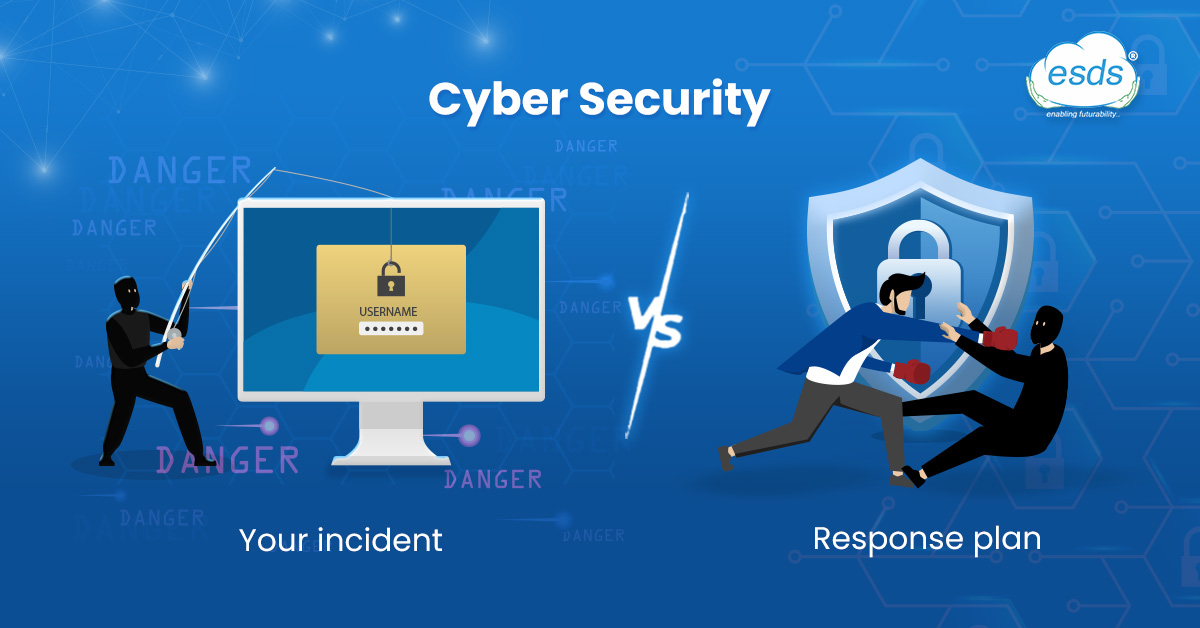
Cyber Security: Your incident vs response plan

The threat of cyberattacks and ransomware assaults has increased significantly as technology continues to permeate more and more aspects of our daily life. Therefore, any organization must have a cyber-incident response plan to defend against and respond to cyber threats.

cyber security

This manual will walk you through the crucial components of an efficient cyber incident response plan. We also discuss the six stages of a cyber-incident response plan based on NIST incident response guidelines. We’ll also demonstrate how to carry out this plan well and strengthen your incident response capabilities.

Critical Elements of a Cyber Incident Response Plan

We must reiterate right away that building cyber resilience takes time. It is insufficient to only have an efficient incident response plan. This strategy needs to be updated regularly to account for new risks.

Additionally, you may occasionally consult with outside cybersecurity experts to get their expert assessment of your preparedness for a cyberattack. They can also assist in updating your strategies and protocols. Finally, to determine just how vulnerable your organization is in the event of an incident, they can also help you conduct a thorough risk assessment.

Several important components should be present in a thorough cyber incident response plan, including:

  • An organized team with defined tasks and responsibilities for responding to incidents.
  • The incident response plan is routinely tested and trained. By doing so, it will be guaranteed that the plan would truly limit the harm that data breaches and/or ransomware attacks may do.
  • Procedures for locating, stopping, stopping the spread of, analyzing, eradicating, and recovering from an incident.
  • Plans for communicating the occurrence and its effects to stakeholders, including employees, clients, and customers.
  • Knowing when to contact law enforcement and how to do so in case of a cybersecurity incident.

The steps to assess and modify the incident response strategy.

The NIST Computer Security Incident Handling Guide’s advice should be considered.

A CIRP should incorporate specific protocols for other incident types, such as malware, phishing, and natural catastrophes, in addition to these essential components.

Read More>>

Friday, 27 January 2023

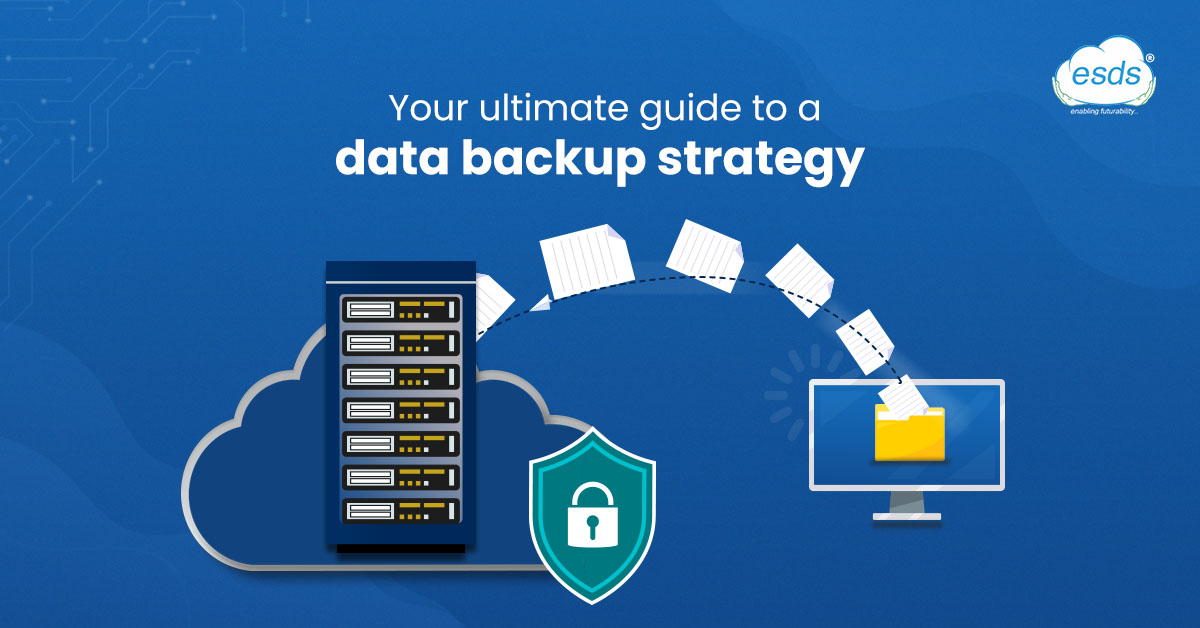
Your ultimate guide to a data backup strategy

Organizations shouldn’t take cybersecurity lightly. Anti-virus software alone is not adequate to protect your critical files. Hackers spend a lot of effort devising workarounds. They eventually will. Once that happens, you won’t have to worry about your data being lost forever if you have a backup strategy in place to protect the data for your business, of course.

Data backup strategy

Why Having a data Backup Strategy is critical?

Data loss could drastically harm your reputation in addition to endangering the information of your clients. In 2019, the average cost of a breach was $7,000,000. It is estimated that 60% of organizations that experience data loss closes their doors within six months.

You could also run the risk of permanently losing your data. Malware and viruses can damage your gadgets, but these are only some of the most frequent threats. Studies show that hardware problems cause 45% of all unplanned downtime and 60% of IT specialists think that careless employees are the biggest threat to their own data. All of these risks can dearly cost your company money, and if you don’t have a solid data backup strategy in place, you face the risk of losing everything.

Even if your company can recover from a data loss, it could be costly. Research has shown that the average cost for corporations to recover from a loss is $7 million. Many firms do not frequently have access to that amount of excess money. Despite how high they are; these costs only provide a partial picture. The additional cost could be something priceless. I’m talking about your clients’ faith and confidence in you. Customers will shop elsewhere if they believe their data is not secure with you. The solution is to develop and implement a data backup strategy. By using the right tools, being prepared, and becoming trained, you can secure your data.

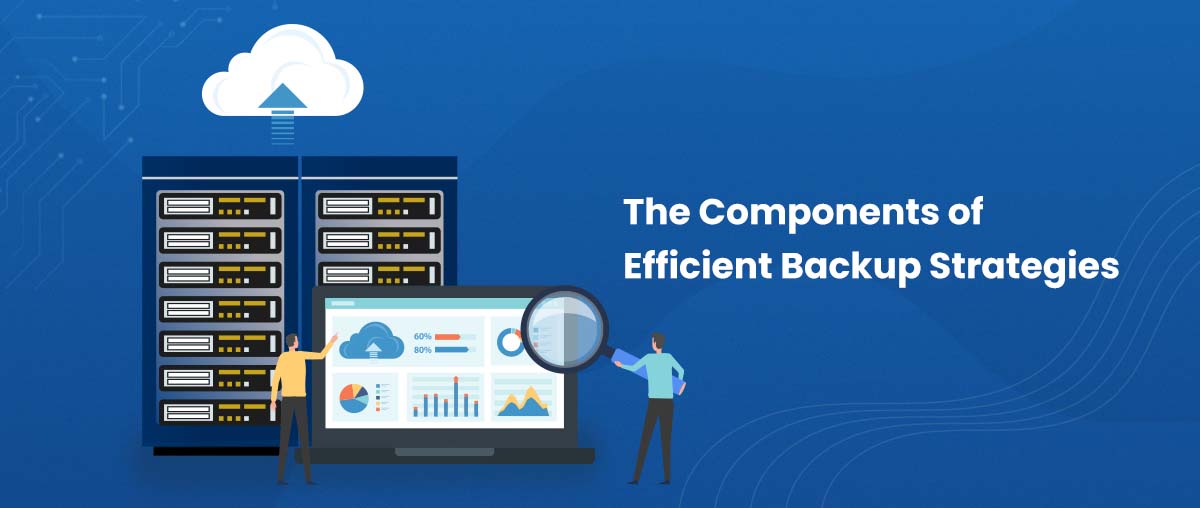
The Components of Efficient Backup Strategies

components of efficient backup strategies

Before your draught your data backup plan, be aware of what should be included.

Let’s look at some best practices for data backup strategies:

Cost – You’ll need a data backup method that is reasonably priced. It’s a wise idea to think creatively with money. Consider the possible expense of a breach or loss. Then, contrast it with the anticipated cost of your data backup plan. That will help you find your way.

Where should data backups be stored? Some organizations prefer cloud-based backup. A physical backup is preferred by some people. The most cautious companies have many fallback strategies. In the event that the first one fails, they have a data backup.

Read More>>

Monday, 12 December 2022

A Good Strategy – To Scale up your Business


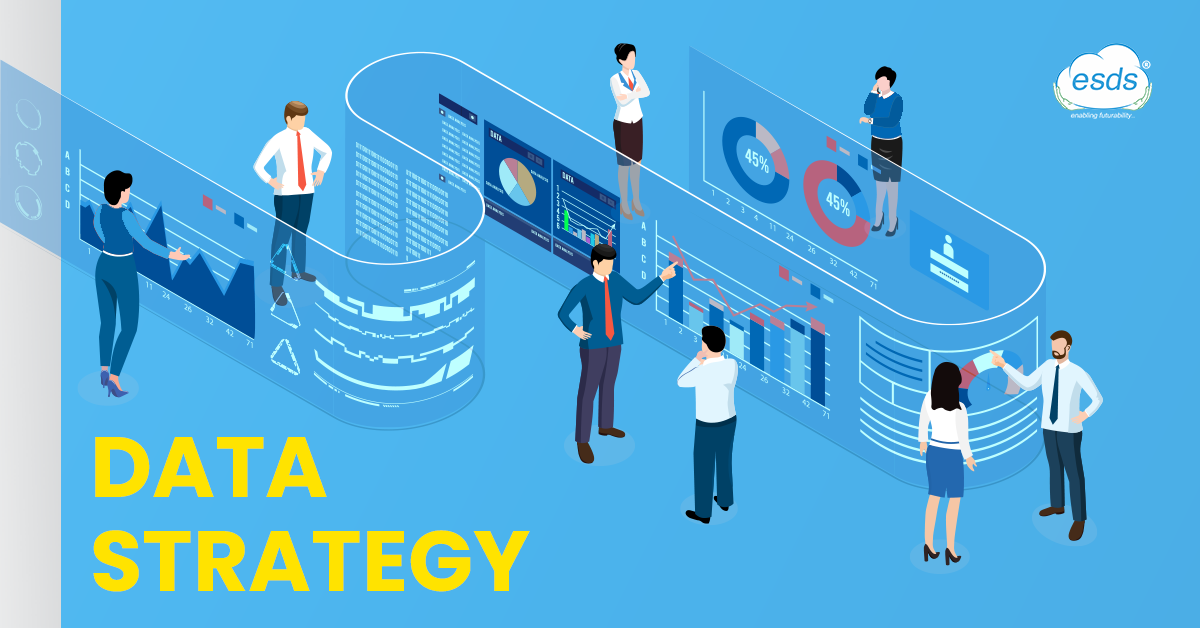
Data has become an invaluable asset for businesses of any type and size or industry. To put this data to use and yield value for a business, requires developing a Data Strategy. Businesses across the globe invest heavily in gathering, analyzing, organizing data, and churning it for multiple uses, which can be quite challenging. Developing a Data Strategy assists organizations to utilize the data extensively without compromising on resources.

Data Strategy

Organized data gives clarity to making important decisions and other strategic actions for the business. Since Data has become a precious resource, security becomes the highest priority. As more and more businesses are shifting towards digital transformation, staying on par with business trends is essential while also protecting the business data from hacking and cyber-attacks is equally crucial.

To Implement a Data Strategy

Importance of Data Strategy – Why your business needs a (modernized) data strategy?

  • Un-organized and steady moving organizational processes
  • Un-structured and duplicated data with quality issues
  • Capability issue to analyze business workings to churn the data for the right use
  • Unable to identify the business’s growing needs and market trends
  • Lack of clarity in terms of segregating the data at hand
  • Work repetition and errors waste resource time

Factors to Consider

To implement a data strategy, an organization needs to have concrete plans and financial investments in place to follow through. The IT team and management personnel must be at the forefront of running the entire activity along with support from the entire organization.

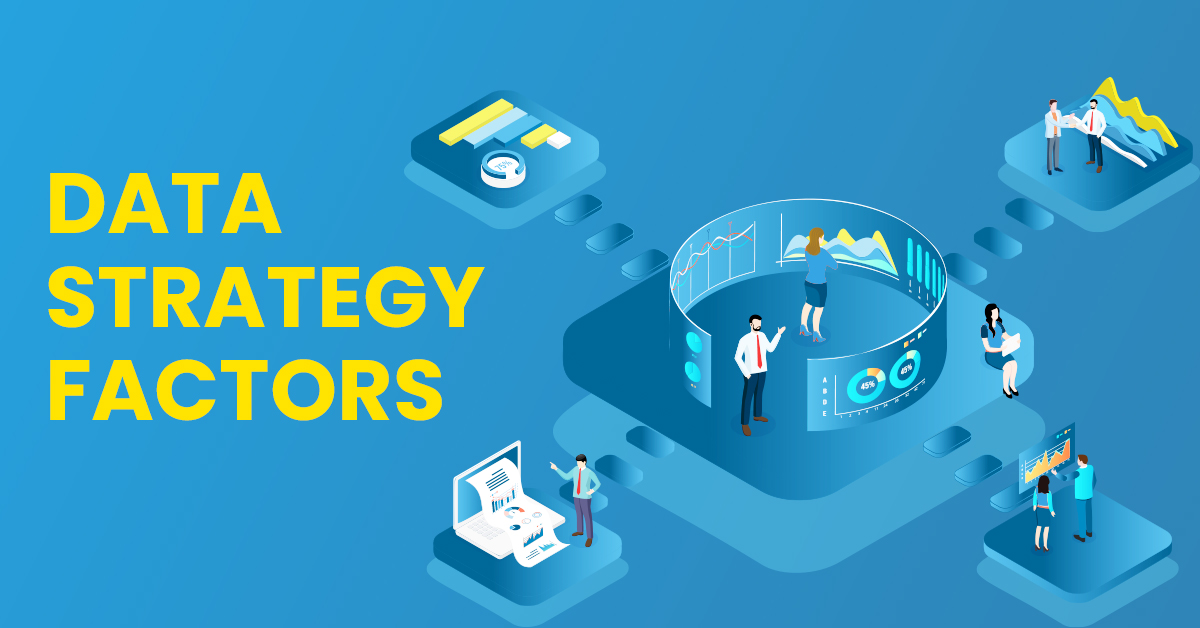
Data Strategy Factors

Before beginning with the data strategy implementation process, organizations should consider the following

  • Consulting management and organization leaders
  • Analyzing and evaluating how data is being used by various teams such as engineers, data analytics teams, business development/sales, etc.
  • Organize data by the target market size and needs
  • Administer the new analytics solution (Install, configure, and maintain)
  • Monitoring all the other policies, guidelines and compliances are in order

Read More>>

Monday, 7 November 2022

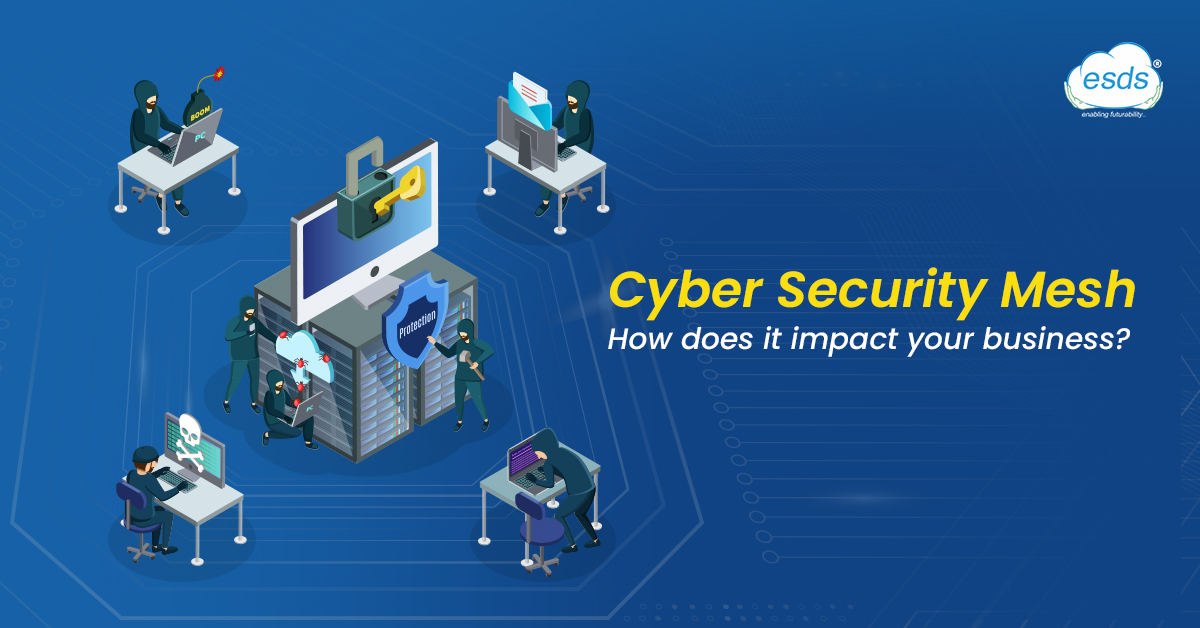
Cybersecurity Mesh – How does it impact your business?

As digital transformation is rapidly accelerating, more businesses are adapting to this current trend. Now the hybrid work environment is also catching up, organizations are faced with new challenges as we are steering away from the traditional network infrastructure. While the hybrid work model comes with its own set of comfort, flexibility, and productivity it also brings in certain risks and complexity. A majority of the staff is working remotely, and control over data and its security has become less rigid leaving the vulnerabilities exposed. Now how to keep the security intact and not let the vulnerabilities prone to hackers? Cybersecurity Mesh, which acts as a cyber-defense strategy with a more holistic approach. While regular security practices use a single perimeter to secure an entire IT environment, Cybersecurity Mesh on the other hand secures each device with its perimeter independently. 

Cybersecurity Mesh

The traditional network perimeter has now become a diverse network that manages infrastructure, remote machines, and their uses, cloud technologies along with IoT devices. Organizations that are adapting to this approach with their remote work model gain access to data and more control over policies implementing new technologies. Industries such as banking, manufacturing, or government are still very much following the traditional practice. Businesses of larger sizes have complex IT architecture hence they need a more distributed model. To run the business smoothly in today’s competitive market organizations are inching more towards a data processing edge and relying on multiple cloud implementations.

Now that we have understood what Cybersecurity Mesh is, let’s understand its top benefits…

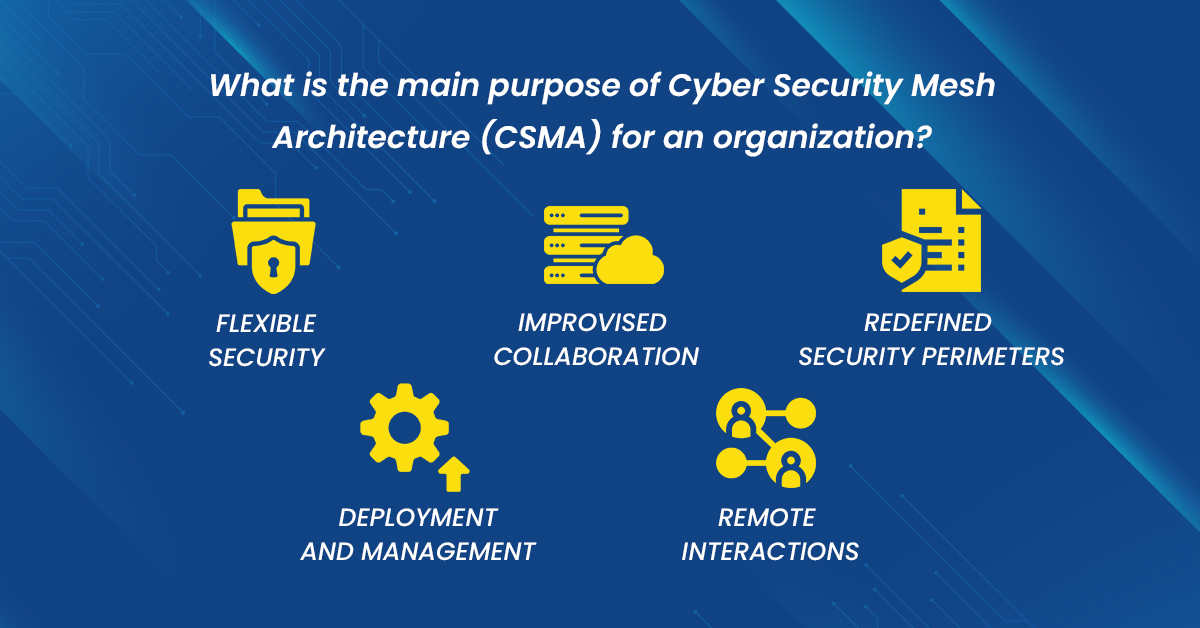
What is the main purpose of Cybersecurity Mesh also known as a Cyber Security Mesh Architecture CSMA for an organization?

main purpose of Cybersecurity Mesh

To provide the best of cyber security it takes the approach of helping organizations evolve to the new and latest security systems rather than the outdated ones. The crucial aspects of it include increasing the operability of various security tools while improving their agility and strengthening the overall security systems. Given the market pace and unpredictability, with the help is cybersecurity mesh organizations get a more distributed architectural approach. This also helps in getting a standardized responsive security pattern. Apart from the basic important aspects such as scalability, flexibility, and more reliable, Cybersecurity Mesh also prevents the network from hackers.

Read More>>

Monday, 31 October 2022

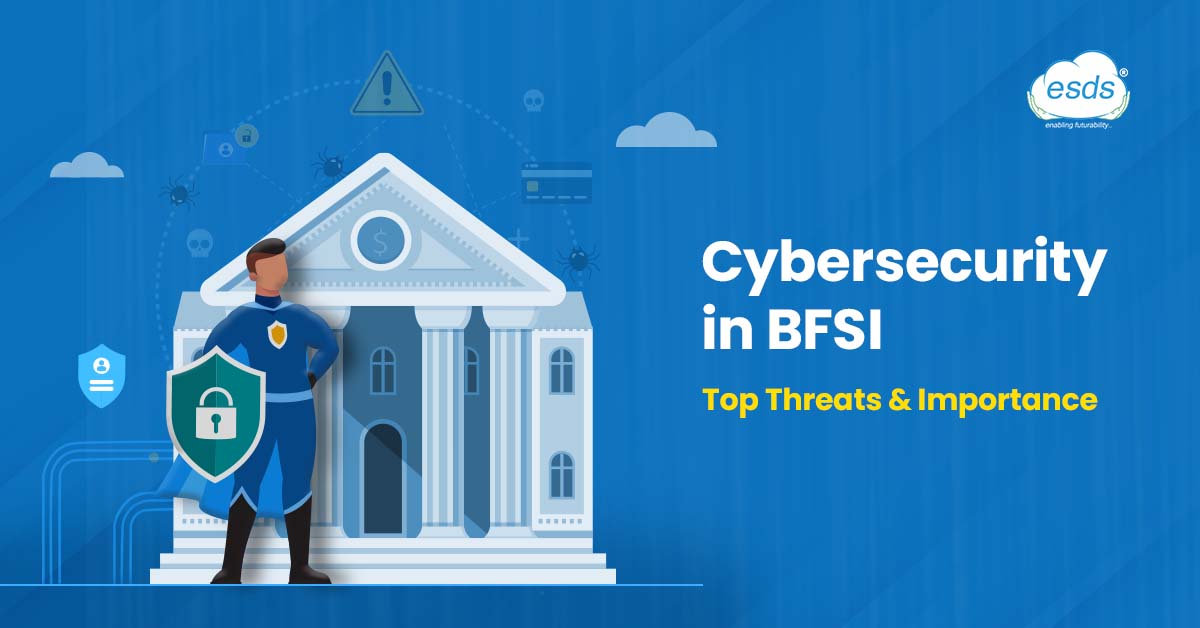
Cybersecurity in BFSI – Top Threats & Importance

 Cybersecurity has been the major area of concern throughout 2022 and now 2023 is all set to witness a new version of cyber-attacks with advanced technologies. Cyber-criminals are ready to exploit the technological trends and hunt away into your security domain.

cybersecurity in BFSI

As we transition to a digital economy, cybersecurity in banks is becoming a serious concern. Leveraging methods and procedures created to safeguard our data are essential for a successful digital revolution. The effectiveness of cybersecurity in banks determines the safety of our Personally Identifiable Information (PII), and by extension, ourselves, whether it is an unintentional breach or a well-planned cyberattack.

Current State of Cybersecurity in Banks

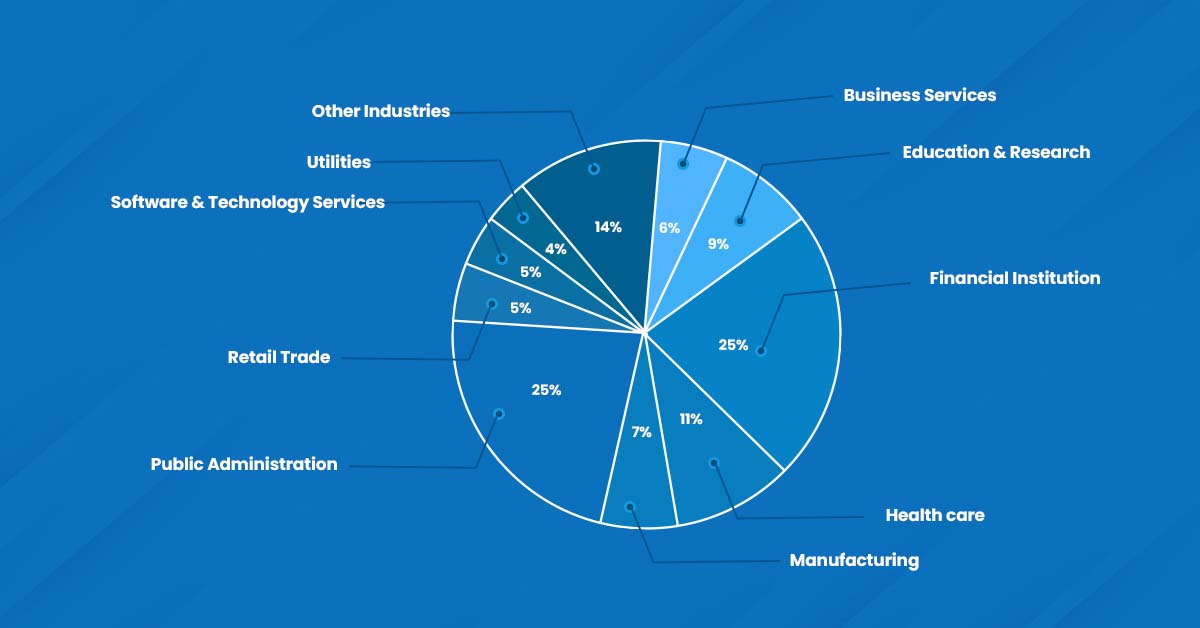
According to the S & P Global study on the share of cyber incidents reported across industries in the past years, financial institutions have topped the list and experienced more than a quarter of such security issues.

To make a comparison, the BFSI sector experienced 26% of these cybersecurity incidents, compared to the Healthcare (11%) Software and Technology Services (7%) and Retail (6%), and Retail (6%).

cybersecurity

The volume of cyber threats is increasing fast, which shows how critical cybersecurity is to banks today. Particularly for small financial institutions and credit unions that lack the resources to survive, cyber-attacks can be very expensive to endure. Additionally, such financial institutions may suffer catastrophic reputational damage.

Read More>>

Wednesday, 12 October 2022

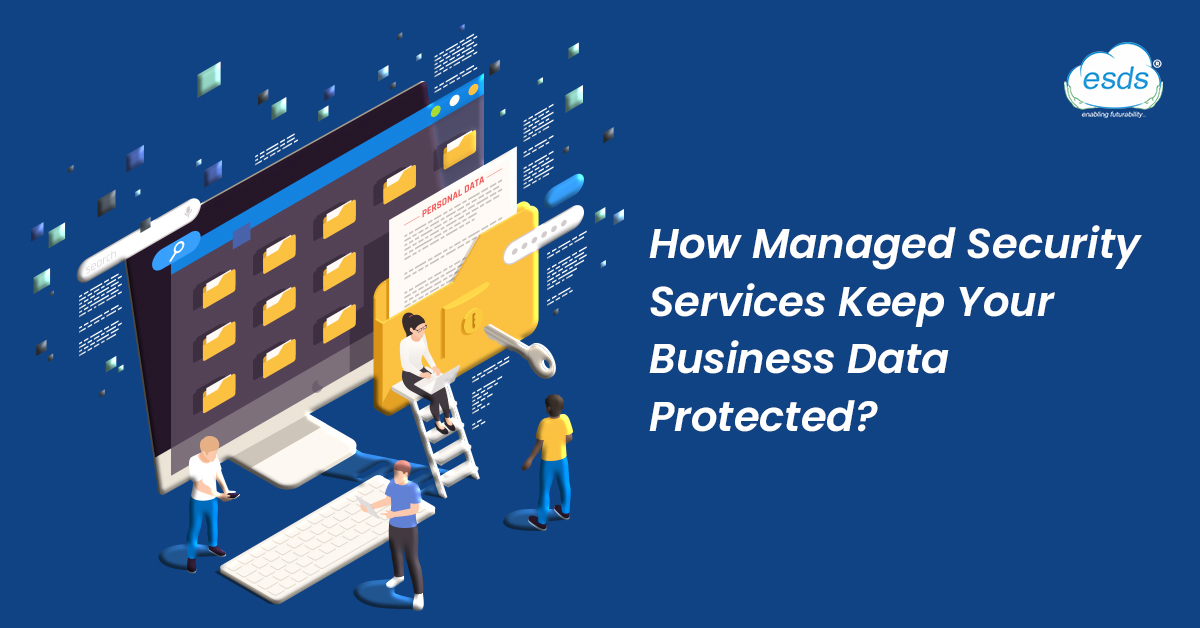
How Managed Security Services Keep Your Business Data Protected

Everything that is managed works great, right? So, why not successfully get your organizational security managed?

As security has been the priority for organizations from SMBs, banks, and government sectors to Fortune 500, managed security services have leaped.

Managed Security Services ESDS

It has become difficult for most organizations to look after the evolving cyber-attacks and put so much time and effort into mitigating the issues. In addition, for SMBs, it can be challenging to implement security measures due to various limitations related to budget, expertise, and security personnel.

Managed security services are a great way to protect your organization’s data and systems from hackers. If you want to increase your company’s cybersecurity, the best way to do so is by hiring a managed security service provider who can provide all of the necessary tools for preventing attacks on your network.

The managed security services market is projected to reach US$ 53.22 Bn by 2031

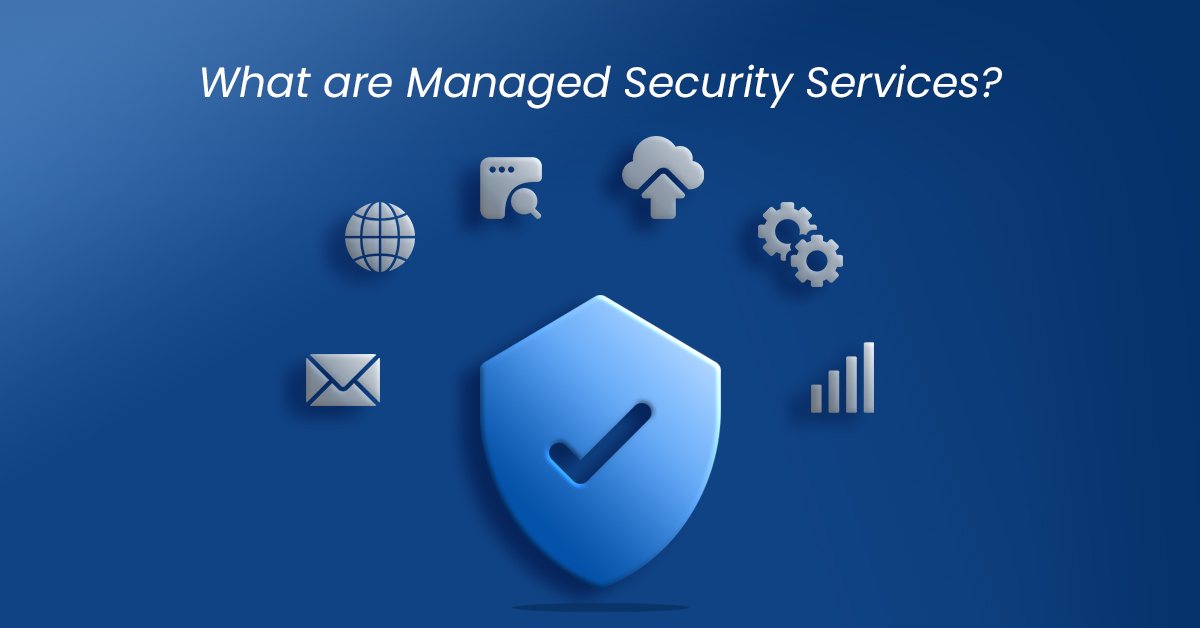
What Does Managed Security Service Mean?

What Does Managed Security Service Mean - ESDS

Managed Security Service is a security solution that provides 24/7 monitoring of your organization’s networks and systems. In other words, it is a way to secure your business against threats like fraud, cyberattacks, and data breaches. A managed security service provider like ESDS offers security assistance or manages your entire security operation center per your requirement. Your SIEM tools, IDS/IPS, firewalls, antivirus software, vulnerability, compliance management, and other security technologies are all under an MSSP.

Managed Security Services offer you great flexibility because they can take different forms depending on your needs. For example, the managed security services may be used as part of a more comprehensive security solution, or they could just be used to secure your assets.

Read More>>

Monday, 4 April 2022

Applications & Benefits of AI in Banking

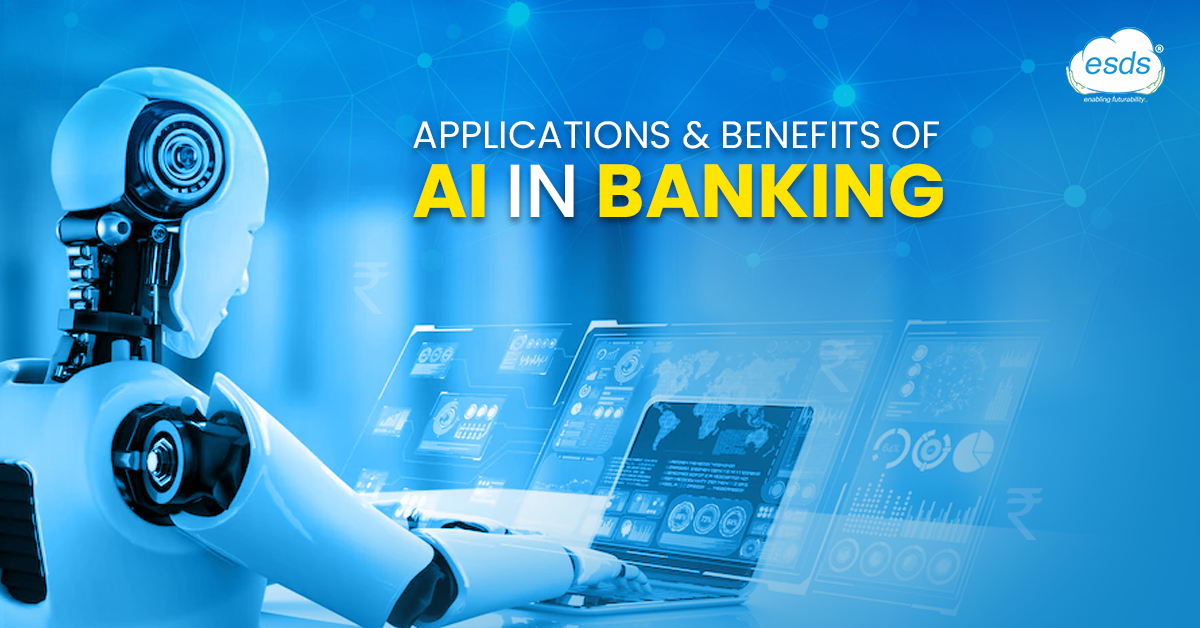
AI is a technology that has impacted every industry vertical including the banking and finance sector. AI in banking reduces expenses by boosting productivity and making the decision process fast, and accurate. According to a report by Business Insider, almost 80%of banks are aware of the potential benefits of AI in the banking sector. It also says that by 2023, banks are estimated to save roughly $447 billion by deploying AI applications. The applications of AI in banking are many and so does the benefits of AI in banking.  Let’s take a look at some of them.
AI in Banking

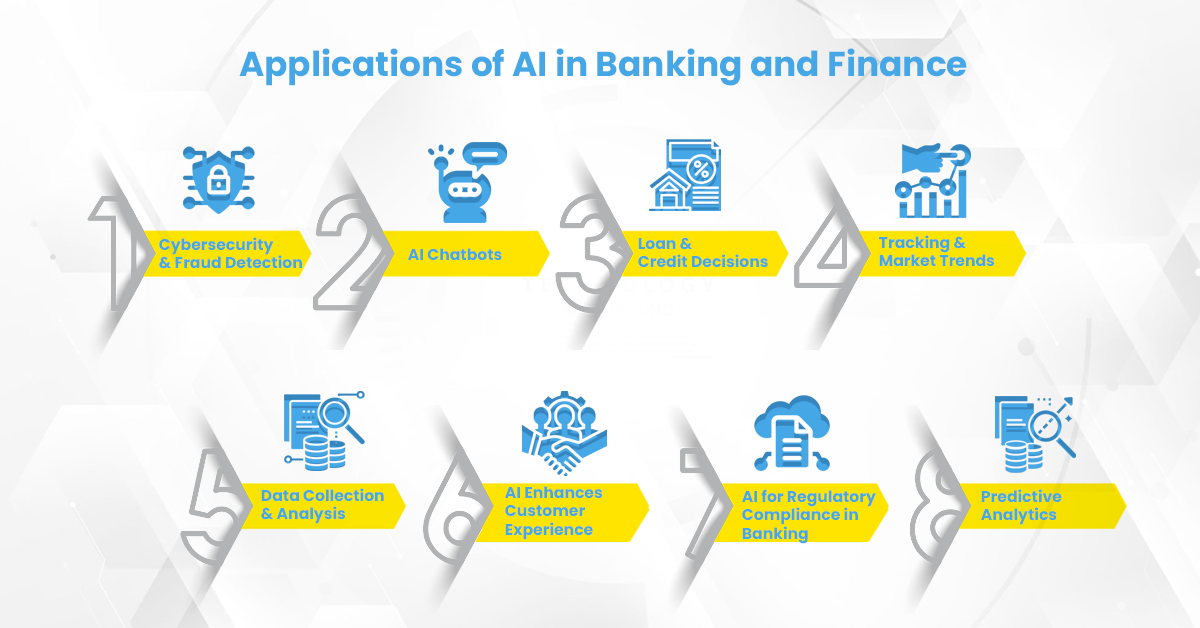
Applications of AI in Banking and Finance

Initially, AI was majorly used for increasing operational efficiency. This has changed post-pandemic where AI is used for automating processes and deriving insights. Here are the 8 major applications of AI in banking.

Applications of AI in Banking and Finance

Cybersecurity & Fraud Detection

AI along with machine learning is capable of easily identifying fraudulent activities and alerting customers and banks. In 2019, the financial sector was the most targeted industry for cyberattacks accounting for 29% of the total. AI can be a game-changer in the finance sector to stop cyberattacks. 

AI Chatbots

By combining chatbots with banking apps, the banks will be available for the customers round the clock 24*7. Chatbots’ capability to comprehend customer behavior helps in offering personalized customer support and recommending the right financial services and products accordingly.

Read More>>

Wednesday, 19 January 2022

What is a Cyber-attack Surface and How it can be Reduced!

The Digitization boom has picked up in the past 2 years and seen phenomenal growth over the past decade and so with it, we have witnessed the exponential growth of Data. Since everything is digital now the concern of cyber threats has also increased. Enterprises and businesses have begun to invest heavily into developing tactful cyber security plans with tested tools, applications, and human resources as well to ensure the utmost safety of data. As we dive into understanding what is a Cyber-attack surface and how we can reduce it, let’s establish the basics of a cyber-attack and how to identify a cyber-attack surface.

Cyber-attack Surface

Understanding of Attack Surfaces

Data is growing rapidly and will continue to flourish as we move closer to the depths of digital transformation. To ensure the full security and safety of this crucial data, organizations across the globe have been taking major steps in terms of cyber security plans and measures. Ransomware, Cyberattacks, Malware, Phishing, etc. are some popular attacks known to everybody. Gaining unauthorized access to a system to leak, destroy or cause any kind of damage to the data is prominently the intention carried out by hackers overall. About 92% of malware attacks are carried out by emails and this has been on the rise for over a decade now. As of June 2021, around 6 lakh cyber security incidents took place in the country. More than 15,000 Indian websites have fallen prey to these attacks and suffered. The year 2020 itself has recorded over 1.16 million cyber security cases, which was 3 times higher than that recorded in 2019. Organizations that suffer such cyber-attack incidents take weeks to recover their losses of data and funds.

Read More>>

Sunday, 19 December 2021

How Security Operations Center (SOC) Services Strengthen Cybersecurity with Mass Migration To Cloud Computing?

The onset of Cloud Computing in the technological scheme of things made the phenomenon of Mass Migration of web-based apps, services, and ecosystems in general a thing to look forward to. With the increase in the number of cloud service providers, this migration became more evident for organizations and enterprises.

Security Operations Center (SOC) Services

The USPs being affordability and accessibility it definitely was and is still changing the priorities for digital ecosystem provisions. For time being though there were several questions raised regarding its functionality and especially its security. Let us try and understand all its aspects before arriving at a conclusion and see if cloud computing is fit for your organization or not.

Mass Migration to Cloud Computing and Storage

Cloud Computing did go through an initial phase of suspicion from organizations and individuals alike. Time though has had its positive say with the significant increase in the number of adoptions, as mentioned in an article titled “The 2021 State of Cloud Adoption”, which states that out of the mid-sized to large-sized enterprises 52% of the software applications being developed are cloud-based.

Mass Migration to Cloud Computing and Storage

This significant rise has majorly been due to the increasing demand for digital ecosystems by various industries post-pandemic. In that reference, the priority to cloud computing was certain due to its ease of administration as the back-end of cloud, like maintenance and setup is taken care of by the cloud computing providers. Another main reason for Migration is to get connected from any place at any time making it affordable and accessible further enhancing the rate of adoption of cloud computing-based services.

Read More>>

Monday, 22 November 2021

Data Privacy or Data Security: Which One is Important for You?

In recent years, organizations of all sizes have been impacted by data breaches & leaks, which have resulted in significant monetary & non-monetary damages. Business heads, CIOs, and CISOs and their data are always on the brink of a cyber attack since the number of cybercriminals has increased multi-folds. Such data breaches & leaks can cause a significant dent in a brand’s image, resulting in both monetary & non-monetary losses. Data protection and data security are important for safeguarding critical data against these forms of online attacks.
Data Privacy or Data Security

What is Cybersecurity?

Every day a lot of valuable information is uploaded & exchanged over the Internet, exposing their integrity & confidentiality. Cybersecurity includes all the protective measures deployed to secure the digital and web assets against all forms of online threats & human-induced errors. The web assets also need to be secured against privilege escalations and unauthorized users. This is when Information Security comes into the picture, depicting the practices of preventing all unauthorized access, modification, or destruction of information in any form.

Pillars of Information Security

The following pillars of Information Security are also known as the CIA Triad, which has to be addressed for obtaining satisfactory levels of information security.

Read More>>

Friday, 19 November 2021

Is Cybersecurity Affecting International Relations?

History says nations have always been aware of their enemies. In the era where the world is shifting towards digitisation, these outright physical attacks are also moving towards digital wars. In other words, the nations are waging wars with the third world countries; which has started entering the realm of cyber warfare. A survey predicts, one-third of the human population on this globe is accessing an active internet connection, and this number is said to increase to 1.5 billion more by 2020. This has resulted into hacking becoming one of the powerful means to take political and economic advantages over enemy nations. With the increasing number of internet users and Internet of Things innovations, there are more threats of cyber criminals hacking the information.The internet expansion in 1990 lead the hackers to explore the various methodologies to play cyber pranks and explore the cyber crime.

Any idea of how cybersecurity has an impact on international relations? Cyber criminals have targeted famous faces like Hilary Clinton and Donald Trump,and also, the nations and its data security has been a significant concern.Thus, countries have been keen on making Cybersecurity as an integral part of governments national defence. Also, Cybersecurity is built as a new domain of warfare.

Read More>>