Showing posts with label Digital transformation. Show all posts

Monday, 12 December 2022

A Good Strategy – To Scale up your Business


Data has become an invaluable asset for businesses of any type and size or industry. To put this data to use and yield value for a business, requires developing a Data Strategy. Businesses across the globe invest heavily in gathering, analyzing, organizing data, and churning it for multiple uses, which can be quite challenging. Developing a Data Strategy assists organizations to utilize the data extensively without compromising on resources.
Data Strategy

Organized data gives clarity to making important decisions and other strategic actions for the business. Since Data has become a precious resource, security becomes the highest priority. As more and more businesses are shifting towards digital transformation, staying on par with business trends is essential while also protecting the business data from hacking and cyber-attacks is equally crucial.

To Implement a Data Strategy

Importance of Data Strategy – Why your business needs a (modernized) data strategy?

  • Un-organized and steady moving organizational processes
  • Un-structured and duplicated data with quality issues
  • Capability issue to analyze business workings to churn the data for the right use
  • Unable to identify the business’s growing needs and market trends
  • Lack of clarity in terms of segregating the data at hand
  • Work repetition and errors waste resource time

Factors to Consider

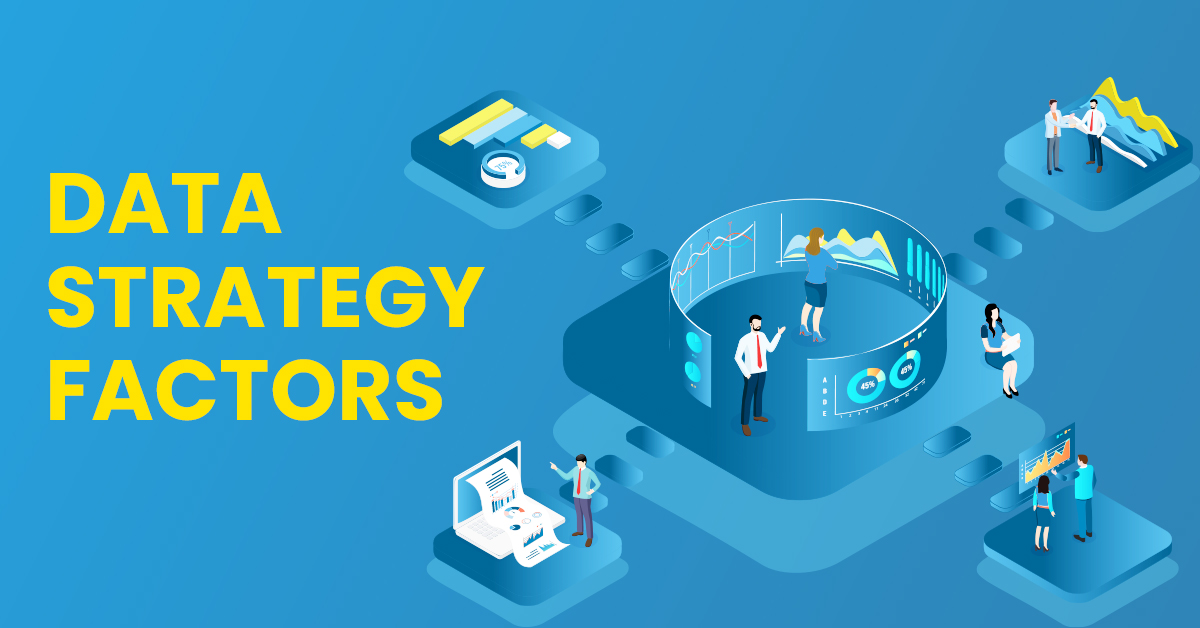
To implement a data strategy, an organization needs to have concrete plans and financial investments in place to follow through. The IT team and management personnel must be at the forefront of running the entire activity along with support from the entire organization.
Data Strategy Factors

Before beginning with the data strategy implementation process, organizations should consider the following

  • Consulting management and organization leaders
  • Analyzing and evaluating how data is being used by various teams such as engineers, data analytics teams, business development/sales, etc.
  • Organize data by the target market size and needs
  • Administer the new analytics solution (Install, configure, and maintain)
  • Monitoring all the other policies, guidelines and compliances are in order

Read More>>

Tuesday, 29 November 2022

Application Modernization – Why is it a must for your business?

Application modernization is the process of repurposing, restructuring, or consolidating existing business applications to better match their requirements with those of the market and its competitors. A legacy app can be made more modern by upgrading its technology stack, improving its application architecture, moving to a new, more current platform, or simply adding cutting-edge functionality using edge technologies.

Application Modernization

The majority of firms believe that modernizing applications is only necessary for organizations using outdated legacy systems. However, it is a presumption that needs to be disproved to confine modernization to legacy apps.

Applications that are out-of-date or on the approach of expiring cannot be the only ones that are modernized. Even a recently developed enterprise application might be seen through a more contemporary and futuristic lens. It makes sense that today’s freshly released enterprise systems are also aiming for digital transformation by developing into next-generation apps or augmenting into business- and customer-centric processes and applications that use AI and VR.

It makes sense that the market for application modernization services is expected to increase from $11.4 billion in 2020 to $24.8 billion in 2025. Undoubtedly, it is now a top issue for many business owners.

Still not convinced that modernizing applications is a good idea? Continue reading to learn more.

Why does your business need to modernize applications?

The term “digital transformation” has gained popularity in recent years. However, as most companies discovered the value of being digitally present to meet the needs of clients who are digitally conscious while physically distant, the epidemic increased its use. Companies moved even closer to this after Microsoft said it would “see two years’ worth of digital transformation in two months.”

However, enterprises seeking digital transformation face significant difficulty due to the monolithic design used by outdated systems. In a time when business applications were thriving in Low-Code/No-Code settings, these programs were still running on dated, heavy technologies. While more recent programs employed microservices and APIs to communicate with one another, even the smallest third-party integration for these legacy systems required complete development teams. Businesses obviously needed a makeover. Application modernization provided this, too.

Read More>>

Tuesday, 16 August 2022

Digital Transformation in The Cooperative Sector

In India, the cooperative sector plays a crucial role in the banking ecosystem. There are 1,531 urban cooperative banks and 97,006 rural cooperative banks as of May 31, 2021. Moreover, the overall depositor base of these banks exceeds eight crores. With such a significant contribution, the complete digital transformation of these banks is essential to make them future-ready. Especially after the advent of the pandemic, the digital transformation of cooperative banks has become a must. Although technological advancements have already begun in the cooperative sector, it still has much to catch up with high-tech commercial banks.
digital transformation


Cooperatives must digitize if they want to navigate the shifting environment. They could be able to provide financial services through conventional means and physical locations. However, this may not be useful in retaining important clientele that prefers simple and digital operations in the future. 

At present, cooperatives rely on close relationships with their clients and members. Although trust and relationships with stakeholders are important, they may not be enough to attract the current generation to financial services.

Moving to Cloud & a Reliable DR plan: The foundation stone for total Digitization

Cloud computing is an essential tool for the cooperative sector in order to stay competitive in the face of growing private banks today. With the Cloud, banks can improve agility, drive innovation with cutting-edge technology, utilize industry-specific solutions, and shift their spending paradigm from CapEx to OpEx.

Cloud & a Reliable DR plan


ESDS has dedicated BFSI community cloud services that are a highly adaptable platform that supports Hosted Payment and Security Services, Core Banking Solutions (CBS), and cutting-edge technology. ESDS BFSI Community Cloud is built in strict compliance with regulatory requirements, security guidelines, and resilience guidelines mandated by the Reserve Bank of India (RBI). To date, 450 + Cooperative Banks, UCB, DCCB, and Apex banks are working with us as partners to transform their banks into digital transformation. 

Read More>>

Wednesday, 22 June 2022

A Good Strategy – To Scale up your Business

Data has become an invaluable asset for businesses of any type and size or industry. To put this data to use and yield value for a business, requires developing a Data Strategy. Businesses across the globe invest heavily in gathering, analyzing, organizing data, and churning it for multiple uses, which can be quite challenging. Developing a Data Strategy assists organizations to utilize the data extensively without compromising on resources.

Data Strategy

Organized data gives clarity to making important decisions and other strategic actions for the business. Since Data has become a precious resource, security becomes the highest priority. As more and more businesses are shifting towards digital transformation, staying on par with business trends is essential while also protecting the business data from hacking and cyber-attacks is equally crucial.

To Implement a Data Strategy

Importance of Data Strategy – Why your business needs a (modernized) data strategy?

  • Un-organized and steady moving organizational processes
  • Un-structured and duplicated data with quality issues
  • Capability issue to analyze business workings to churn the data for the right use
  • Unable to identify the business’s growing needs and market trends
  • Lack of clarity in terms of segregating the data at hand
  • Work repetition and errors waste resource time

Factors to Consider

To implement a data strategy, an organization needs to have concrete plans and financial investments in place to follow through. The IT team and management personnel must be at the forefront of running the entire activity along with support from the entire organization.

Read More>>

Thursday, 14 April 2022

A Good Strategy – To Scale up your Business

 Data has become an invaluable asset for businesses of any type and size or industry. To put this data to use and yield value for a business, requires developing a Data Strategy. Businesses across the globe invest heavily in gathering, analyzing, organizing data, and churning it for multiple uses, which can be quite challenging. Developing a Data Strategy assists organizations to utilize the data extensively without compromising on resources.

Data Strategy

Organized data gives clarity to making important decisions and other strategic actions for the business. Since Data has become a precious resource, security becomes the highest priority. As more and more businesses are shifting towards digital transformation, staying on par with business trends is essential while also protecting the business data from hacking and cyber-attacks is equally crucial.

To Implement a Data Strategy

Importance of Data Strategy – Why your business needs a (modernized) data strategy?

  • Un-organized and steady moving organizational processes
  • Un-structured and duplicated data with quality issues
  • Capability issue to analyze business workings to churn the data for the right use
  • Unable to identify the business’s growing needs and market trends
  • Lack of clarity in terms of segregating the data at hand
  • Work repetition and errors waste resource time

Read More>>

Monday, 21 February 2022

Digital Transformation In Logistic Industry: Where Does India Stand?

Logistics as a sector of any economy is like the veins in the human body, various body parts will start suffering if the veins are affected in one way or the other. Now, considering the logistics sector then it has certainly been hit hard by the pandemic. The resultant butterfly effect is certainly visible in the form of the performance of the Indian economy amidst the pandemic. The conclusion for the same can be drawn from two different reports.
Digital Transformation In Logistic Industry

First, there was a survey by McKinsey Global Institute (MGI) in 2019 which predicted the expansion of the Indian Logistics sector at a CAGR of above 10% from 2020 to 2025, but post-pandemic the situation seems to be unfavorably changing for the sector, which as per a recent report by UK-based research firm Technavio is almost 8%. Amidst all this, the need of the hour is a complete overhaul with the digital transformation of the Indian logistics industry. The next question that arises then is, where does the Indian industry stand when it comes to digital transformation in the logistics market in the country? To understand it first, we need to understand the sector status in detail.

So, let us consider in detail the Indian Logistics sector in terms of its present situation and the road ahead.

The present state of Warehousing & Transportation

Warehousing and Transportation are two crucial functions of the logistics sector and pandemics have impacted both on a large scale. This has created major hurdles and challenges in forecasting the demand, assigning specific capacity, and allocating products across various sectors and regions.

Read More>>

Sunday, 23 January 2022

Digital Transformation Paves the Way for the Finance Industry

With the outbreak of COVID-19, Digital Transformation has created an overwhelming buzz across the business world including the BFSI sector. Digital players in the finance industry have resolved the customer’s struggle to get access to the funds. Technological innovations have paved the way for new services disrupting the traditional ones.

Digital Transformation Paves the Way for the Finance Industry

Transforming the traditional banking processes, fintech has emerged to be the most effective lending channel. Easing the common person’s struggle to get access to funds, fintech has unlocked various opportunities to trap the huge volumes of substantial customer databases leading to a strong digital foundation.

Digital Transformation

What is the Role of Digital Lending Platforms in the Growth of the Indian Economy?

India being one of the fastest-growing economies, Fintech platforms are scaling up at a greater position. Delivering a wide range of market opportunities for both innovative and traditional lenders, the new-age lending platforms have catered to a large segment of online banking customers.

The COVID-19 induced lockdown pushed the business world to embrace Digitalization to compete in the Digital World. FinTech’s have enabled transparency of financial requirements and services catering to convenient access eliminating the need to visit bank branches.

Read More>>

Wednesday, 1 December 2021

Is Banking Heading Towards Digital Transformation in the Near Future?

Digital Banking is no more a talk of the future, and we all have witnessed the transformation of the Indian banking system. There was a time when visits to the banks were an essential part of our weekly schedules but it has almost become a phenomenon of the bygone era now. With most banking services available literally at our fingertips, digital banking has now become an inseparable part of our lifestyle. As just within the last decade the technological advancements like cloud computing in BFSI and many others, have brought about impeccable changes in the banking sector. From cards to digital payments, the digitization of the core banking services and not to forget the ground-breaking UPI payments mode, have become clearly synonymous with day-to-day business in the banking sector.
Banking Heading Towards Digital Transformation

Looking towards the future prospect of the sector what we need to consider first is the present status of the daily operations in the banking sector.

The Present Status of Digital Banking in India

Digital Banking in India

Talking about Digitization in the present day in Banking System, yes the sector has come a long way ahead of both in terms of the Core Banking System and various other administrative services in the daily business of the banking and finance organizations. Especially with the updates in the cloud banking solutions in India, banking administration has simplified and most importantly has brought about a remarkable change which has made the ease of doing banking business a thing of the present. Otherwise, who would have thought of real-time payments, easy or same-day loan procedures, or even a completely paperless Core Banking System? All becoming a common phenomenon in today’s banking system. Not just words but even numbers prove it with statistics from Statista about the “Total number of digital payments across India from the financial year 2018 to 2021” which clearly proves the exponential growth of digital payments in India, i.e. from USD 14.59Bn in FY 2018 to USD 43.71Bn in FY 2021.

Read More>>

Thursday, 26 August 2021

Digital Transformation Paves the Way for the Finance Industry

 With the outbreak of COVID-19, Digital Transformation has created an overwhelming buzz across the business world including the BFSI sector. Digital players in the finance industry have resolved the customer’s struggle to get access to the funds. Technological innovations have paved the way for new services disrupting the traditional ones.

Digital Transformation Paves the Way for the Finance Industry

Transforming the traditional banking processes, fintech has emerged to be the most effective lending channel. Easing the common person’s struggle to get access to funds, fintech has unlocked various opportunities to trap the huge volumes of substantial customer databases leading to a strong digital foundation.

India being one of the fastest-growing economies, Fintech platforms are scaling up at a greater position. Delivering a wide range of market opportunities for both innovative and traditional lenders, the new-age lending platforms have catered to a large segment of online banking customers.  

Read More>>

Tuesday, 4 May 2021

Embracing Change – How Banks are Adopting Digital Innovation

Digital Technologies are creating an unprecedented disruption across the banking sector. Digital technologies have radically transformed the way industry operates accelerating the shift to automation. The technological advancements are enabling the banks to meet the customer expectations delivering enhanced services. Digital technologies have unleashed the potential of the banking industry to enable 24×7 online access to the services.


Evolution of Digital Banking in India

In the late 1980s, the need for computerization was recognized in the Indian BFSI sector to deliver exuberant customer service.  To address the introduction of computerization in the BFSI sector, the Reserve Bank of India set up a committee in 1988.    

The banking industry transformed drastically from computerized records to digital banking. Post computerization, banks adopted core banking solutions to deliver service excellence. With core banking solutions there was a transition from branch banking to bank banking. Core banking solutions enabled banks to offer customer convenience through “Anywhere and Anytime Banking.”

The rising competition between private and foreign banks compelled the financial institutions to leverage digital services to stay competitive.   

In April 2016, the Indian government launched the UPI system ensuring easy money transfer to and from banks. The dawn of the UPI system introduced Mobile banking in India that kicked up a digital revolution. Before 2016, mobile banking was offered only to account holders. In the present scenario, UPI made it easier to open an account and make transactions via a mobile phone.

For security reasons the government initiated the process to link the Aadhaar number with bank accounts to ensure the person who owns the account can only access it. Today, digital banking has made it convenient to create and access a bank account eliminating the need to visit the bank branch.

The introduction of UPI and BHIM by the National Payments Corporation of India laid the foundation of innovation in the domain of Payment systems.

Prioritizing customer needs to ensure a fast, accurate, and quality banking experience, the Indian BFSI industry is leveraging digital technologies to ensure an exuberant customer experience. Integrating digital technologies in the BFSI industry implemented electronic payments system, Time Gross Settlement, Cheque Truncation System, Mobile banking system, and internet banking.

What is the Role of Digitalization in Banking?      

Digitalization has brought a great transformation in the BFSI sector. With Digital Banking Solutions, there has been a transition from manual to automation in the banking industry. The transition to digital banking services has minimized the errors caused due to manual intervention.

1. Enhanced Customer Experience:

The Digital Banking Solutions have enabled the banks to deliver an Omnichannel banking experience facilitating customer-centric services. Digitalization in banks offered analytical insights enabling products or services to be tailored to users based on their preferences, behavior, choice, and financial health.

2. Grab New Prospects/ Customers:

Consumers are migrating from traditional banking to online banking for convenience in accessing transactions and services. With the growth in digital banking customers, financial institutions have witnessed an increase in the number of customers.

Read More>>

Sunday, 2 June 2019

Are You Ready for the Fourth Industrial Revolution?


The Digital Revolution or the Fourth Industrial Revolution is upon us, and it is unstoppable. Organizations are reorienting their business processes and corporate culture to align themselves with upcoming technologies and present-day customer needs. In nearly every industry, new digital technologies are being adopted, which are bringing unmatched performances to their business processes. Almost every day, there is an innovation in Artificial Intelligence, Robotics, Business Intelligence and Connectivity, which promises us to transform the way we live and work. The most crucial step towards digital transformation is that an organization first needs to understand what they are trying to achieve and why – before choosing to transform their entire organization digitally.


The Titanic seemed herculean and unsinkable until the moment where it didn’t anticipate the iceberg which later sunk it. Today, digital transformation is the iceberg, which companies should soon apprehend in order to continue with their business smoothly. So to embrace digital change, a business should engage itself in digital initiatives and strategies. An organization is only going to benefit if they smartly invest and understand the emerging technologies and how they can be implemented to enhance processes.

That being the case, we will focus on some points, which will give us a clear idea about the entire ecosystem of these digital innovations and their collaboration in business.

Digital Transformation for business success

Organizations are looking to move above traditional software systems and adopt intelligent platforms, which will connect their operations and processes with technologies such as the Internet of Things, Big Data, Artificial Intelligence, Business Intelligence & Analytics and more in Industry 4.0. When an organization approaches digital transformation, they need inputs or advice on how to successfully transform into this journey. Many times, they learn on their own by making some mistakes or errors on the way or learn from the experiences of others. To prepare for the digital transformation journey, one must first keep the end-goal in mind. A plan should be devised on what are things business wants to achieve, and it can be in the form of business gains, technical functionality, a better understanding of market needs or improved efficiency. The next step is to discover the potential of your organization and how you can transform into an intelligent enterprise. By adding value drivers to your product and services, you can guide your efforts in the right direction to reap maximum benefits.

Opportunities through Digital Transformation

If we look at this industry, it is a multi-trillion dollar opportunity for IT companies to help organizations make the digital transition. While all modern digital innovations are fascinating, it is also essential to find appropriate technologies for your business, which will keep you aligned with the current market demands. It is easier to serve a customer when you have precisely the kind of technology, which will meet their requirements. Technologies like Big Data and Analytics will help your organization to understand the needs of the market and Internet of Things (IoT) platform can be utilized to store a customer’s data based on the products and services they are using. These technologies will extensively benefit an organization by accurately positioning itself in the market for the right kind of audience.

Points to consider before embarking on a Digital Transformation journey

A.    Discovering your objectives for implementing digital technologies in your organization should be your first step while parallelly thinking about the result you wish to have.

B.    Identifying the Key Performance Index (KPI) in your organization will help you find the right digital solution for improving your business.

C.    Keep an eye on the rising and in-demand technologies in the market. If you don’t pay attention to innovations in technology and what it has to offer you, then you will lack behind and probably be out of business. Imagine if Sony had paid a little more attention to the digital music format, rather than allowing Apple to break new ground with iPod, iTunes and Apple music.

D.    Some businesses are making the most of digital initiatives right now and comparing yourself with them might be unwise. Understand that they have implemented only those technologies, which are best for their business, and so you should do the same by adopting only those technologies, which can improve your business.

There are multiple processes, transactions, evolutions and innovations, which are covered under the digital transformation umbrella. Before embarking on the digital transformation journey, you might end up reading about specific reports, which predict the market, and “guides” you towards widespread technology adoption, but there are specific challenges and pitfalls, which an organization should foresee or experience themselves. There are steps, which a leader and various departments in an organization need to make for a successful shift in the organizational thinking towards digital transformation adoption.