Showing posts with label Data Centers. Show all posts

Thursday, 9 January 2025

Secure Your Data Center with a Comprehensive Security Framework in 2025

Data center services are critical infrastructures that host vast amounts of sensitive data and provide business connectivity. Network devices tend to remain open but become the gateway to an attack. This is a risk analysis discussion about the insecurity of network devices, why it matters, and how to address it as an organization. Data centers face threats of many different natures, both to the integrity of security and operation.

Data centers face various threats that can compromise their security and operational integrity.

These threats can be categorized into three main areas:

1.     Physical Threats

Unauthorized access is a primary factor in an attacker's attempt to gain physical entry, leading to theft, vandalism, or sabotage. This risk can mostly happen due to insider threats from authorized personnel who may expose their access for malicious purposes. Natural disasters like floods and earthquakes can impact data center operations and threaten business continuity.

Cybersecurity Threats

Cyberattacks such as malware, phishing, and Distributed Denial-of-Service (DDoS) attacks are prevalent. Denial-of-service attacks are widespread because they aim to overwhelm servers and disrupt essential services.

3.   Operational Threats:  Power outages are among the most complex issues for data center security. Unplanned disruptions can result in downtime, especially if backup systems like uninterruptible power supplies (UPS) and generators fail to activate on time. 

Current Cyber Crime Landscape

The growth in data digitization has increased the rate of cyberattacks, especially on data centers and their network devices. Cyberattacks worldwide went up by 76% in the first quarter of 2024. It is alarming to note that in the same quarter, India registered a 261% increase in cyberattacks.


This means there must have been a massive advancement in cybersecurity measures safeguarding sensitive data and infrastructure. Healthcare is the most targeted sector, as reported by DSCI, with 22% of attacks. Other more vulnerable industries are hospitality, with 20%; banking and financial services, with 17%; education, with 16%; and micro, small, and medium enterprises, with 8%.

Geographical hotspots can be identified since specific regions of certain areas have faced particular cyber-attacks. Telangana and Tamil Nadu accounted for 15% and 12%, respectively. Bengaluru had around 12% of the detected threats. Surat and Jaipur, emerging commercial hubs, also had heavy attacks.

Data Center Security Risks in Network Devices

Network devices, including switches and routers, are vital in managing data traffic within a data center. Despite their importance, they often receive less scrutiny regarding cybersecurity than servers.

Key risks associated with these devices include: 

  • Software Vulnerabilities: Network devices can have vulnerabilities in their firmware, operating systems, or software-defined networking solutions that attackers can exploit.
  • Remote Management Risks: Tools used for remote management may also contain vulnerabilities that could be targeted.
  • Physical security threats: unauthorized physical access to network devices can lead to significant security breaches.
  • Weak Credentials: Many devices have publicly known default login credentials that attackers can easily exploit.

Why Securing Network Hardware Matters?

Network infrastructure security is critical because it often goes unnoticed compared to server security. While organizations may have robust measures in place for server hardening and monitoring, network infrastructure risks are frequently overlooked. Security monitoring tools may not effectively support network switches, leading to gaps in visibility and response capabilities. Moreover, patch management processes typically focus on server operating systems and applications, neglecting the software and firmware of network devices. This oversight can leave organizations vulnerable to attacks that exploit unpatched network hardware.

Defending Data Center Network Infrastructure Against Attacks

Organizations should extend their cybersecurity tools and procedures to cover network infrastructure to mitigate the risks of insecure network devices.

Here are some effective strategies:

  • Implement SIEM: Utilize security information and event management platforms capable of analyzing logs from servers and network switches to detect anomalies.
  • Regularly Update Firmware: Ensure all network devices are updated with the latest patches to address vulnerabilities.
  • Strengthen Access Controls: Use strong, unique credentials for all network devices and enforce policies for regular password changes.
  • Conduct Security Audits: Regularly audit network device configurations and access logs to identify potential security issues.

As cyber threats evolve, securing network infrastructure will become increasingly essential. While servers remain primary targets for attackers, network hardware can also serve as a viable entry point into an organization's IT environment.

ESDS Data Center Security Solutions Against Cyber Threats

ESDS Software Solutions offers better cyber data center security solutions to help organizations protect their data from the increasing complexities of cyber threats. Their approach is comprehensive and covers:

Ø  Intrusion Detection Systems (IDS): These intrusion detection systems are always active and perform real-time analysis of system and network activities to identify suspicious or illegal activities. They use signature-based detection, anomaly detection, and investigative analysis to identify threats like malware and DDoS.

Ø  Advanced Firewalls: It has implemented efficient firewalls that regulate incoming and outgoing traffic based on security policies that have been set.

Ø  Encryption Protocols: The data encryption is done in motion and at rest to protect the information from getting into the wrong hands when in transit or at rest.

Ø  Access Controls: Strict identity and access management measures prevent unwanted persons from entering the data center. 

Conclusion

Thus, ESDS integrates threat intelligence feeds, including IP addresses and file hashes of suspicious objects, to improve SOAR threat detection and response time and filter out malicious actors before they enter the networks

ESDS Thus, implementing other components of these organizations is an important part of developing and safeguarding data that is strong in the center of defense integrity, security mechanism privacy architecture, and the availability of numerous valuable cyber-risk information.

Contact ESDS today to secure your data against cyber threats.

Visit us: https://www.esds.co.in/our-datacenter

For more information, contact Team ESDS through:

🖂 Email: getintouch@esds.co.in; Toll-Free: 1800-209-3006; Website: https://www.esds.co.in/


Thursday, 13 January 2022

Decoding the Success of Netflix on Cloud

Netflix has grown as a dominant company from a DVD-renting website with mere 30 employees to a universal streaming service with more than 38 million subscribers. It has been generating annual revenue of approx. $11 billion and has significantly changed the way entertainment is served. Netflix is a major user of cloud having 38 million subscribers from over 40 countries; streaming a monthly content of several billion hours.

Besides that, it generates a service from the history of users to show them which shows they could watch as per the study of their personalised likings. Similarly Amazon Prime has also been a provider of entertaining shows since 2007 and music services since 2012. This has been possible due to strong cloud support.

Netflix has a content-delivery platform, titled as Open Connect which manages the pairing relationships with all the ISPs (Internet Service Providers) to the movies and shows reach out to all the end users.

Being one of the largest group of cloud users, Netflix has learned some lessons from its several functions.

Read More>>

Tuesday, 12 October 2021

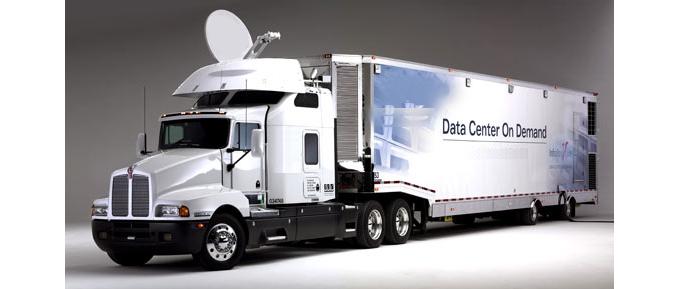
The Concept of Mobile Data Centers


Data Center (DC) is becoming one of the main points of the efforts to increase energy efficiency in IT and telecommunications. “Green” technology increases the cooling efficiency, reduce losses and allow the use of alternative energy sources. In turn, this leads to a rapid replacement of traditional technologies in the data center to new, with improved energy efficiency, as well as the development of new product niches, such as container, or as they are called mobile or modular data centers (MDC). The fact that the dimensions of mobile containers should allow their transport by road and rail. In addition, they must be strong enough to withstand the loading and unloading and delivery in a complete state. There must be a constructive element for operation and maintenance (air, cable entry, the passes of sufficient width, etc.). These requirements can be satisfied through the use of standard shipping containers (20 and 40 feet).


Generally speaking, the concept of containerized data center is very attractive. After all, this solution provides organizations with limited resources, to increase their computing capacity without building a new data center. All tested and debugged the IT data center equipment can be placed, for example, a standard container of ISO, which can only be installed in the right place and connect to the cooling system (water), electrical power and communication channels. However, according to IDC, the market of container data centers is still small. However, the market is growing rapidly. A key feature of its data centers became the third generation modular approach. The concept of novelty under the name of IT PAC (IT Pre-Assembled Component) involves small independent mobile containers that are going off-site data center and can be connected together to form a holistic data center.

Read More>>

Monday, 5 July 2021

Indian Data Centers’ Expansion and Growth


Data Center Market in India

In recent years, the Data Center market in India has witnessed robust growth due to Advanced Technologies’ broad adoption for creating digitally intelligent enterprises. Every industry vertical is adopting and taking advantage of this technology for driving their growth and combat competitiveness. India is the second-fastest emerging digital economy with multiple new initiatives undertaken by Government Institutions, Banks, and Enterprises, which generate a huge volume of data. With such vast volumes of data being generated, the question of Data Security emerges too. Hence, as a result, the industry leaders have shifted their focus towards the state-of-the-art Data Center facilities in India for securely storing their data.

Demand for Data Localization and the emergence of indigenous Cloud & Data Center providers like ESDS has driven the growth of Data Centers in India. Additionally, migrating critical databases, applications, and other data along with the usage of virtualization technologies have increased the demand for Data Center Services in India.

India is the upcoming biggest Data Center market with multiple reasons contributing to it. With technological advancements taking place, setting up Data Centers becomes challenging due to distance, operations, security risks, and higher operating costs.

Read More>>

Wednesday, 14 November 2018

10 Reasons on Why Cloud Computing Makes Your Employees Efficient


Migrating to the cloud is a huge decision and therefore you need to weigh several pros and cons of before making any sort of changes in your infrastructure and the way of working. The ultimate goal of doing any new change in an organization is increasing ROI (Return On Investment); which also directly proportional to increasing the effectiveness and productivity of the employees. 


As per the surveys were done in the last decade, the organizations have voted in the favor of adopting cloud computing and said that they are benefited from this change. Employee productivity has increased in multiple ways like reducing downtime, increasing communication efficiency and collaboration.

Here are 10 reasons on why cloud computing makes your employees efficient –

· Reduction in Downtime

Seeing a downtime is a nightmare for the organizations and everyone wants an efficient service so that they hardly ever see this nightmare. Cloud service providers dedicate a special team to look after the smooth running of services for their clients. The technical support team ensures that the issues are responded at a faster rate. These steps help in reduction of the downtime and hence contributes in increasing employee productivity.

· Optimum Usage of In-House Resources

To enhance the efficiency of the company for an increased time, the cloud computing team makes sure that the team doesn’t get stressed due to the day-to-day tasks. Instead, the service provider sees to it that the team focuses on the new strategies and customer-specific problems. So, the organization utilizes the IT resources more efficiently and divides the tasks according to the team’s expertise.

· Enhancement in the Collaboration

The most known benefit of cloud computing is the ease of access. Employees are having the ease of accessibility by which they can fetch whatever they want from the cloud at anytime and anywhere. The feature of reaching out to the colleagues in real-time irrespective of location and time has given employees a liberty of work. Due to an increase in effective collaboration, companies have reported that productivity is increased by 400%! So, that is quite a big number!

· Adaption with the Market

The clients after shifting to the cloud, get the ability to use the latest tools and features. The feature of scalability, especially the vertical auto-scaling feature caused a big revolution in the cloud industry. This rise in flexibility gives organizations the power to serve to the heavy load requirements of clients on demand. Having the right and time-saving tools can make the employees more productive. 

· Integration with Current Systems

Generally, the major amount of cloud computing platforms easily integrates into different software applications. This seamless integration offers various benefits to the employees like switching between the tools instead of the manual passing of the information. Automatic switching between the tools consumes less time and is very likely to be error-free.

· Disaster Recovery and Prevention

There are situations where some sort of disaster can occur and wreak havoc on your organization. It may be due to online threats, malware or, ransomware attacks. The disaster recovery services provided by the cloud service providers can help you in dealing with such crisis situations. Due to virtualization, it is now possible to have multiple clones of your data easily available at the data centers.

· Increase in the use of own devices

Any internet-connected device has the potential to turn into a work machine depending on the load that device can take and the functions which need to be operated. Employees can now become more responsive on-the-go and hence this increases the productivity.

· Increased Competitiveness

After the research, many business owners say that they have gained a competitive position in the business race. Implementing cloud computing made them unable to capitalize the opportunities rapidly than other competitors. The technology gives organizations the power of speed and agility. Due to this power, the SMBs can easily come in the competition with bigger companies.

· Security Services Virtualized Too

With an increasing number of security breaches, ransomware attacks, and online frauds, there is even more necessity of a top-notch security service. Such attacks restrict the employees from getting access to data files, and the downtime can affect the productivity. Reputed cloud service providers have specialized security services which can prevent such threats, and even if they happen, they can make you recover quickly. Thus, this security-as-a-service also increases the productivity of your organization.

· Efficient Handling of Huge Chunks of Data

Due to cloud computing, handling the enormously increasing data is getting very smooth. Employees can sort, analyze, structure, design, and organize big data in a matter of minutes. Moreover, the data, statistics, and analytics can be easily shared and accessed across the organization, or even several branches of the organization swiftly in real-time. This makes decision-making super easy due to reducing the errors and repetitive efforts on the same tasks which lead to wastage of time.


All in all, cloud computing provides lots of ways which helps in increasing the productivity and efficiency of your organization and obviously in turn, of the employees.

About US:

For more information about importance of Cloud Computing, visit us at: Cloud Computing Providers AND Cloud Computing Platform

Friday, 5 October 2018

How Edge Computing Will Change Enterprise IT


As enterprises’ IT expectations are rising, new technologies are backing their needs by offering latest mechanics which are helping them fulfill their quests. There are multiple technologies in multiple fields which are being developed through R&D and are very much capable of solving modern issues related to IT. Gone are the days when we waited patiently for the webpages to load and respond to actions because internet in those days couldn’t connect faster or analyze requests as they do now due to one or the other reason.


Today we are firmly into the cloud computing era where we make use of personal services like Dropbox, Gmail and more which are able to provide us data from anywhere at any time. Businesses make use of cloud services to store and retrieve their data. This gives the owners the freedom to access their data from any location because of the connected network of servers/data centers. By now we have learned that cloud computing has been very profitable for organizations in terms of CAPEX. The investment is low as compared to traditional computing environment and the benefits are huge in a cloud environment too.

Research firm IDC estimates, “by 2019, 40% of IoT data will be stored, processed, analyzed, and acted upon close to or at the edge of the network.”

Edge Computing is one such emerging technology which is already playing an important role by enabling quick decision making by analyzing the data at the edge of the network. Edge computing basically tries to provide low latency by processing closer to the source of data collection. Internet of Things (IoT) devices are an important component of edge computing because analysis of data takes place within these connected devices which are far from a data center but are able to process data on the edge. This technology satisfies the local computing needs by processing data in micro data centers like an office or a facility instead of sending them directly to the main data center. Micro data center is at the center of edge computing needs. One can say this is an on premise technology which is diminished to match certain business models. It is important to make sure that IT infrastructure can operate on site, from within the largest spaces to small remote sites if we ever want to unleash the true benefits of edge computing. The challenging areas in remote locations can be connectivity and network connection but by bringing data locally on-site, latency can be eliminated.

The adoption of edge computing has been rapid since its introduction and its real-time benefits. There is a common misconception among people that edge computing is purely a technology for IoT embedded devices but that is definitely not true. Though edge computing is ideal for IoT, it offers great scope for departmental and traditional business applications. Wherever the data sources are, the edge computing layer will be operating close to it. There will be units which will be configured for particular functions which will be their primary job in a device. Each unit in the edge computing will have its own compute, storage and networking. These devices will handle network switching, routing, load balancing and security. The entire network of these devices becomes a centralized point for data processing from multiple sources. The data points will be analyzed by event processing engines which will decide the path where the data will be streamed. The data may be processed on edge or can be sent to a data center nearby based on pre-defined rules for further analysis. There are two types of data which are ‘Hot Data’ and ‘Cold Data’. Hot data will be analyzed instantly to take quick decisions and in case of Cold data, the data will be stored and analyzed later which supports analytics based on historical trends.


One of the most important features revolving around the term edge computing is the speed and agility it offers is so great that in future the data which is stored will be acted upon the edge of network instead of transferring it to data centers for further analysis.

Conclusion

These days’ organizations are adopting the best practices for their business so that they can stay ahead of their competition. As technology evolves it brings new opportunities for the world so that we can adapt to the changing ways and improve our current state. Even if edge computing is relatively a new term, it has opened up great scope for organizations to implement this technology and make use of faster and accurate data processing and transferring through a cluster of edge computing network. Decision making, lower costs, faster data processing, analytical trends are some of the many benefits edge computing offers. It is time for enterprises to take the next logical step towards upgradation of their business processes.

About US:

As technology evolves it brings new opportunities for the world so that we can adapt to the changing ways and improve our current state. For more information, visit us at: cloud computing