Showing posts with label Cloud Service Provider. Show all posts

Thursday, 27 February 2025

How to Select the Best Cloud Service Provider for Your Organization in 2025


In today’s digital-first world, cloud computing has become the backbone of modern businesses. By 2025, the global cloud computing market is projected to reach $832.1 billion, growing at a CAGR of 17.5% from 2023 to 2030. With such rapid growth, selecting the right cloud service provider for your organization is more critical than ever.

This guide will explain the key factors to consider when choosing a CSP and why ESDS is the best cloud service provider for your business needs.

Key Factors to Consider When Selecting a Cloud Service Provider in 2025


Here are the key factors that need to be considered while selecting the best cloud service provider based on your business requirements: -

1. Security and Compliance

Data security is a top priority for businesses moving to the cloud. Ensure your CSP offers robust security features like encryption, multi-factor authentication, and regular security audits.

ESDS has the eNlight Cloud, which provides advanced security features and compliance certifications, ensuring your data is always protected.

2. Scalability and Flexibility

Your organization’s needs will evolve, so your CSP must offer scalable solutions. Look for providers that allow you to upgrade or downgrade resources quickly based on demand.

ESDS offers scalability with its auto-scalable cloud infrastructure, enabling businesses to handle traffic seamlessly without manual intervention.

3. Performance and Reliability

Downtime can cost businesses millions. According to Gartner, the average cost of IT downtime is $5,600 per minute.

ESDS provides 99.99% uptime and a disaster recovery-as-a-service (DRaaS) solution, business continuity.

4. Cost-Effectiveness

Cloud services should align with your budget without compromising on quality. Look for transparent pricing models and avoid hidden costs.

ESDS offers a pay-as-you-go pricing model, allowing businesses to optimize costs and pay only for the resources they use.

5. Customer Support

Reliable customer support is crucial for resolving issues quickly. Ensure your CSP offers 24/7 support through multiple channels like phone, email, and live chat.

ESDS provides 24/7 customer support with a dedicated team of cloud experts, ensuring your business operations run smoothly.

6. Innovation and Future-Readiness

The cloud landscape is constantly evolving. Your CSP should offer cutting-edge technologies like AI, machine learning, and IoT integration to keep your business ahead of the curve.

7. Global Reach and Data Centers

If your organization operates globally, choose a CSP with a vast network of data centers to ensure low latency and fast data access.

ESDS has a robust network of data centers across India and globally, providing businesses with low-latency, high-performance cloud services.

Why ESDS is the Best Cloud Service Provider for Your Organization


ESDS has always provided excellent service to its customers through its exceptional service. Below are key solutions that ESDS has focused on to satisfy customers through cloud solutions.

1. Comprehensive Cloud Solutions

ESDS offers a wide range of cloud services, including public cloud, private cloud, hybrid cloud, and multi-cloud solutions, catering to businesses of all sizes and industries.

2. Cutting-Edge Technology

With its eNlight Cloud Platform, ESDS provides auto-scaling, load balancing, and real-time resource optimization, ensuring your business operates efficiently.

3. Unmatched Security

Sometimes, for every organization, website security is a nightmare. Here, the VTMScan technology offers real-time threat detection and mitigation, making it one of the most secure cloud providers in the market.

4. Sustainability

ESDS is committed to sustainability, with energy-efficient data centers that reduce your organization’s carbon footprint.

5. Proven Track Record

With over a decade of experience, ESDS has several customers across various industries, earning a reputation for reliability and excellence.

Conclusion

Choosing the best cloud service provider for your organization is always a big challenge, and the most important factors are security, scalability, performance, and cost optimization. ESDS has always stood out as a great leader in the cloud industry, offering innovative, secure, and cost-effective solutions to meet your business needs.

Want to take your business to the next level without any interruptions? Contact ESDS today and experience the future of cloud computing.

Visit us: https://www.esds.co.in/cloud-services

For more information, contact Team ESDS through:

🖂 Email: getintouch@esds.co.in; ✆ Toll-Free: 1800-209-3006; Website: https://www.esds.co.in/

Tuesday, 21 May 2024

How Cloud Services Drive Digital Transformation

Today's businesses are always looking for ways to innovate and stay ahead. And when it comes to innovation, cloud services are like a secret weapon. If you're a Chief Technology Officer (CTO) or an IT Head, you're the captain steering your ship toward success. Understanding how cloud services can supercharge your digital transformation efforts is key to making it happen.


So, What Exactly Are Cloud Services?

Think of cloud services as a toolbox filled with everything you need for computing, all delivered over the internet. You've got storage, servers, databases, networking tools, software, and more. Instead of shelling out for expensive hardware and maintenance, businesses can tap into these cloud services from trusted providers, scaling their operations as needed without breaking the bank.

Finding Your Fit: Public, Private, Hybrid, or Community Cloud?

Cloud services aren't one-size-fits-all. Every organization has its own needs and preferences. That's where understanding the differences between public, private, hybrid, and community clouds comes in handy.

Public Cloud: This is like renting space on the internet from big players like. It's great for businesses needing quick scalability and flexibility without the headache of managing their own servers.

Private Cloud: Here, you've got your own dedicated cloud environment, either on-premises or managed by a third party. It's all about control and security, perfect for businesses with sensitive data or strict compliance needs.

Hybrid Cloud: Why choose between public and private when you can have both? Hybrid clouds blend the best of both worlds, letting you mix and match to meet your needs. They're ideal for businesses juggling different workloads and priorities.

Community Cloud: Picture a shared clubhouse in the digital realm, catering to a specific group's needs, like healthcare or finance. These clouds offer the benefits of both public and private setups, promoting collaboration and cost-sharing among like-minded folks.

Picking the Perfect Cloud Model:

When it's decision time, think about things like data sensitivity, performance demands, and budget constraints. Whether you go public, private, hybrid, or community depends on what makes sense for your goals and limitations. Work closely with your IT crew and chosen cloud provider to find your sweet spot.

Why Cloud Services Are Your Digital Transformation Wingman

Digital transformation isn't just about getting new toys; it's about shaking up how you do business and making things better for customers and your bottom line. Cloud services are at the heart of this revolution, letting you:

1. Scale Up and Down: No more sweating over outdated servers. With cloud services, you can adjust your resources on the fly, keeping things humming without overspending.

2. Get Creative: Cloud platforms are playgrounds for innovation. Dive into tech like AI, ML, and IoT to uncover fresh growth opportunities.

3. Team up Anywhere: Cloud-based tools make teamwork a breeze, whether your crew is down the hall or across the globe. Stay agile and ready to tackle whatever comes your way.

4. Keep Things Locked Down: Trustworthy cloud providers have your back when it comes to security and compliance. Sleep easy, knowing your data is safe and sound.

Finding Your Cloud Services 

Choosing the right cloud provider is like picking a partner for your digital adventure. Look for:

1. Reliability and Performance: Make sure your provider can keep up with your needs, offering top-notch support and uptime.

2. Flexibility: Your provider should be able to grow with you, adapting to your changing demands without a fuss.

3. Security First: Take your time with safety. Your cloud partner should have solid security measures and follow all the rules.

4. Budget-Friendly Options: Transparency is key. Look for providers with clear pricing and no surprise fees.

5. Innovation and Support: Choose a provider who is always pushing the envelope and ready to help when you need it most.

In Closing:

Embracing cloud services is not just a choice; it's a strategic move toward propelling your business into the future of digital transformation. Regardless of your role, understanding the power of cloud services is paramount.

Cloud services offer an abundance of benefits, from scalability and flexibility to security and innovation. By leveraging cloud platforms, businesses can scale their operations seamlessly, tap into cutting-edge technologies like AI and IoT, foster collaboration among teams regardless of geographical barriers, and ensure the utmost security and compliance standards are met.

When it comes to choosing the right cloud model and provider, it's essential to assess your organization's specific needs and goals. Whether you opt for a public, private, hybrid, or community cloud, finding a reliable partner like ESDS Cloud Services is crucial.

ESDS Cloud Services ticks all the boxes, offering reliability, performance, flexibility, security, and innovation. With ESDS, businesses can rest assured that they have a partner committed to supporting their digital transformation journey every step of the way. So, take the leap into the cloud and let ESDS Cloud Services be your trusted partner in driving digital transformation and achieving unprecedented success.

Visit us: https://www.esds.co.in/cloud-services

For more information, contact Team ESDS through-
Email: getintouch@esds.co.in | Toll-Free: 1800 209 3006 | Website: 
https://www.esds.co.in/

Thursday, 5 May 2022

Hybrid-cloud & Multi-cloud – Differences & Similarities

 
Hybrid-cloud & Multi-cloud

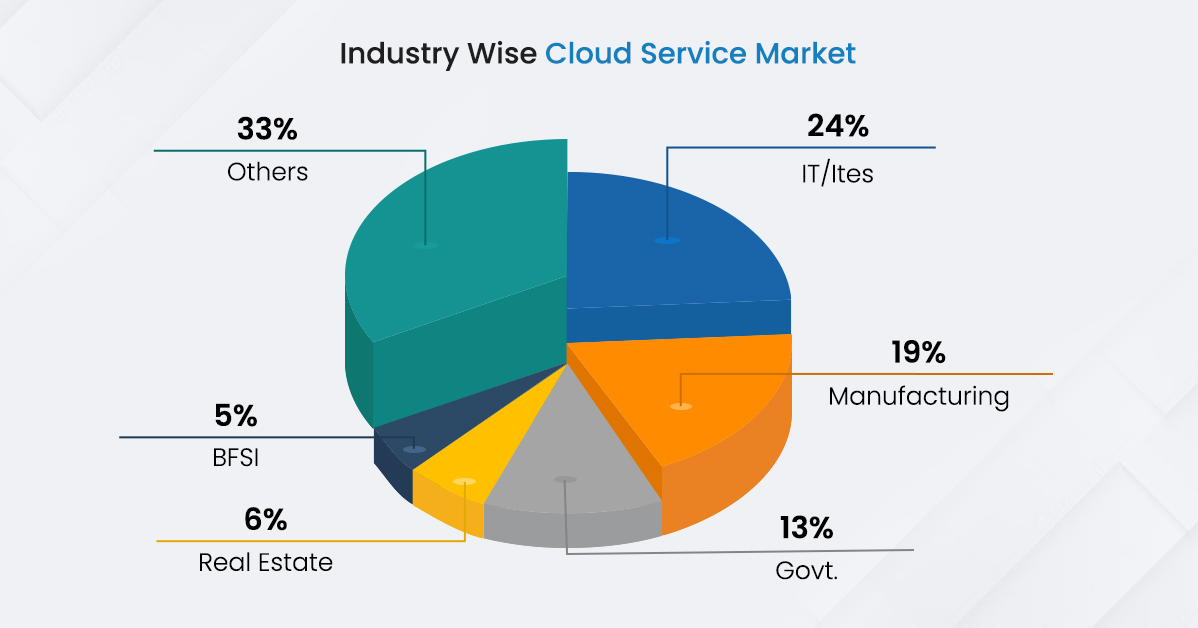
According to sources, small and medium businesses benefit the most from cloud services, as they spend 36% less money on IT. Cloud-based solutions/services are used widely in all the business sectors. Manufacturing, BFSI, government, and various enterprises use cloud solutions for automating the manual work process and ease of work.

Cloud-based solutions

Cloud solutions have helped various businesses to grow regardless of the business size, infrastructure, and finance. Cloud is not just the future, but it is the present! Choosing cloud solutions is your only choice. Basically, cloud computing is a collection of servers whose resources are accessible to you through the Internet. To access the cloud services/resources, you need a cloud service provider who offers you services according to the requirement of your business.

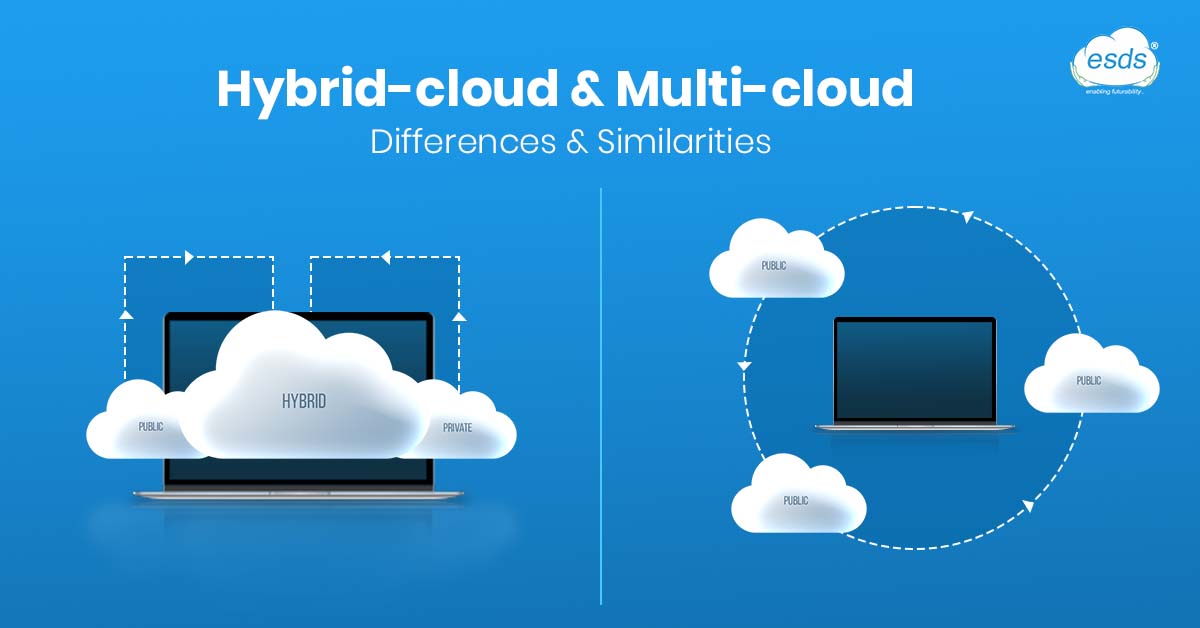
Hybrid clouds and multi-clouds are the two most popular types of cloud computing.

Find out what multi-cloud and hybrid cloud are and how they can help you!

What is Multi-Cloud?

Multi-cloud refers to the use of multiple public clouds. Multi-cloud deployment is when a company uses various public clouds from different cloud service providers. For cloud hosting, storage, and the entire application stack, a company uses services from multiple service providers.

Multi-cloud deployments have a variety of applications. Multiple IaaS (Infrastructure-as-a-Service) providers can be used in a multi-cloud deployment, or a single vendor can provide IaaS, PaaS (Platform-as-a-Service), and SaaS (Software-as-a-Service) services. Multi-cloud can be used solely for redundancy and system backup, or it might include many cloud vendors for various services.

Read More>>

Thursday, 27 January 2022

Benefits & Future Scope of Cloud Computing In Manufacturing Industry

The arrival and wide acceptance of advanced technologies like AI, ML, Big Data, Blockchain, and more have made cloud computing a pivotal force in the digital transformation of various industries. Within a short period, cloud computing has become a priority of most organizations. The pandemic has further raised the demand because organizations of all sizes started adopting cultures like work from home, remote management, and more.

But, the phenomenon of cloud computing is not that new for sectors like IT, Finance, and e-commerce as they have been using cloud-based products for a long time and are benefiting from it now. Amidst all this transformation, there still are sectors like the manufacturing industry that are coping with the scenario and have a long way to go to utilize the full potential of cloud computing and with the pandemic not showing any signs of immediate halt, no industry would want to get hampered again with any possibility of lockdowns.

Benefits & Future Scope of Cloud Computing In Manufacturing Industry

In that case, the coming year can be crucial to get that required business boost and achieve the set business milestones. As far as the stats are considered, according to a report by Nasscom, enterprises’ spending on cloud computing is expected to rise to $7 Bn by 2022. Another report by Market research future states that the manufacturing sector is forecasted to attain $111.9 Bn worth of cloud computing investment by 2024. These stats are evident enough to signify the increasing demand and speedy adoption of cloud computing-related services in the manufacturing sector. Apart from this, the FDI inflows in India in the previous decade make it clear that the demand from the manufacturing and the IT sector in the country is further going to rise, hence the sector needs to be future-ready in that sense.

Benefits & Future Scope of Cloud Computing In Manufacturing Industry 2

The road ahead of cloud computing in the manufacturing sector

Talking about the manufacturing sector, the key always has been to fulfill speedy delivery of larger orders & requirements all being affordable and flexible at the same time. These needs of the industry can be fulfilled by cloud computing, as for the sector, connectivity of all different elements of every section, right from procurement to production and later to storage, is a key requirement. In that case, manufacturers can utilize various cloud services to streamline everything and stay connected with the end consumers at the same time. Yes, there is a significant rise in the number of manufacturers using a combination of public and private clouds, and the demand is on the rise. Then for those looking out for or planning to incorporate cloud computing in their business flow, they couldn’t have asked for a better time than now, and staying back will result in missing out on targets a big time.

Read More>>

Sunday, 19 December 2021

How Security Operations Center (SOC) Services Strengthen Cybersecurity with Mass Migration To Cloud Computing?

The onset of Cloud Computing in the technological scheme of things made the phenomenon of Mass Migration of web-based apps, services, and ecosystems in general a thing to look forward to. With the increase in the number of cloud service providers, this migration became more evident for organizations and enterprises.

Security Operations Center (SOC) Services

The USPs being affordability and accessibility it definitely was and is still changing the priorities for digital ecosystem provisions. For time being though there were several questions raised regarding its functionality and especially its security. Let us try and understand all its aspects before arriving at a conclusion and see if cloud computing is fit for your organization or not.

Mass Migration to Cloud Computing and Storage

Cloud Computing did go through an initial phase of suspicion from organizations and individuals alike. Time though has had its positive say with the significant increase in the number of adoptions, as mentioned in an article titled “The 2021 State of Cloud Adoption”, which states that out of the mid-sized to large-sized enterprises 52% of the software applications being developed are cloud-based.

Mass Migration to Cloud Computing and Storage

This significant rise has majorly been due to the increasing demand for digital ecosystems by various industries post-pandemic. In that reference, the priority to cloud computing was certain due to its ease of administration as the back-end of cloud, like maintenance and setup is taken care of by the cloud computing providers. Another main reason for Migration is to get connected from any place at any time making it affordable and accessible further enhancing the rate of adoption of cloud computing-based services.

Read More>>

Tuesday, 11 August 2020

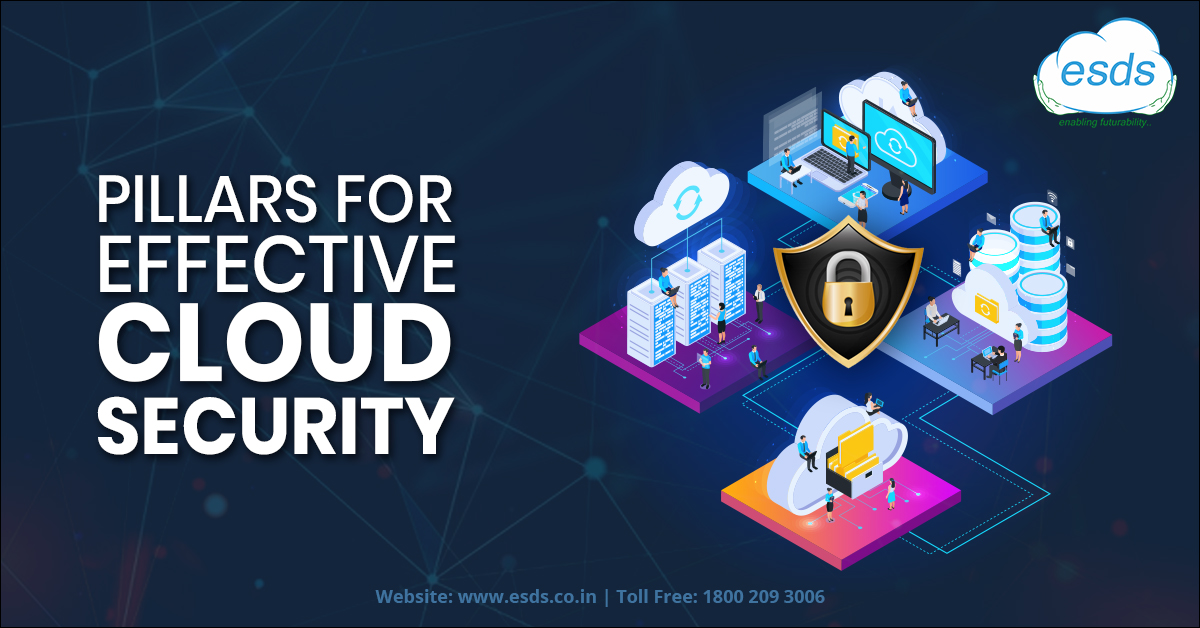
PILLARS FOR EFFECTIVE CLOUD SECURITY

 Businesses today operate a massive volume of sensitive data and also perform various operations with this data. Data breaches are getting too familiar in today’s time. A successful operation in the cloud demands for diversified mechanisms and procedures compared to an on-premise cloud computing solution. An online analysis done by the Gartner states that- by 2020, 80% of the cloud breaches will be caused due to customer misconfigurations, wrongly-managed credentials, or even insider thefts. However, cloud breaches will not be a result of the cloud provider’s vulnerabilities.

 Operating in a secured cloud-based solution demands for different mechanisms and ways as compared to an on-premise deployment. An on-premise cloud solution, however, will not work effectively in the cloud. Also, the cloud-based infrastructures house several security services that are to be included.

Cloud Security Pillars

A successfully performed migration to any cloud security framework is dependent on the pillars that follow a sequential cycle. In this sequential cycle, every pillar is dependent on the pillar, just preceding it. Any business organization that follows this methodology is successfully able to create a framework that can support cloud strategies as well as optimize the complete security of the cloud. 

Read More>>


Wednesday, 24 October 2018

Debunking the Top 4 Myths about Public Cloud Security


Lots of businesses are moving towards cloud but still, they are pretty confused on which cloud to choose. Where most of the small and medium-sized businesses prefer public clouds but, they still have a fear in mind about the privacy, security, and costs as it is a public cloud. A lot of confusion still lingers around about the data security when people choose cloud computing. Public clouds are the recommended solutions to the businesses for cutting down the IT costs and improve the scalability and flexibility. 


Security and control are two different and this difference is seen between the data security of cloud computing and data center. A company gets several benefits from cloud computing. Due to the public cloud, the companies can have quick provisioning, deployment, and IT resource scaling at much lower costs. A user can enter new markets easily and lessen the development time and wastage.

Actually, a public cloud can serve similar or better purposes than that of the traditional platforms like on premise. Even though there are several benefits, some myths still exist. We are here to debunk some of the myths about the public cloud so that the enterprises won’t get confused.

So, here are the top four myths about the security of the public cloud:

•        You can’t control your data location/residency
•        Customers on the same server are a threat to each other
•        There is a lack of inherent transparency in the public cloud
•        CSP (Cloud Service Provider) is only responsible for the security

You can’t control your data location/residency

Data residency/location is one of the prime concerns and therefore several countries have various laws which consider exporting of personal data in other countries as a criminal offense. Data residency is more of a concern when handling the personality identification data like financial information of any kind or health-related private information. In these cases, the cloud service provider should choose the locations from which it runs its data centers. The resellers that need to provide cloud services to their customers shall at least choose the service providers that can handle the location wise needs. So, it clarifies that this issue is not a matter to stress on. You can choose a quality cloud-service provider that can provide data residency as per your choice with accountability of data.


Customers on the same server are a threat to each other

This one is a constant myth about the multi-tenant cloud infrastructure that it is more vulnerable to attacks than that of the traditional IT infrastructure. Basically, in a public cloud, the tenants share all kinds of resources like storage, compute, and network. The sharing of all these physical resources arises the security concerns in the minds of the cloud tenants. They think that they are more vulnerable to attacks by the tenants of the same cloud. But, in actuality, it is very difficult for any tenant to attack the other tenant in the in the public cloud environment. The layer of hypervisor is primarily responsible for the separation between every tenant. If you don’t know then understand that hypervisors are very secure and therefore they are critical to attack. In addition, there are some cloud providers which provides more options to diminish the multi-tenancy risks at a greater extent. If you want to subscribe to a cloud service provider and get their offerings, then you should fully understand your requirements.

There is a lack of inherent transparency in the public cloud

Lack of transparency is liked by no one in any business as customers seek transparency everywhere. If there is visibility in any business, then it gets easier for the customers to trust you. Mistrust is the main reason that consumers back out from the cloud services because to build trust you should provide transparency and security. We can evaluate the cloud service provider by checking whether it has certain security compliances certifications or not. Further, you can validate if the service provider abides by the Could Trust Protocol or not. Through this protocol, the customers get the right information and it mentions that the data on the cloud is as it is and as per the rules mentioned. This protocol helps the customers by seeing the original information.

The companies can make correct choices about the data and processes. Which kind of data should go on which cloud and how to sustain the risk management decisions regarding the cloud services are the points which the company can work on confidently. Therefore, the visibility improves and the transparency gets affordable. Even though not every cloud provider will emphasize this and spend bucks over the maintaining 100% transparency, so every user can’t strictly demand this feature. Though, there will always be some kind of transparency maintained.

CSP (Cloud Service Provider) is only responsible for the security

Public cloud has an upper hand because the organizations can afford the resources like compute, space, RAM and several other features. Everyone can’t afford a personal server and hence the public cloud comes to the rescue.

The point is very easy, you don’t have to create everything from scratch as someone has already built it for you. It is not necessary for you to buy an individual server, or build a data center for that matter; unless that’s the only thing you have planned for your IT infrastructure.

No matter what, it is still your data and applications and therefore, you are responsible for it. It is your duty to select a perfect cloud vendor that caters your needs and seriously takes care of the security, disaster prevention, and post-disaster recovery. You should not just take a casual or mild approach while choosing the service provider and then the package which the provider offers. Things won’t work like that. Even if the vendor knows how to take care of the security part, you should also be knowledgeable enough to understand the risks, and make decisions.

Conclusion

Anyhow, the fact is that the public cloud provides more security than a conventional data center. Nowadays, cloud service providers are providing various levels of security by having some great tools and scanners. All of this is because the increasing number of threats and therefore growing cyber threats have forced them to become more attentive for preventing the attacks.