Monday, 20 December 2021

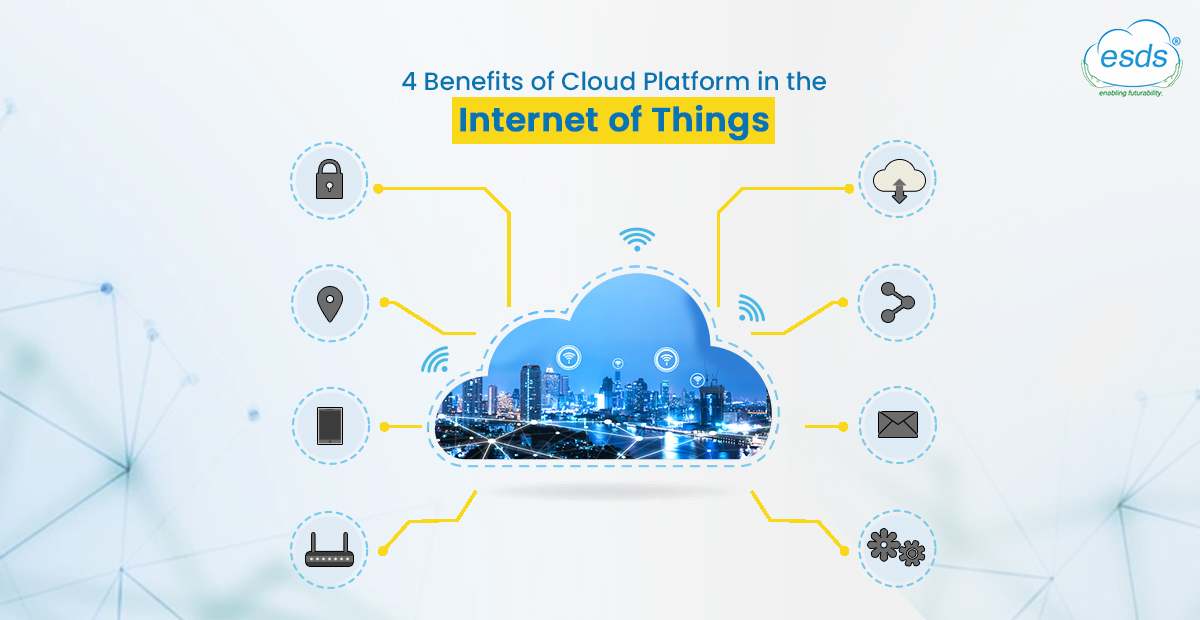
4 Benefits of Cloud Platform in the Internet of Things

What if I tell you the Internet of Things (IoT) alone does not offer many benefits? Yes, that is true to some extent. IoT is a network of billions of physical devices having processing ability, and are embedded with sensors and software. These devices collect and share a massive amount of data per second over the internet. This raw data when analyzed interprets meaningful information useful for smart decision making.
Benefits of Cloud Platform


As per IDC, by 2025 there will be 41.6 billion connected IoT devices that will generate 79.4 zettabytes (ZB) of data. Storing, processing, and managing the flow of such a vast amount of data is a complex task for businesses. In such a case, the Cloud platform acts as a catalyst by providing storage space and cloud computing allows the analysis, processing, and managing of the data enabling IoT systems to work more efficiently.

4 Benefits of Cloud Platform

4 Major Benefits of Cloud Platform in the Internet of Things
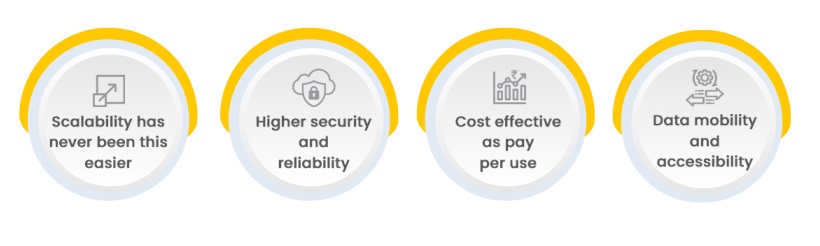
4 Major Benefits of Cloud Platform in the Internet of Things

Cloud platforms and cloud computing can bring ease to your business operations and drive its growth.  Here are 4 major benefits when you switch to a cloud platform:

Read More>>

Sunday, 19 December 2021

How Security Operations Center (SOC) Services Strengthen Cybersecurity with Mass Migration To Cloud Computing?

The onset of Cloud Computing in the technological scheme of things made the phenomenon of Mass Migration of web-based apps, services, and ecosystems in general a thing to look forward to. With the increase in the number of cloud service providers, this migration became more evident for organizations and enterprises.

Security Operations Center (SOC) Services

The USPs being affordability and accessibility it definitely was and is still changing the priorities for digital ecosystem provisions. For time being though there were several questions raised regarding its functionality and especially its security. Let us try and understand all its aspects before arriving at a conclusion and see if cloud computing is fit for your organization or not.

Mass Migration to Cloud Computing and Storage

Cloud Computing did go through an initial phase of suspicion from organizations and individuals alike. Time though has had its positive say with the significant increase in the number of adoptions, as mentioned in an article titled “The 2021 State of Cloud Adoption”, which states that out of the mid-sized to large-sized enterprises 52% of the software applications being developed are cloud-based.

Mass Migration to Cloud Computing and Storage

This significant rise has majorly been due to the increasing demand for digital ecosystems by various industries post-pandemic. In that reference, the priority to cloud computing was certain due to its ease of administration as the back-end of cloud, like maintenance and setup is taken care of by the cloud computing providers. Another main reason for Migration is to get connected from any place at any time making it affordable and accessible further enhancing the rate of adoption of cloud computing-based services.

Read More>>

Wednesday, 15 December 2021

Email Migration – Understanding the Importance and Process


Serving as an advanced mode of communication for businesses across the globe, no doubt Emails play a significant role in the professional industry. Keeping a track record of all the conversations related to a professional or personal matter. Emails have become a simple and easy way to communicate with customers or any other business conversation. In this digitized era, emails carry crucial data and information. Said that, when these emails store such vast data of information from day-to-day conversations to financial data or sensitive documents/information, these emails need to be protected and secured.

Email Migration

As we move deeper into the digital transformation age, emails are even more prone to cyber risks. The CIOs, CTO’s and other professionals ensure to opt for a secure and stable backup and recovery partner for their business. While backup and recovery are essential businesses also need a safer and long-term email service provider. As these emails hold crucial business data companies need a reliable email service, where their data is smoothly transferred and stored safely for their daily activities.

Need of Email Migration

Need of Email Migration

Organizations explore different email service providers when they feel that the existing one is not able to keep up with the growing business demands. While there are several other reasons for a company to upgrade or change to another email service provider, reliability is truly an important feature. Back a decade ago on-premise email servers were considered fundamental by IT firms, today it is completely different. Companies go for a cost-effective and smarter way to utilize email services. A cloud-based platform is one of the options that are also available in the market. 

Read More>>

Monday, 13 December 2021

Disaster Recovery Using Cloud: Working, Planning and Benefits


What is the main asset for a business in today’s time? Definitely the Data. Data is the currency of today. Data is moving businesses and is at the core of business success. Hence, saving the most crucial, money-making asset of your business is the top-most business priority across all industries. Given its significance to business success, the importance of disaster recovery cannot be overstated in this data-driven world. Regardless of the business domain, when an unanticipated event occurs bringing operations to a halt, businesses need all the plans in place to quickly resort to their operations and continue their services.

What is Disaster Recovery and IT Disaster Recovery Plan?

Disaster recovery is a method of restoring the data and recovering infrastructure, systems, applications, networks, power, and connectivity after a disaster has happened. IT Disaster Recovery plan is a document containing a set of policies and procedures to enable the organization to retrieve access to its hardware, applications, and data, and resume its operations post a disaster. A business can be impacted by various disasters, from man-made such as cyber-attacks, device failure, or human error to a natural event such as an earthquake or flood. Considering all these parameters, an IT Disaster Recovery plan is designed to reduce system downtime, financial loss and keep the customer’s trust.

There are different ways disaster recovery plans can be put in a place. However, with a massive amount of data generated by businesses, a cloud-based DR solution provides the optimum benefits. Want to know why you need to make a move from traditional disaster recovery to the cloud-based DR solution? Read Cloud-based DR or Traditional DR – Which is the best Disaster Recovery Plan for you?

Read More>>

Sunday, 5 December 2021

What is Cloud Computing? All You Need to Know

As we gear up for the year 2022, we are undeniably living in a Digital World. When we talk about a Digital World, we are talking about Cloud-based solutions dominating this era. The Cloud is nothing but a platform that hosts a plethora of computing resources over the internet. These services are easy-to-use and on-demand facilities that can be used on a pay-as-you-go basis. The Clouds are virtualized Data Centers, compact with computing and storage resources.
What is Cloud Computing

In present times, Cloud-based solutions dominate the digital world by helping various businesses with advantages like enhanced productivity, low equipment costs, traffic cost reduction, data security, unlimited storage capacity, automatic software updates, and integration, as well as enhanced productivity. It is provable to say Cloud-based applications have simplified lives and businesses to a great extent.

Significant Features of Cloud-Based Applications

  • Clientele can access information stored in the cloud on any device, anytime, and from anywhere.
  • App’s data is positioned in cloud infrastructure and could be partly stored on a user’s device.
  • The requirements for devices to run the applications are minimum.
  • Encryption, Optimization, and Compression of data, as well as backup schedules, can be set up by the user. 
  • Placid technical support to manage and support Cloud apps, infrastructure, and architecture
  • When offline, the information stored on a user’s device can be accessed. When online again, the app updates and uploads the data that was generated offline to the location of the cloud storage.

Read More>>

Wednesday, 1 December 2021

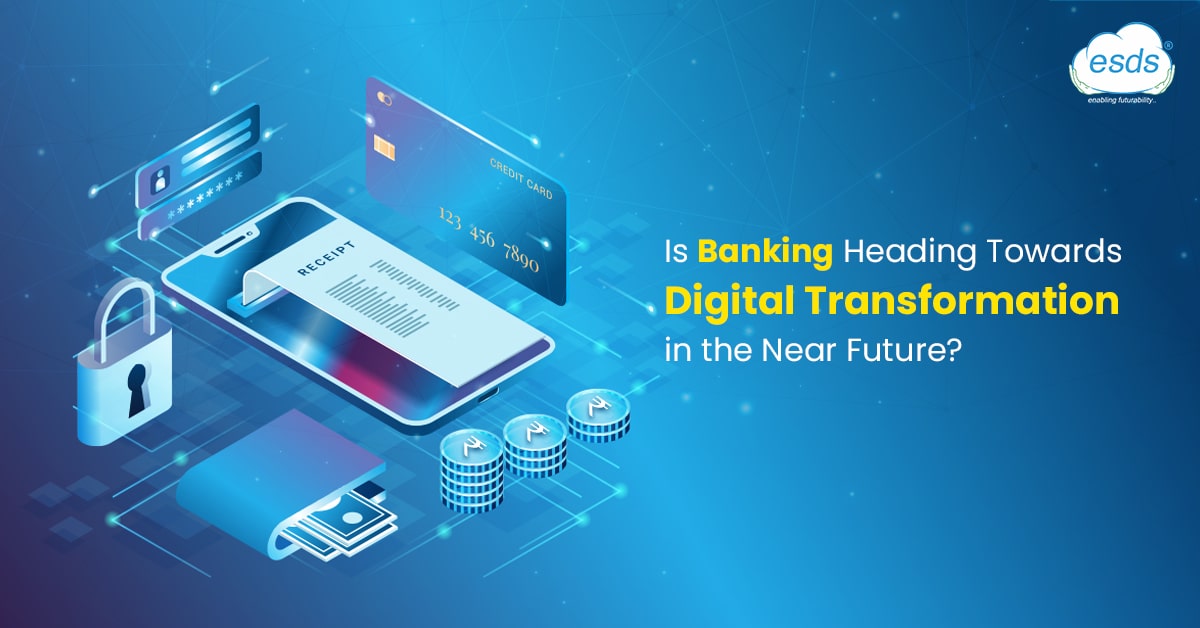
Is Banking Heading Towards Digital Transformation in the Near Future?

Digital Banking is no more a talk of the future, and we all have witnessed the transformation of the Indian banking system. There was a time when visits to the banks were an essential part of our weekly schedules but it has almost become a phenomenon of the bygone era now. With most banking services available literally at our fingertips, digital banking has now become an inseparable part of our lifestyle. As just within the last decade the technological advancements like cloud computing in BFSI and many others, have brought about impeccable changes in the banking sector. From cards to digital payments, the digitization of the core banking services and not to forget the ground-breaking UPI payments mode, have become clearly synonymous with day-to-day business in the banking sector.
Banking Heading Towards Digital Transformation

Looking towards the future prospect of the sector what we need to consider first is the present status of the daily operations in the banking sector.

The Present Status of Digital Banking in India

Digital Banking in India

Talking about Digitization in the present day in Banking System, yes the sector has come a long way ahead of both in terms of the Core Banking System and various other administrative services in the daily business of the banking and finance organizations. Especially with the updates in the cloud banking solutions in India, banking administration has simplified and most importantly has brought about a remarkable change which has made the ease of doing banking business a thing of the present. Otherwise, who would have thought of real-time payments, easy or same-day loan procedures, or even a completely paperless Core Banking System? All becoming a common phenomenon in today’s banking system. Not just words but even numbers prove it with statistics from Statista about the “Total number of digital payments across India from the financial year 2018 to 2021” which clearly proves the exponential growth of digital payments in India, i.e. from USD 14.59Bn in FY 2018 to USD 43.71Bn in FY 2021.

Read More>>

Thursday, 25 November 2021

Wednesday, 24 November 2021

Networking Defined By Software: Seven Ways to Implement Them

 Networking Defined By Software


In few IT groups, Software Defined Networking (SDN) is still viewed as a hypothetical idea or vaporware to a great extent. Even though SDN  is valid multiple fields, the truth is that we now have few circumstances where SDN can be utilised – and you will be able to see several cases in the coming years. What was previously just another buzzword expressed by IT marketing experts, has now transformed into a practical idea which most of us can make use in organization networks.

Who can precisely derive the benefits from SDN deployments today? There are many factors playing an important role in answering this question. For one, a small portion of your network architecture must be fit for utilising software-defined technologies or can be redesigned to permit such centralised orchestration.

The widest areas where SDN can be applied today is either inside the datacenter or at the WAN control. While it’s feasible for SDN to loosen up completely to the access layer, few networks have suitable hardware in access closets. In any case, that shouldn’t prevent us from considering practical uses. What’s more is once your next network recharge comes around, you will be prepared to take benefits of SDN capacities that are arid.

Read More>>

Monday, 22 November 2021

Data Privacy or Data Security: Which One is Important for You?

In recent years, organizations of all sizes have been impacted by data breaches & leaks, which have resulted in significant monetary & non-monetary damages. Business heads, CIOs, and CISOs and their data are always on the brink of a cyber attack since the number of cybercriminals has increased multi-folds. Such data breaches & leaks can cause a significant dent in a brand’s image, resulting in both monetary & non-monetary losses. Data protection and data security are important for safeguarding critical data against these forms of online attacks.
Data Privacy or Data Security

What is Cybersecurity?

Every day a lot of valuable information is uploaded & exchanged over the Internet, exposing their integrity & confidentiality. Cybersecurity includes all the protective measures deployed to secure the digital and web assets against all forms of online threats & human-induced errors. The web assets also need to be secured against privilege escalations and unauthorized users. This is when Information Security comes into the picture, depicting the practices of preventing all unauthorized access, modification, or destruction of information in any form.

Pillars of Information Security

The following pillars of Information Security are also known as the CIA Triad, which has to be addressed for obtaining satisfactory levels of information security.

Read More>>

5 Easy Hacks to prevent WannaCry Ransomware Attacks and keep your System Safe!


Ransomware Prevention Hacks!

Hackers are using ransomware to hold your computer files and demand money in return. It has been witnessed that the first quarter of 2016, hackers were busy creating new domains and sub domains attacking the genuine ones for their ransomware operations.

 
There are a variety of ransomware attacks; however, everything ends up to social engineering tactics or using software vulnerabilities to soundlessly deploy on victim’s machine.

Ransomware attacks are very daunting. Encrypted data can be considered damaged beyond repair. However, prevention is better than cure. Having your system properly prepared will help you in curbing such attacks. Here are some ways to keep ransomware away from your machine.

Data Backup

The only biggest weapon to defeat ransomware is to regularly Backup your data. If attacked by ransomware, you will lose all your data. But, with backups you can start from where you left and restore all the lost data and rest easy. Backing up data not only protects you from ransomware but also in case of other disasters like theft, accidental deletion, flood, fire etc.

Read More>>