Showing posts with label data center security. Show all posts

Thursday, 9 January 2025

Secure Your Data Center with a Comprehensive Security Framework in 2025

: 

Data center services are critical infrastructures that host vast amounts of sensitive data and provide business connectivity. Network devices tend to remain open but become the gateway to an attack. This is a risk analysis discussion about the insecurity of network devices, why it matters, and how to address it as an organization. Data centers face threats of many different natures, both to the integrity of security and operation.

Data centers face various threats that can compromise their security and operational integrity.

These threats can be categorized into three main areas:

1.     Physical Threats

Unauthorized access is a primary factor in an attacker's attempt to gain physical entry, leading to theft, vandalism, or sabotage. This risk can mostly happen due to insider threats from authorized personnel who may expose their access for malicious purposes. Natural disasters like floods and earthquakes can impact data center operations and threaten business continuity.

Cybersecurity Threats

Cyberattacks such as malware, phishing, and Distributed Denial-of-Service (DDoS) attacks are prevalent. Denial-of-service attacks are widespread because they aim to overwhelm servers and disrupt essential services.

3.   Operational Threats:  Power outages are among the most complex issues for data center security. Unplanned disruptions can result in downtime, especially if backup systems like uninterruptible power supplies (UPS) and generators fail to activate on time. 

Current Cyber Crime Landscape

The growth in data digitization has increased the rate of cyberattacks, especially on data centers and their network devices. Cyberattacks worldwide went up by 76% in the first quarter of 2024. It is alarming to note that in the same quarter, India registered a 261% increase in cyberattacks.


This means there must have been a massive advancement in cybersecurity measures safeguarding sensitive data and infrastructure. Healthcare is the most targeted sector, as reported by DSCI, with 22% of attacks. Other more vulnerable industries are hospitality, with 20%; banking and financial services, with 17%; education, with 16%; and micro, small, and medium enterprises, with 8%.

Geographical hotspots can be identified since specific regions of certain areas have faced particular cyber-attacks. Telangana and Tamil Nadu accounted for 15% and 12%, respectively. Bengaluru had around 12% of the detected threats. Surat and Jaipur, emerging commercial hubs, also had heavy attacks.

Data Center Security Risks in Network Devices

Network devices, including switches and routers, are vital in managing data traffic within a data center. Despite their importance, they often receive less scrutiny regarding cybersecurity than servers.

Key risks associated with these devices include: 

  • Software Vulnerabilities: Network devices can have vulnerabilities in their firmware, operating systems, or software-defined networking solutions that attackers can exploit.
  • Remote Management Risks: Tools used for remote management may also contain vulnerabilities that could be targeted.
  • Physical security threats: unauthorized physical access to network devices can lead to significant security breaches.
  • Weak Credentials: Many devices have publicly known default login credentials that attackers can easily exploit.

Why Securing Network Hardware Matters?

Network infrastructure security is critical because it often goes unnoticed compared to server security. While organizations may have robust measures in place for server hardening and monitoring, network infrastructure risks are frequently overlooked. Security monitoring tools may not effectively support network switches, leading to gaps in visibility and response capabilities. Moreover, patch management processes typically focus on server operating systems and applications, neglecting the software and firmware of network devices. This oversight can leave organizations vulnerable to attacks that exploit unpatched network hardware.

Defending Data Center Network Infrastructure Against Attacks

Organizations should extend their cybersecurity tools and procedures to cover network infrastructure to mitigate the risks of insecure network devices.

Here are some effective strategies:

  • Implement SIEM: Utilize security information and event management platforms capable of analyzing logs from servers and network switches to detect anomalies.
  • Regularly Update Firmware: Ensure all network devices are updated with the latest patches to address vulnerabilities.
  • Strengthen Access Controls: Use strong, unique credentials for all network devices and enforce policies for regular password changes.
  • Conduct Security Audits: Regularly audit network device configurations and access logs to identify potential security issues.

As cyber threats evolve, securing network infrastructure will become increasingly essential. While servers remain primary targets for attackers, network hardware can also serve as a viable entry point into an organization's IT environment.

ESDS Data Center Security Solutions Against Cyber Threats

ESDS Software Solutions offers better cyber data center security solutions to help organizations protect their data from the increasing complexities of cyber threats. Their approach is comprehensive and covers:

Ø  Intrusion Detection Systems (IDS): These intrusion detection systems are always active and perform real-time analysis of system and network activities to identify suspicious or illegal activities. They use signature-based detection, anomaly detection, and investigative analysis to identify threats like malware and DDoS.

Ø  Advanced Firewalls: It has implemented efficient firewalls that regulate incoming and outgoing traffic based on security policies that have been set.

Ø  Encryption Protocols: The data encryption is done in motion and at rest to protect the information from getting into the wrong hands when in transit or at rest.

Ø  Access Controls: Strict identity and access management measures prevent unwanted persons from entering the data center. 

Conclusion

Thus, ESDS integrates threat intelligence feeds, including IP addresses and file hashes of suspicious objects, to improve SOAR threat detection and response time and filter out malicious actors before they enter the networks

ESDS Thus, implementing other components of these organizations is an important part of developing and safeguarding data that is strong in the center of defense integrity, security mechanism privacy architecture, and the availability of numerous valuable cyber-risk information.

Contact ESDS today to secure your data against cyber threats.

Visit us: https://www.esds.co.in/our-datacenter

For more information, contact Team ESDS through:

🖂 Email: getintouch@esds.co.in; ✆ Toll-Free: 1800-209-3006; Website: https://www.esds.co.in/


Thursday, 12 January 2023

15 Latest trends in data center security 2023: Staying secure in the cloud

 Are you aware the average cost of a data breach in the cloud is $1.25 million? Isn’t that a considerable amount?

Latest Trends in Data Center Security

What would you better prefer? Waiting until it’s too late and spending on a data breach or instead on cloud data security?

Data insecurity shouldn’t be your downfall – protect it.

Data Center Security market

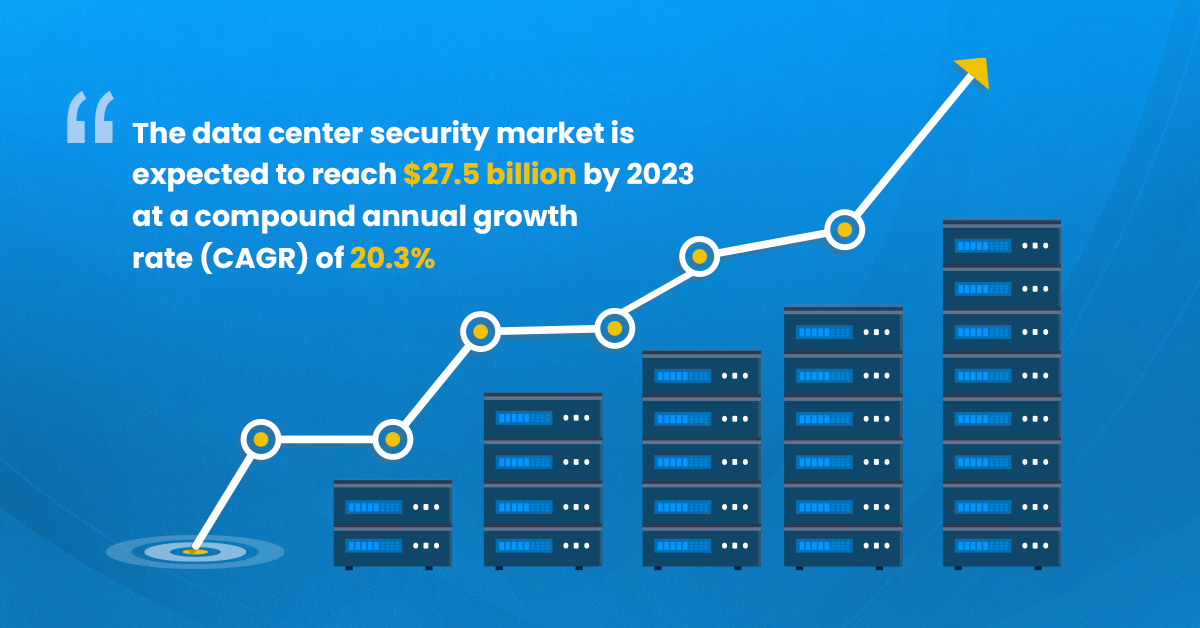
Talking about the Datacenter security market, the stats say, “The data center security market was valued at $11.1 billion in 2018 and is expected to reach $27.5 billion by 2023 at a compound annual growth rate (CAGR) of 20.3% during the forecast period.”

According to these projections, the data center security market is expanding rapidly and is anticipated to expand further in the forthcoming years. In addition, the increased usage of cloud computing and virtualization, as well as growing concern about data security and regulatory compliance, are projected to propel the data center security industry forward.

The data center security market is constantly evolving to keep pace with the changing threat landscape and the increasing adoption of cloud computing and virtualization.  Here are the 15 latest trends in the data center security market:

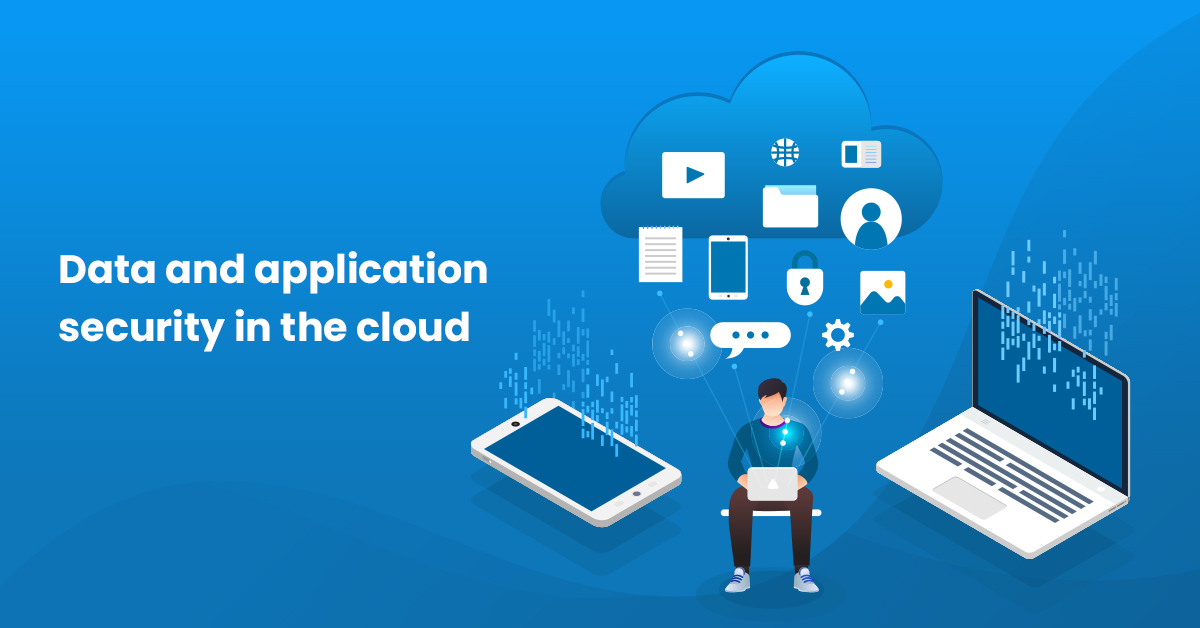
Data and application security in the cloud
  • Cloud security: With the increasing adoption of cloud computing, organizations are looking for ways to secure their data and applications in the cloud. This has led to the rise of cloud security solutions for cloud-based data centers. Cloud security is essential for any organization that uses cloud computing services to store, process, and manage data and applications.
  • Virtualization security: Virtualization security is securing virtualized environments, including virtual machines and the hypervisor, against cyber threats. Virtualization has become increasingly popular in data centers as it allows organizations to run multiple virtual servers on a single physical server, thereby increasing efficiency and reducing costs. However, virtualization also introduces new security challenges, such as the need to secure virtual machines and the hypervisor. As a result, there is a growing demand for virtualization security solutions.

Read More>>

Monday, 1 April 2019

Safeguarding your Organization from Internal Threats

Just a quick recap from my previous blog where we focused majorly on How crucial data is and what’s even more important is its security. We also saw some standard practices for ensuring Data Security.
1. Disk Encryption- Converting data into a form that cannot be easily interpreted without a key that makes it legible.

2. Backups- Creating multiple copies of data at regular interval so it can be recovered if the original copy is lost.

3. Data Masking- Masking certain areas of data so sensitive information can be protected from unauthorized access.

4. Data Erasure- Ensuring data no longer in use is completely removed and cannot be recovered by unauthorized people.

Threats are not always bound by external sources; we need to focus on Insider Threats as well which now a days are posing more serious risks to any organization. We do have lots of security measures inside our perimeter but is it not enough? Speaking of an organization like ESDS, need to protect its integrity from our staff, vendors, customers who have Co-located their servers, Contractors, etc. The in-depth knowledge of our Network Layout, Connectivity, Policies, Processes, Business practices completely lie in the hands of our staff members.

One interesting fact about security which I came across while browsing the security zone website is maximum data breaches occur due to Internal Attackers.
The study also revealed, Organization that incurred serious loss and negative financial impact was of major share of 68%.
Most of the Internal Threats can be prevented rather it is manageable to prevent by giving proper Trainings to the employees. What an organization needs are a clearly drafted and defined policy framework that is implemented across the complete organization and monitored regularly by the Security Teams. Following are some of the steps which will enable an organization in prevention against internal threats.
1) First Security Policy

Your ISMS 27001 should include the Information transfer process. How is the data flow for Internal Teams? Similarly, while sending data outside your organization, it should be sent through secure network.

Organization Chart is another important aspect. Hierarchy should be followed in-case of any incident. Specify in your Security policy who is allowed to access which data. Even with whom the employees are allowed to share the data. Inform the consequences if any data is mishandled.
2) Educate your employees

Every department of your organization has some localized data within the department. This data might be of high or low importance. It may relate to Marketing, Sales or Personal Information of any customer. To secure this data from your employees, they need to undergo security training sessions. The best way to reduce risk from Internal Threats is to provide High end security training; explaining the importance of data and what will be the consequences if they fail to follow the security standards. Make the training interactive with some security related games. We do not say that employees will do any malicious incident but at least if they see, they may recognize it and will raise a red flag to their seniors.
3) Classify your Data

Data is classified into 3 main categories: Restricted, Private and Public data. This classification is mandatory in every organization and for every process. It should be included in your Security Policy. This helps the security team to easily rectify the data and its severity. Access to the classified data will be based on the designation of employees.
4) Physical Security

Every valuable computer must be highly secure. Only the ones who are handling the data must have the access. Use of CCTV to monitor the sensitive areas. Dual Factor authentication using smart cards or pins must be implemented in Secure zones like Data Center, Stores, Legal etc. Even consider biometric authentication for all your employees. Use of USBs must be restricted for the employees unless it is necessary. It should get scanned from IT team before using.
5) New Hires Screening

One way where you can minimize the risk is during the employment process. The role of HR begins while hiring a new candidate. A thorough background check is necessary before the employee gets on-board. HR needs to perform checks not only at the professional level but also a complete family background check if necessary. For an organization security of data is the main concern. After onboarding the employee should undergo training on Security related to the organization. Not only this, when any employee leaves the organization, HR needs to revoke all its access and make sure before being relieved the employee has submitted all the data which he was holding in his possession.
6) Strong Authentication

A strong password policy should be followed. The password should change on biweekly basis to prevent any kind of loss. Every system, servers, and the storage must be in Dual Authentication mode.
7) Monitor for “Abnormal” Behavior

Try to install right software and devices with proper access control. You need to use granular access control to monitor all the activities of the systems. Unauthorized users must be blocked from logging into the sytem. Track the behavior and if you find any abnormal action track the behavior and raise the red flag for further investigation and any Legal implications.
For investing on security we always look for reliable service provider. If you want more details on External and Internal Threats and about securing your organization, you have come to the right blog!
Request you to visit https://www.esds.co.in/soc-as-a-service for our offerings and experience of (Security Operation Center) SOC as a Service.