Showing posts with label best data center. Show all posts

Monday, 5 January 2026

Colocation vs Building Your Own Data Center in India (2026)


As India’s digital infrastructure matures, enterprises are re-evaluating one of the most capital-intensive decisions in IT: whether to build and operate their own data center or adopt a colocation model.

By 2026, this decision is no longer driven purely by ownership or control. It is shaped by capital efficiency, regulatory compliance, scalability, time-to-market, and long-term return on investment (ROI). Rising land prices, power constraints, sustainability expectations, and AI-driven compute density have significantly altered the economics of data center ownership.

This article presents an India-specific comparison of colocation vs building an in-house data center, with a clear cost breakdown and ROI perspective to support informed enterprise hosting India decisions.

Understanding the Two Models

What Is Colocation?

Colocation allows enterprises to place their own IT hardware servers, storage, and networking equipment inside a third-party data center facility. The provider delivers:

  • Reliable power and backup systems
  • Cooling and environmental controls
  • Physical security and monitoring
  • Carrier-neutral connectivity
  • Compliance-ready infrastructure

The enterprise retains hardware ownership and architectural control, while the data center operator manages the facility.

What Does Building Your Own Data Center Involve?

Building a captive data center means end-to-end ownership and responsibility for:

  • Land acquisition or long-term leasing
  • Facility construction and civil works
  • Electrical, cooling, and fire-safety systems
  • Compliance certifications and audits
  • 24×7 operations and maintenance

While this model offers maximum control, it also concentrates capital risk and operational complexity within the enterprise.

Cost Breakdown: India Context

1. Land and Real Estate

Own Data Center

  • High land acquisition costs, especially in metro and Tier-1 regions
  • Zoning, environmental clearances, and approval timelines
  • Capital locked in non-productive assets

Colocation

  • No land ownership required
  • Real estate costs embedded into predictable colocation pricing

ROI impact:
Land acquisition significantly delays ROI realization in owned data centers, whereas colocation enables faster deployment without long-term real estate exposure.

2. Construction and Core Facility Infrastructure

Own Data Center Major upfront investments include:

  • Building shell, raised floors, and structural reinforcements
  • Electrical substations, transformers, DG sets, and UPS systems
  • Cooling plants, chillers, CRAH/CRAC units, and containment
  • Fire detection and suppression systems

These are high-CAPEX, long-depreciation assets.

Colocation

  • Infrastructure is already built and maintained
  • Enterprises pay only for the space, power, and redundancy consumed

ROI impact:
Colocation converts heavy capital expenditure into operationally aligned spending, improving capital efficiency.

3. Power, Cooling, and Energy Efficiency

Own Data Center

  • Direct responsibility for power procurement and redundancy
  • Fuel logistics and generator maintenance
  • Efficiency depends heavily on internal design and expertise

Colocation

  • Optimized power density and cooling efficiency at scale
  • Shared redundancy models
  • Better alignment with evolving efficiency and sustainability practices

ROI impact:
Power and cooling are among the largest long-term cost drivers. Colocation generally delivers more efficient cost-per-kW economics over time.

This becomes especially relevant as AI and high-density workloads reshape infrastructure requirements.

4. Compliance, Security, and Governance

Own Data Center

  • Continuous investment in compliance certifications and audits
  • Dedicated teams for governance, documentation, and upgrades
  • Higher operational risk if standards evolve

Colocation

  • Facilities are designed to support multiple regulatory and audit requirements
  • Faster audit readiness
  • Reduced compliance management overhead

ROI impact:
Compliance is a recurring cost. Colocation reduces compliance-related friction and improves colocation ROI 2026 projections.

5. Staffing and Operations

Own Data Center Requires:

  • 24×7 facility operations teams.
  • Electrical, mechanical, and safety specialists.
  • Vendor, spare-parts, and lifecycle management.

Colocation

  • Facility operations handled by the provider.
  • Enterprise teams focus on IT workloads, not physical infrastructure.

ROI impact:
Operational staffing costs compound annually. Colocation lowers non-core operational overhead, improving long-term ROI.

ROI Analysis: When Each Model Makes Sense

Building Your Own Data Center May Be Viable When:

  • Workloads are extremely large and stable
  • Utilization remains consistently high over 10–15 years
  • Low-cost land and power are available
  • Strong in-house data center engineering capability exists

ROI improves only after several years of sustained utilization.

Colocation Delivers Stronger ROI When:

  • Workloads grow or change over time
  • Capital preservation is a priority
  • Compliance and audit readiness are critical
  • Faster deployment directly impacts business outcomes

For many enterprises, colocation reaches positive ROI earlier due to reduced upfront investment and faster production readiness.

Where ESDS Colocation Fits in Enterprise Infrastructure Planning

Within the colocation India landscape, ESDS Software Solution Limited provides colocation data center services designed for enterprises seeking infrastructure control with operational efficiency.

ESDS colocation facilities are structured to support enterprise workloads that require:

  • India-based data residency
  • High availability infrastructure
  • Predictable operating economics
  • Alignment with regulatory and audit requirements

From a data center cost comparison perspective, ESDS colocation enables enterprises to avoid the capital intensity of building facilities while maintaining ownership of IT assets. The model supports incremental scaling of space and power, allowing infrastructure investment to align with business growth rather than long-term fixed commitments.

Colocation also integrates effectively with hybrid and cloud-based architectures, acting as a stable physical foundation alongside cloud services.

For enterprises evaluating alternative hosting models such as private cloud as part of a broader strategy.

Final Perspective: Colocation vs Own Data Center in 2026

In 2026, building a captive data center is a high-commitment, long-horizon investment suitable only for organizations with very specific scale and maturity profiles.

For most enterprises, colocation offers:

  • Faster ROI realization
  • Lower financial and operational risk
  • Improved capital efficiency
  • Better alignment with hybrid and AI-driven infrastructure strategies

When evaluated through a colocation ROI 2026 lens, colocation increasingly emerges as a rational, flexible alternative to owning and operating a private data center.

For more information, contact Team ESDS through:

Visit us: https://www.esds.co.in/blog/data-center-services/

🖂 Email: getintouch@esds.co.in; Toll-Free: 1800-209-3006

Wednesday, 1 June 2022

Data Center Services and Its Different Types

 Data Centers, for all intents and purposes, are structures that provide shared access to applications and data using a complex network, compute, and storage infrastructure.

Data Center Services and Its Different Types

From small server rooms to groupings of geographically distributed buildings, data centers come in all sizes and shapes, but one thing they all have in common is this: data centers are critical assets where companies often invest in and deploy the latest advances in data center networking, computing, and storage technologies.

Types of Data Centers

Rather than being a space dedicated to on-premises infrastructure, today’s data centers contain on-premises systems in conjunction with cloud infrastructures that will make use of virtualized networks, applications, and workloads across multiple private and public clouds.

Types of Data Centers
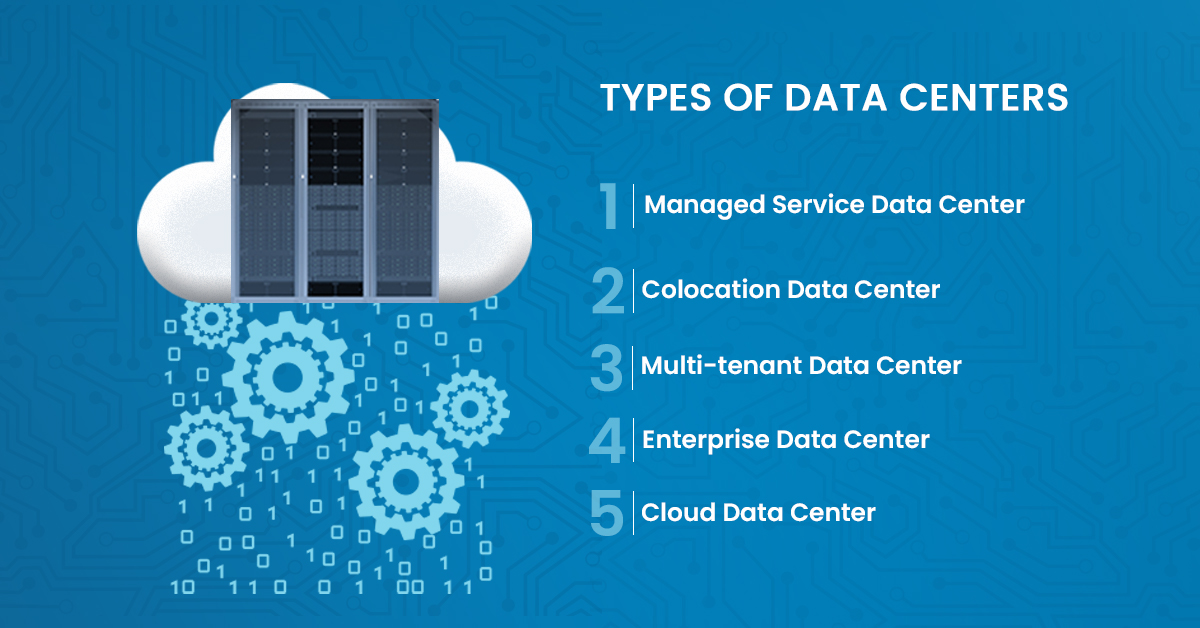
  • Enterprise Data Centers are usually designed and maintained by a single organization for its own internal needs. Technology giants typically have them.
  • Colocation Data Centers are rentals of data center space and resources that are made available to people who wish to access them.
  • Managed Service Data centers take care of aspects such as data storage, computing, and other services directly for customers.
  • Cloud Data Centers provide customers with distributed and managed services provided by third parties.

 Read More>>

Friday, 29 October 2021

The Use Of Optical Cables and Optical Fibers In Data Center


 Structured cabling system DPC (Data Center) should support the work of various applications, including those that are only planned to use in the future. Speed in data centers are increasing due to the use of server virtualization technology and the use of this technology leads to an increase in requirements for the cable system. Using an optical cable in data centers is primarily due to the fact that a large number of reliable and working technologies and solutions that use as a medium for data transmission singlemode and multimode fiber , the transmission of large information flows and the distance is much more than it can reach copper cables.

Optical cables have no problems with EMC and crosstalk occurring between the twisted pairs and copper cables, which makes use of copper cables in data centers .

The diameter of the optical cable is less than copper and it allows the use of cable channels for the optical cable of smaller sections, which allows better use of space in data center, reduce the costs of cable channels. Also reduces the load on the mount cable channel.

Read More>>

Monday, 1 April 2019

Safeguarding your Organization from Internal Threats

Just a quick recap from my previous blog where we focused majorly on How crucial data is and what’s even more important is its security. We also saw some standard practices for ensuring Data Security.
1. Disk Encryption- Converting data into a form that cannot be easily interpreted without a key that makes it legible.

2. Backups- Creating multiple copies of data at regular interval so it can be recovered if the original copy is lost.

3. Data Masking- Masking certain areas of data so sensitive information can be protected from unauthorized access.

4. Data Erasure- Ensuring data no longer in use is completely removed and cannot be recovered by unauthorized people.

Threats are not always bound by external sources; we need to focus on Insider Threats as well which now a days are posing more serious risks to any organization. We do have lots of security measures inside our perimeter but is it not enough? Speaking of an organization like ESDS, need to protect its integrity from our staff, vendors, customers who have Co-located their servers, Contractors, etc. The in-depth knowledge of our Network Layout, Connectivity, Policies, Processes, Business practices completely lie in the hands of our staff members.

One interesting fact about security which I came across while browsing the security zone website is maximum data breaches occur due to Internal Attackers.
The study also revealed, Organization that incurred serious loss and negative financial impact was of major share of 68%.
Most of the Internal Threats can be prevented rather it is manageable to prevent by giving proper Trainings to the employees. What an organization needs are a clearly drafted and defined policy framework that is implemented across the complete organization and monitored regularly by the Security Teams. Following are some of the steps which will enable an organization in prevention against internal threats.
1) First Security Policy

Your ISMS 27001 should include the Information transfer process. How is the data flow for Internal Teams? Similarly, while sending data outside your organization, it should be sent through secure network.

Organization Chart is another important aspect. Hierarchy should be followed in-case of any incident. Specify in your Security policy who is allowed to access which data. Even with whom the employees are allowed to share the data. Inform the consequences if any data is mishandled.
2) Educate your employees

Every department of your organization has some localized data within the department. This data might be of high or low importance. It may relate to Marketing, Sales or Personal Information of any customer. To secure this data from your employees, they need to undergo security training sessions. The best way to reduce risk from Internal Threats is to provide High end security training; explaining the importance of data and what will be the consequences if they fail to follow the security standards. Make the training interactive with some security related games. We do not say that employees will do any malicious incident but at least if they see, they may recognize it and will raise a red flag to their seniors.
3) Classify your Data

Data is classified into 3 main categories: Restricted, Private and Public data. This classification is mandatory in every organization and for every process. It should be included in your Security Policy. This helps the security team to easily rectify the data and its severity. Access to the classified data will be based on the designation of employees.
4) Physical Security

Every valuable computer must be highly secure. Only the ones who are handling the data must have the access. Use of CCTV to monitor the sensitive areas. Dual Factor authentication using smart cards or pins must be implemented in Secure zones like Data Center, Stores, Legal etc. Even consider biometric authentication for all your employees. Use of USBs must be restricted for the employees unless it is necessary. It should get scanned from IT team before using.
5) New Hires Screening

One way where you can minimize the risk is during the employment process. The role of HR begins while hiring a new candidate. A thorough background check is necessary before the employee gets on-board. HR needs to perform checks not only at the professional level but also a complete family background check if necessary. For an organization security of data is the main concern. After onboarding the employee should undergo training on Security related to the organization. Not only this, when any employee leaves the organization, HR needs to revoke all its access and make sure before being relieved the employee has submitted all the data which he was holding in his possession.
6) Strong Authentication

A strong password policy should be followed. The password should change on biweekly basis to prevent any kind of loss. Every system, servers, and the storage must be in Dual Authentication mode.
7) Monitor for “Abnormal” Behavior

Try to install right software and devices with proper access control. You need to use granular access control to monitor all the activities of the systems. Unauthorized users must be blocked from logging into the sytem. Track the behavior and if you find any abnormal action track the behavior and raise the red flag for further investigation and any Legal implications.
For investing on security we always look for reliable service provider. If you want more details on External and Internal Threats and about securing your organization, you have come to the right blog!
Request you to visit https://www.esds.co.in/soc-as-a-service for our offerings and experience of (Security Operation Center) SOC as a Service.