Showing posts with label Phishing. Show all posts

Monday, 6 February 2023

Top 10 types of cyber-attacks that can compromise an organization’s security

Cyber-attacks are a growing threat to organizations of all sizes, and it is critical for companies to understand the various types of attacks they may face. Here are the top 10 types of cyber-attacks that can hamper an organization’s security:
top 10 types of cyber attack

Top 10 types of cyber-attacks

Phishing:

This type of attack is used to steal sensitive information or login credentials by tricking individuals into revealing their passwords or other personal information through fraudulent emails or websites.

Here is a list of some key cyberattack statistics as per IBM’s 2022 Cost of Data Breach Report-

  • With 16% of breaches, phishing was the second most common cause, costing $4.91 million.
  • During this year, 19% of data breaches used stolen or compromised credentials as their main attack vector.
  • Averaging $4.5 million, breaches brought on by lost or stolen passwords.
  • With a 243-day identification period and an 84-day containment period, this type of breach had the longest life cycle.
  • The average amount of time taken to find and contain a data breach is 16.6% longer than this amount of time.
  • With a 16% frequency and a cost of $4.91m, phishing was the second most frequent reason for breaches.
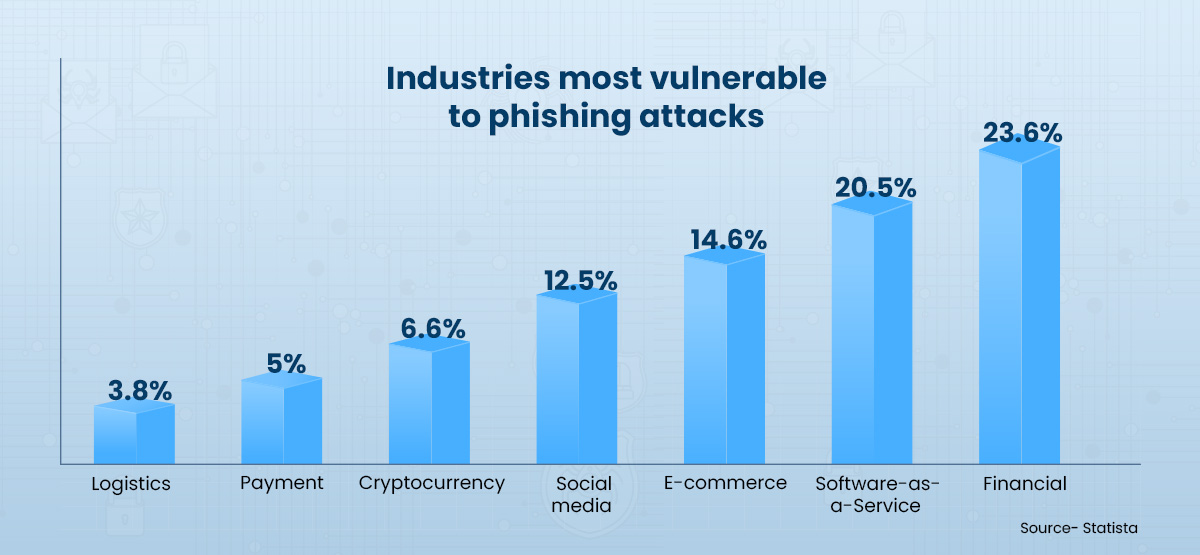
industries most vulnerable to phishing attacks

Ransomware

In a ransomware attack, hackers encrypt an organization’s data and demand a ransom payment for its release. These attacks can cripple an organization’s operations and result in significant financial losses. In 2022, ransomware remained the most common type of malware. As a result of its capacity to extort large amounts of money, it has grown in popularity among cybercriminals. Cybereason. Ransomware attacks surged dramatically in 2022, with 25% of all breaches involving ransomware attacks, according to Verizon’s 2022 Data Breach Investigations Report.

Malware

Malware attacks involve introducing malicious software into an organization’s systems to steal data or disrupt operations. Common types of malware include viruses, Trojans, and spyware. Viruses are spread more widely by employees with infected machines. 61 percent of organizations experienced malware spread by employees in 2020. By 2021, it had risen to 74 percent; by 2022, it had reached 75 percent – the highest infection rate since the SOES survey began in 2016.

Denial of Service (DoS)

DoS attacks are used to overload a network or website to make it unavailable to users. These attacks can result in significant downtime and lost revenue. Additionally, it makes it challenging for the host to recognize and defend itself against the real source of the attack. Legitimate users cannot access network resources like information systems and devices. That’s terrible news for hosts and their clients. Unfortunately, that’s also the primary security feature many of the best web hosting providers take pride in preventing DDoS attacks from disrupting services. 

It is relatively easy to launch a DDoS attack and extremely difficult to mitigate it. DDoS attacks are often too massive to handle, even with some quality CDN providers. Here are some important cyberattack statistics related to DoS attacks

  • In 2022, the YoY DDoS growth is 109%.
  • In Q2 of 2021, the average DDoS attack lasted 30 minutes; a year later, they averaged 50 hours.
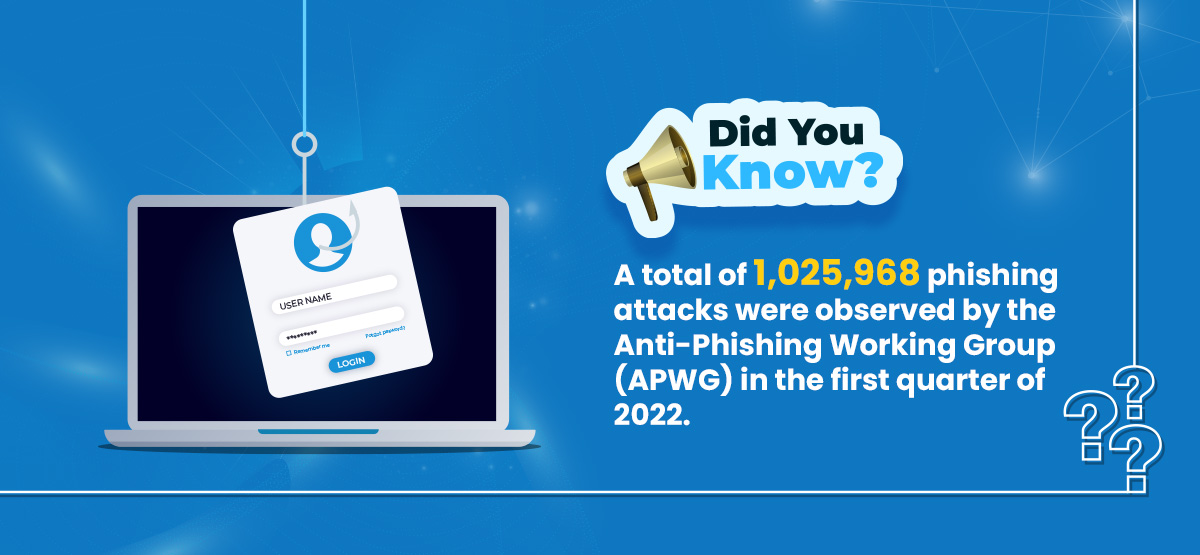
phishing attacks stat

SQL Injection

In an SQL injection attack, hackers manipulate a database through user input on a website to access sensitive information. These attacks can result in the theft of sensitive data, such as financial information or intellectual property.

Read More>>

Monday, 15 June 2020

Top-4 Cybersecurity Threats Faced by Small Businesses And How You Can Prevent It

Be it a small business or an enterprise, cybersecurity threats possess the same amount of risk. There is a common myth that exists that a small business can’t become a potential target of any cybersecurity; however, this is not the case.

With an increasing number of automated cyberattacks rising every day, it has allowed small businesses to serve as soft-targets. When compared to larger enterprises, small businesses are low on resources and often don’t tend to invest quite extensively on security technologies. Due to the lack of dedicated and stringent cybersecurity measures, it makes them an easier target of cybercriminals.
A cyberattack can result in a damaged image for such business and its post-effects can be quite devastating. An online report states that a small business with an employee cap less than 500, tend to lose around $2.5 million after every cyberattack. Losing out such a huge amount of money can be financially demotivating for any small business. Keeping in mind all these reasons, small businesses must make sure that they’re aware of these threats and how they can stop them in the initial stages. 

Monday, 8 June 2020

How to Protect Your Organization’s Online Presence from Phishing Scams

The dawn of digital transformation has taken the internet by storm with the growing number and sophistication of phishing scams. Long back in 1996, phishing scams involved fooling people through messages pretending to be the authentic source. People those days fell prey to such scams and shared their account details and billing information. Though the strategies have become outdated today and we believe we can’t be fooled with such techniques, Phishing remains as popular as ever. 


Over the years, Phishing has transformed drastically from simple messaging to spooky emails. There is no end to the rising number of phishing scams through emails with fake IDs, driving to the malicious website that appears to be similar to the one it is imitating. The hackers are sneaking into your email conversations with previously compromised email accounts, replying to your mail threads with malicious links or attachments trying to acquire confidential information of your company.

With time the threat actors are turning out to be more precisewith their target audience. Spear Phishing targets known individuals to lure them, observing their online activities and imitating the websites they are accessing. Whaling is more precise, which targets executives at higher positions. Both techniques involve a huge amount of research and observation to entice the targets to open the fraudulent emails. There is a thin line of difference between Spear Phishing and Whaling. Spear Phishing is used to target an individual while Whaling targets an organization’s top level executives. Scammers popularly use whaling to acquire the organization’s valuable information which comprises of trade secrets and passwords credentials to administrative company accounts.

Though the digital era demands the use of advanced technologies like IoT, AI, Cloud Computing; security becomes a major concern here. In the present scenario, while we all are working in the extended perimeters of our homes, no one wants to fall prey to phishing scams.

Let’s have a look at the preventive measures to be taken to secure your organization’s online presence from phishing scams.

1.       Build a Cybersecurity Awareness Training Program:

The organizations Cyber security is as strong as the weakest employee of the company. A security breach is likely to occur due to human negligence rather than cyber-attack. Conduct Cyber security awareness training program and educate your employees about the phishing trends and tactics to spot them. The training session will ensure use of approved software and strong passwords in the organization. Enlighten the employees on the Cyber security strategies and multi-factor authentication to protect the business data from top 10 OWASP vulnerabilities.

2.       Install an Anti-Phishing Toolbar:

According to experts, 97% of Internet consumers within an organization fail to identify sophisticated phishing emails. Deploying anti-phishing tool is a comprehensive anti-phishing solution that delivers detailed information of the website you are browsing on the internet preventing such scams. The toolbar secures your business information with routine checks of the visited sites comparing them with the known phishing sites in their database.

While browsing through the internet, if the user accidentally lands to a malicious site, the toolbar sets an alert.

These toolbars are offered by most of the popular browsers with no extra cost. To secure your organization’s confidential information, the decision makers should install the anti-phishing toolbar to keep a track of your website security. It verifies the email content, attached files, and other information securing your online presence from web spoofing or phishing.

ESDSVTMScan is a vulnerability scanning tool regularly notifying you of the security lapse, thus Securing your organization from a security breach. 

1.       Use Web Application Firewalls:

The web application firewalls act as a barrier to phishing scams. Most of the organizations use Web Application Firewall as a defense tool between their business website and the internet traffic, safeguarding the online presence against malicious intruders. The internet traffic consists of malicious requests which might be spoofed emails, messages, requests from fraudulent websites. So, deploying a WAF secures your online presence from these Cyber security attacks and malicious actors.

This indispensable part of the web application security strategy identifies and patches the vulnerabilities in applications and servers, blocking malicious actors from finding these loopholes. ESDS eNlight WAF is a specially engineered intelligent Cloud Hosted Web Application Firewall that protects your web applications from threats/attacks. Protect your online presence against these spoofed requests with ESDS eNlight WAF.

1.       Detect Potential Threats with AI and ML:

With sophistication of cyber threats, Cyber security is also evolving at a rapid pace. AI and ML can analyze the user behavior and proactively detect the threats thus assisting your organization in Cyber security war. The advanced technology solutions like AI and ML trace the anomalies and warning signals for phishing throughout the email. AI examines the email message based on the context comparing it with previous phishing scams.

2.       Endpoint Monitoring and Protection:

No doubt at workplace employees tends to make use of their personal devices. The rising use of these devices introduces a number of fresh endpoints which need to be protected under IT security system. At workplace there are certain devices with compromised security, monitoring and protecting them becomes a crucial task. Monitor such endpoints and offer remediation for compromised devices to prevent the explosion of attack through these unmanaged devices.

Wrap Up

The dawn of the digital era has taken the internet by storm with the rising number of Internet consumers and sophistication of phishing scams. The scammers are innovating unique strategies to sneak into your email conversation and India ranks 3rd after Canada and the United States for Phishing scams. The above-mentioned techniques will help you secure online presence of your organization from Phishing Scams.

Companies like ESDS – The Digital Transformation Catalyst are finding new ways to defend your online presence with the help of advanced technological solutions to fight against the sophisticated scammers. ESDS eNlight WAF, ESDS eNlight WebVPN, and VTMScan are the Made in India security tools to guard your online presence.

For further queries, you can connect to us at getintouch@esds.co.in | 1800 209 3006