Showing posts with label ESDS VTMScan. Show all posts

Thursday, 10 November 2022

Why being cyber resilient is a must for your business

 As the globe is getting digitally connected, corporate systems are growing more vulnerable to evolving cyber security risks. High-profile security incidents continued to dominate news headlines in 2021.
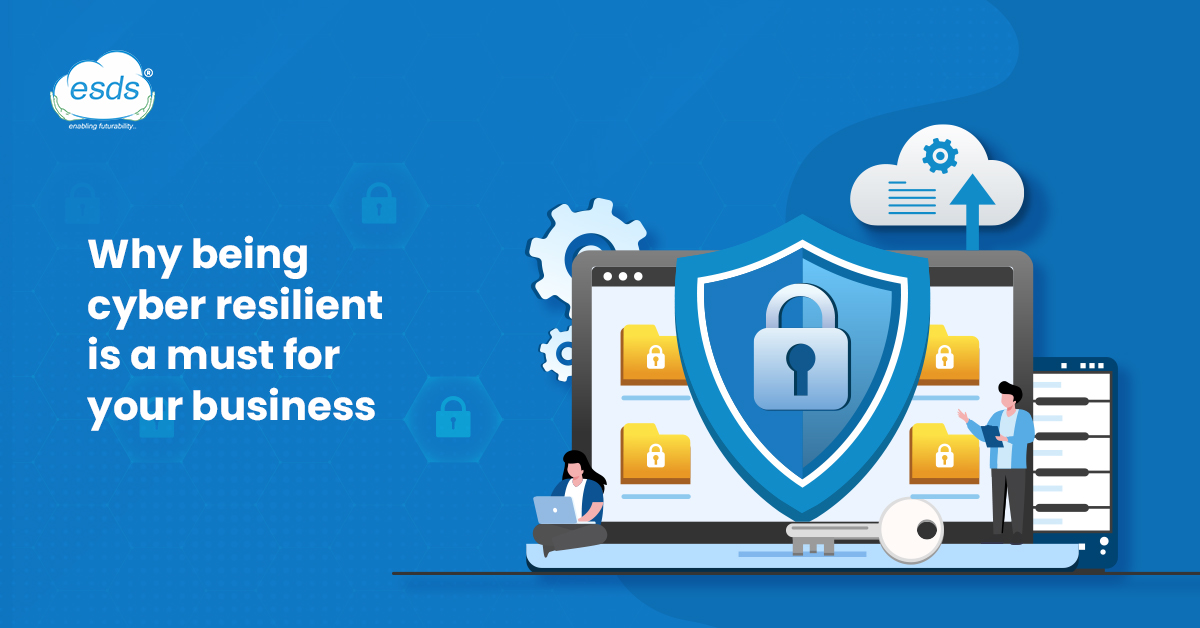
cyber resilience for your business
cyber resilient for your business

Notably, we saw a concerning increase in ransomware-related data breach events, which increased by 82% in 2021. Attacks on the software supply chain rose by 650% over the course of the year as malicious actors deliberately pushed upstream to disrupt systems by infiltrating open-source software.

Business executives and IT teams need to approach cyber security with the attitude that “it’s not simply an issue of if an event will occur, it’s a matter of when” as they progress into 2022.

order to keep the operation of your company from coming to a complete stop, you must also think about how your systems will react to and recover from a catastrophe and also consider outsourcing with Security insight services that shield you from probable massive damage.

The idea of cyber resilience comes into focus at this point. This article will get you details about the idea and look at various strategies you can utilize to increase the cyber resilience of your company. We’ll focus on the function of backups in developing and putting into practice your cyber resilience strategy.

What is cyber resilience?

Cyber resilience is described as “the ability to predict, withstand, recover from, and adapt to adverse situations, pressures, attacks, or compromises on systems that use or are enabled by cyber resources”
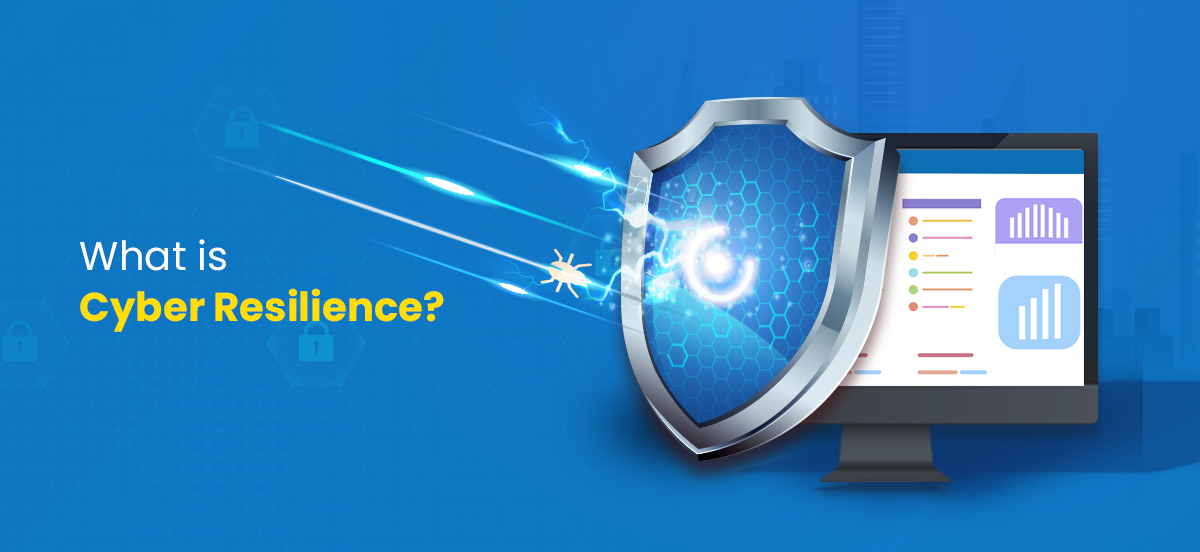
cyber resilience
what is cyber resilience?

Consider cyber resilience as being “fit” or “primed” digitally. It involves maintaining your company’s data and devices online despite any security dangers that may arise.

Achieving true cyber resilience needs various techniques and levels of security for humans, systems, data, networks, and devices; it is not a one-dimensional or one-time effort. This tactic is frequently referred to as “defense-in-depth.”

Read More>>

Sunday, 16 January 2022

Know How to Prevent Your Application from an XXE (XML External Entity) Attack


What is an XXE (XML External Entity) attack?

Any application that parses XML input can become prey for an XXE (XML External Entity) attack. An XML parser of a weak configuration is more vulnerable to such attack because it becomes open to threats when it processes the XML input having a reference to an external entity. An XXE attack can leak some confidential data, DOS (denial of service), port scanning of the machine having a parser, and forgery in server side request, having severe impacts. An XML document has a standard, and its version 1.0 defines the term ‘entity’ that refers to a storage unit of a particular type

The entities are of different types like the parameter parsed, or external general entity (abbreviation – ‘external entity’) can dereference (access) remote and local content through a system identifier. An XML processor accesses the URL/URI to while processing the external entity. Later on, the XML processor substitutes the named external entities at all occurrences by the content accessed by the system identifier. If the data in the system identifier has some infections, then the XML processor can reveal any confidential information after dereferencing this infected data. Usually, this sensitive information is not accessible by the application, but due to the attack, it gets vulnerable. Similar external resource insertion attacks are possible where the use of external stylesheets, schemas, DTDs (Document Type Definition), etc. is made

The attacks can comprise and reveal local files having sensitive data like a user’s private data or passwords by utilising files like relative paths or schemes in the system identifier. A hacker can use the trusted application to hinge at other internal systems, probably showing other confidential content; by initiating a CSRF attack for any one of the insecure internal services or through HTTP(S) requests

Read More>>


Thursday, 13 August 2020

Cybersecurity in the BFSI Sector Has Stepped Up Get to know why?

 What is Cybersecurity?

Cybersecurity may be defined as the act of securing every computing hardware as well as software that are connected by the means of an Internet connection or even cloud, in recent times. The cloud is gaining more popularity in line with positive business outcomes, it has also become prone to malicious entities and attackers who’re always looking to steal valuable user information.

Cybersecurity is a more technical term that corresponds to the physical security of systems present in data centers or any other computing system. Thus, there has been an increased demand for securing valuable user information. Cyber-attacks have now evolved into major threats for the BFSI Sector.

What Cyberattack Means in BFSI?

A cyber attack in the BFSI Industry opens doorways for malicious attackers along different channels. This could be a singular event where one person is targetted and his large amount of money or data is stolen using credit/debit card information, net banking, etc. If the attacker looks to target banks, then it is considered as a huge heist by the means of DDoS attacks, spear-phishing, ransomware, malware taking place on mobile devices to name a few. Governments across the world have emphasized heavily on strict security protocols and technology to stop these data breaches.

Read More>>

Thursday, 4 June 2020

Are you aware of all types of online scams prevalent nowadays?

The general rule of thumb when working on the Internet is If you feel suspicious about any email at all, do not open it, and for sure don’t open any link provided inside it. 

Online phishing scams have been around a while and as we turn more towards Digital Technology for almost everything. Right from social interaction to banking and shopping online, Identity and banking information thefts are running rampant. 

The problem seems to be growing even more like a lot of our personal information is publicly available on Social media channels and other data collecting websites. 

The problem is only growing, as more personal information is now publicly available on social media channels and websites, and hackers can easily craft personalized phishing attacks for their preys and be very convincing and easily bypass many Security systems. In recent years we have also witnessed an increase in bank fraud cases where using stolen identities, and Aadhaar information scammers have stolen money from individual bank accounts. 

Kaspersky Lab a cybersecurity firm investigated the Dark Web Market and found out that personal data of any person, their complete digital life is worth even less than $50 nearly just Rs 3500. 

Sunday, 19 April 2020

Pharming – One of the deadly sins of online safety

In this digital age, as technological innovations continue to transform the world, cybercrime does its best to keep up. Just as one technique of cybercriminals is exposed and catered for, they move onto the next one.

“Pharming” is a typical example. The term “pharming” is based on the words “farming” and “phishing.”

It’s an advanced version of phishing where the victims are trapped without any particular bait for the same purpose as they are in phishing – stealing confidential information.


Friday, 17 April 2020

Are you aware of all types of online scams prevalent nowadays?


The general rule of thumb when working on the Internet is If you feel suspicious about any email at all, do not open it, and for sure don’t open any link provided inside it. 

Online phishing scams have been around a while and as we turn more towards Digital Technology for almost everything. Right from social interaction to banking and shopping online, Identity and banking information thefts are running rampant. 

The problem seems to be growing even more like a lot of our personal information is publicly available on Social media channels and other data collecting websites. 

The problem is only growing, as more personal information is now publicly available on social media channels and websites, and hackers can easily craft personalized phishing attacks for their preys and be very convincing and easily bypass many Security systems. In recent years we have also witnessed an increase in bank fraud cases where using stolen identities, and Aadhaar information scammers have stolen money from individual bank accounts. 

Kaspersky Lab a cybersecurity firm investigated the Dark Web Market and found out that personal data of any person, their complete digital life is worth even less than $50 nearly just Rs 3500. 

Wednesday, 15 April 2020

SSL SCAM: A FORM OF INTERNET SCAM – ESDS VTMScan

The internet contributes significantly to people’s lives these days, whereas the lives of some people evolve with time around the web. However, not everything on the internet seems real or seems as it is.

Just as the filmmakers use sophisticated tricks, manipulations, and effects to get us to believe that the action is real, so also there are numerous websites on the internet which are using a lot of tricks and great range promises to get the internet user part way with their cash or information for fraudulent acts.

The internet is full of websites that appear real on the surface but beneath it, its fake, fraudulent and scam -a ploy to fraud people
The evolution of the internet has brought with it numerous extremely convenient advances and powerfully shaped our manner of livelihood. The world is a global village. At the same time, the evolution of the internet has also given way to new risks and methodologies to prey on internet users —new avenues for online scammers to rip off the unsuspecting users