Wednesday, 16 June 2021

eNlight Web VPN


A Secure Remote Access to Digital Transformation

Amidst COVID-19, technological innovations have not only transformed the way business is done but have enhanced hacking techniques. The threat of security breaches with an extended perimeter of workplaces is a reality everyone is facing. To ensure a secure remote working environment, ESDS offers a clientless SSL VPN solution called eNlightWebVPN.

What is eNlight Web VPN?

ESDS eNlightWebVPN is the first client-less SSL VPN solution with built-in WAF (Web Application Firewall) delivering multi-factor authentication securing your remote working environment from OWASP Top 10 Vulnerabilities. Eliminating the need to deploy hardware and software in every device, ESDS eNlightWebVPN becomes the cost-effective solution. Deploy this software-defined solutionon public Cloud, on-premise, or hybrid cloud ensuring private secure access to your desktop.

Problems in the Existing System?


·         Client Based: Installation of VPN client on every device

·         User Frustration: Service delivery delay due to application slowness and performance issues

·         Security and Scalability: Application security on the internet a major concern for businesses with high scalability and availability

·         High Pricing: Client-based and clientless VPN solutions are costly

·         User Analytics:  Unable to get a complete real-time overview of all remote access users 

What Do We Offer?


·         Clientless: No need to install any VPN client

·         High Security: Multi-factor authentication Built-in WAF preventing OWASP Top 10 Vulnerabilities

·         Cost-Effective: Reduced VPN cost as hardware or software are not deployed on every device

Why Should You Choose eNlight Web VPN?


·         Supports Windows, MAC, Linux, and mobile OS

·         Supports HTML5 applications, Websocket, RDP, FTP protocols, CGI applications

·         Integrate with multiple identity providers simultaneously (AD, LDAP, Radius, etc.)

·         Multifactor authentication with SMS and Email OTP

·         Time-based OTP with Google and Microsoft Authenticator

·         WAF protects from OWASP Top 10 Vulnerabilities

·         Granular Application Access Control

 URL:

https://www.esds.co.in/enlight-webvpn


Monday, 14 June 2021

Tips to safeguard your Joomla website

Let’s first understand what Joomla is and how does it help to build a website?


It is an open source system that can manage content efficiently. Joomla is also used for development of websites and applications that are supported on line. Technically, Joomla consists of two templates, a front-end template which is made user friendly and a back-end template which is mostly used by the administrators of the website. Joomla is created using PHP (designing the front end), Object Oriented Programming language (for coding), MySQL (for storing data).

What is Content Management System (CMS)?

It is a software that is capable of keeping track of all the data. Data can be in various forms such as text, images, document, etc. This data is available on the site. CMS also helps in editing, altering and publishing the content of website.

Generally, Joomla is used for developing websites of different kinds and sizes. Joomla can be used for development of following:

• Sites and portals for Corporates
• Start-ups and small-sized business websites
• Magazines, newspapers, and publications that have an online presence
• E-commerce sites and online booking & reservations
• Websites for government, NGO’s and organizations

Open source softwares are free to use, distribute and modify. It has a lower cost compared to the cost of its proprietary counterparts. But at the same time, it is subjected to getting attacked. Taking precautions before your website gets hacked and working on how to improvise its Security is extremely necessary.

Read More>>

Monday, 7 June 2021

Technological Advancements to boom the Backup and Disaster Recovery Software Market by 2025


The dawn of the internet has revolutionised the way data stored and consumed. The rise of the digital era has led to the acceptance of cloud computing over the traditional means of data storage. But, the raised concern with cloud computing is data privacy and security. Consider, if you lose your irreplaceable data. Won’t you be embarrassed to explain this failure to your clients? And how do you think your clients would react? They might be a little frustrated. Also, they may switch to some other company for business. So, data loss and data recovery failure may adversely affect your relations with your clients.

In order to have continuous access to your data even after the disaster takes place, backup and disaster recovery software is the appropriate solution. Cloud disaster recovery is a security measure that involves maintaining copies of electronic records in a cloud computing environment. Cloud disaster recovery aims to enable an enterprise to recover the lost data or implement failover in case of human errors or natural calamity.

The idea of backup was established with the birth of data itself. Initially, floppy disks, backup CDs and DVDs were the means of technology for data backup. Later, USBs came into existence and now dedicated backup appliances, and remote backup repositories are used. The backup market has seen explosive growth due to technological innovations. The last few years have seen some exciting changes in the world of disaster recovery. A survey from 2018 predicts global data backup and recovery market is expected to reach $18.21 billion by 2025.

Read More>>

Monday, 24 May 2021

Why you should choose Cloud Managed Services

Adoption of Cloud Computing has exceeded expectations of those who were forecasting large-scale acceptance of the technology by businesses of every sector. Organizations have successfully made the move on Cloud by investing considerable amount of their IT budget, but they are still making one huge investment that can be smartly eliminated. As these organizations use their Cloud services, they are heavily dependent on their in-house IT team to manage and continuously monitor their systems. Clearly, when one has their own in-house team, it is assumed they are spending on personnel who are helping them maintain their Cloud environment. This area of an organization’s IT environment can be outsourced to professionals that manage various aspects such as maintenance of infrastructure, database management, technology upgradations, etc.

As technology progresses twofold every year, organizations that have adopted Cloud may not be able to keep up with innovations and can face technological roadblocks while achieving business success. There are various managed service providers whose main responsibility is to offer administration services for Cloud, storage, backup, network, etc., which are some of the elements in an IT environment. An organization may be using Cloud services provided by a CSP or their own On-premise infrastructure, but nonetheless, they require experts to manage their IT environment.

Read More>> 

Contact US:>>

Monday, 10 May 2021

Benefits of Cloud ERP for SMBs

 In today's time, every business organization has deployed an ERP Solution that helps it in aggregating and organizing the data present across various departments in the organization. The traditional ERP software is usually present at the parent organization's infrastructure, which constantly demands updates and servicing.

Challenges with Traditional ERP

Most businesses opt for an ERP system, as it easies their intra and inter-departmental processes. However, despite easing the core processes, a traditional ERP implementation possess multiple challenges to the SMBs in the form of- 

·         The key challenge related to a traditional ERP Is that it becomes difficult for smaller businesses to understand the key processes and how they will benefit by implementing ERP systems.

·         Another challenge with a traditional ERP is the lack of flexibility. In case the installed ERP is not flexible, then businesses are forced to adopt the processes as per the ERP to make it functional.

·         A traditional ERP software often demands regular maintenance, thereby bringing in associated maintenance costs. The maintenance costs in ERP after it is implemented are much higher. Since the ERP systems are not deployed with any other businesses, smaller businesses are forced to pay the entire cost of the ERP software.

Understanding Cloud ERP

As the name suggests, a Cloud ERP is based on Cloud hosting, similar to SaaS. Unlike the traditional ERPs, a Cloud-based ERP is dependent on Cloud for assisting companies that share their information across different departments. Cloud ERP is a shared database supporting various functions being implemented across business units. A Cloud-based ERP allows the business employees across departments to access the same information to match their individual/department requirements.

Benefits of Cloud ERP

Various Cloud ERP vendors offer innovative and sophisticated alternates compared to on-premise ERP implementations in today's scenario. There are numerous benefits that SMBs get when they opt for a Cloud-based ERP solution. These benefits can prove highly beneficial to SMBs, as they don't have enough resources to implement an on-premise ERP solution.

The following are benefits that SMBs get with a Cloud-based ERP system-

·         When compared to an on-premise solution, a Cloud-based ERP has a relatively lower cost. The key reason is that hardware and other associated costs are shared amongst other businesses using the ERP solution. The distributed costs of hardware and other related accessories make it an affordable option. Additionally, businesses need not be concerned about the security-related concerns in a Cloud ERP solution. In a Cloud ERP, the IT-associated costs are also shared amongst others present with the same ERP vendor. For SMBs, lowered costs can be a great option as it helps them overcome any unwanted additional cost of under-utilized staff.

·         Experts often believe that the estimated time taken to implement a Cloud ERP solution is near 1/4th the time taken to setup a traditional, on-premise ERP. Cloud ERP can be easily setup as Cloud ERP already has predefined modules that can be easily integrated. An SMB just needs to pay the ERP provider a subscription amount to start using the services. A Cloud ERP faces minimal downtime during the software upgrade process. The ERP vendors entirely manage Cloud ERPs. Software setups have eliminated any dependency from businesses, and there are no disruptions to business operations.

·         For businesses, it becomes challenging to have on-premise ERP demands continuous maintenance to keep it running and functioning with the highest degree of efficiency. On the contrary, a Cloud-based ERP has a bare minimum requirement and has an active, steady Internet connection. An active Internet connection helps SMB get maximum proficiency and no hindrance or interruption in their core working areas.

·         Any ERP system is responsible for storing confidential data. When an SMB opts for a Cloud-based ERP solution, it offers multiple encryption layers that enhance security levels of critical data, ensuring maximum security of stored data.

·         Cloud-based ERPs allow SMBs to streamline their critical business processes. Employees are often given role-based access to data. With Cloud ERP, it becomes possible not to be physically present at the ERP location, and business processes are updated concurrently, even from remotest locations.

·         ERP solutions can be used for integrating all the necessary information from multiple departments, which becomes an effective method for enhancing core business operations. The Internet contains essential information regarding the business, thus making it easier to have a Cloud ERP connection. Cloud ERP connections allow the employee to fetch and update the required data on the go. Cloud ERP solution can help employees who work from remote locations for finding and sharing the desired information.

Conclusion:


Recent market trend depicts that SMBs rely heavily on Cloud Computing for storing their critical data. When integrated with Cloud, ERP systems will offer multiple alluring benefits to business organizations that help them stay ahead in their industries.

Tuesday, 4 May 2021

Embracing Change – How Banks are Adopting Digital Innovation

Digital Technologies are creating an unprecedented disruption across the banking sector. Digital technologies have radically transformed the way industry operates accelerating the shift to automation. The technological advancements are enabling the banks to meet the customer expectations delivering enhanced services. Digital technologies have unleashed the potential of the banking industry to enable 24×7 online access to the services.


Evolution of Digital Banking in India

In the late 1980s, the need for computerization was recognized in the Indian BFSI sector to deliver exuberant customer service.  To address the introduction of computerization in the BFSI sector, the Reserve Bank of India set up a committee in 1988.    

The banking industry transformed drastically from computerized records to digital banking. Post computerization, banks adopted core banking solutions to deliver service excellence. With core banking solutions there was a transition from branch banking to bank banking. Core banking solutions enabled banks to offer customer convenience through “Anywhere and Anytime Banking.”

The rising competition between private and foreign banks compelled the financial institutions to leverage digital services to stay competitive.   

In April 2016, the Indian government launched the UPI system ensuring easy money transfer to and from banks. The dawn of the UPI system introduced Mobile banking in India that kicked up a digital revolution. Before 2016, mobile banking was offered only to account holders. In the present scenario, UPI made it easier to open an account and make transactions via a mobile phone.

For security reasons the government initiated the process to link the Aadhaar number with bank accounts to ensure the person who owns the account can only access it. Today, digital banking has made it convenient to create and access a bank account eliminating the need to visit the bank branch.

The introduction of UPI and BHIM by the National Payments Corporation of India laid the foundation of innovation in the domain of Payment systems.

Prioritizing customer needs to ensure a fast, accurate, and quality banking experience, the Indian BFSI industry is leveraging digital technologies to ensure an exuberant customer experience. Integrating digital technologies in the BFSI industry implemented electronic payments system, Time Gross Settlement, Cheque Truncation System, Mobile banking system, and internet banking.

What is the Role of Digitalization in Banking?      

Digitalization has brought a great transformation in the BFSI sector. With Digital Banking Solutions, there has been a transition from manual to automation in the banking industry. The transition to digital banking services has minimized the errors caused due to manual intervention.

1. Enhanced Customer Experience:

The Digital Banking Solutions have enabled the banks to deliver an Omnichannel banking experience facilitating customer-centric services. Digitalization in banks offered analytical insights enabling products or services to be tailored to users based on their preferences, behavior, choice, and financial health.

2. Grab New Prospects/ Customers:

Consumers are migrating from traditional banking to online banking for convenience in accessing transactions and services. With the growth in digital banking customers, financial institutions have witnessed an increase in the number of customers.

Read More>>

Wednesday, 28 April 2021

Input Validation Errors: The Core of Website Security Evils

In the past few years with the rise of technological innovations, there has been an increase in the number and sophistication of security breaches. Poor input validation has turned out to be the root cause of these embarrassing data breaches reported in the last few years. While compiling the code, the developers create input fields for the users to enter whatever they wish. The website is secure until the unchecked input fields are not used for hacking.
Website Security Evils

Let’s see why input validation is crucial for website security

What Is Input Validation?

Websites processing input data from users or a wide range of systems should ensure that it is valid. Validation is carried on a variety of levels ranging from simply verifying the input types and lengths i.e. syntactic validation to ensuring the inserted values are valid in the application context i.e. semantic validation.

For websites, input validation is nothing but verifying the values inserted in the input field ensuring date, email address and other details inserted in the field are valid. This is the initial step for client-side validation performed directly in the browser and submitted values are verified on the server-side.

Input Validation is a commonly used method to check potentially dangerous inputs ensuring they are safe to be processed within the code.

Consequences of Improper Input Validation

Input validation reduces the attack surface minimizing the impact that tends to succeed. Improper input validation leads to incorrect results on the website or even crash. Insufficient input validation degrades the user experience on the website. If the registration form fails to detect the incorrect details entered on the form, the user won’t be able to confirm the account.

Also, there might be a circumstance where the invalid data clears the validation process on the browser side and is trapped during server validation. This process might take a longer duration to drive a response to the user.

How can we ensure Proper Input Validation?

Earlier, input fields were validated using the JavaScript either manually or with the help of a dedicated library. It’s better to look for the existing validation features rather than implementing validation since it is a tedious process. Languages and frameworks are consisting of built-in validators ensuring reliable and easier input validation.

  • Blacklist and Whitelist Based Validation

Typically input validation for website security is carried out by blocking elements that can be used for an injection attack. Apostrophes and semicolons can be disabled to prevent SQL injection, parenthesis can be banned to stop a malicious user from inserting a JavaScript function. This is nothing but blacklisting elements and it is not advisable to use the technique. Blacklist-based validation is not feasible to implement since the developer can’t predict all the attack vectors which might help the hacker to bypass the validation.

Whitelist based validation can be used for well-defined input variables like numbers, dates, postcodes, etc. Whitelist based validation will help you to state the permitted values and reject the other input values. HTML5 format delivers a predefined whitelisting logic with built-in data type definitions where the inputs fields have predefined validations. 

Read More>>

Sunday, 18 April 2021

CDN Solutions: Business Benefits, Use Cases & Future Scope


Benefits of Content Delivery Networks & Future Scope

Benefits of Content Delivery Networks & Future Scope

In today’s digital and Internet age, websites serve as the first point of contact between an outsider and enterprises. Without having a dedicated website, it becomes quite difficult for organizations to establish trust among the potential end-customers. To drive in customer trust, all businesses, irrespective of their sizes, now have their website. Today, various organizations exist across industries like e-Commerce, video sharing, or OTT who run their businesses through websites only. For such organizations, a Content Delivery Network or CDN solution is necessary.

Defining PoP

PoP

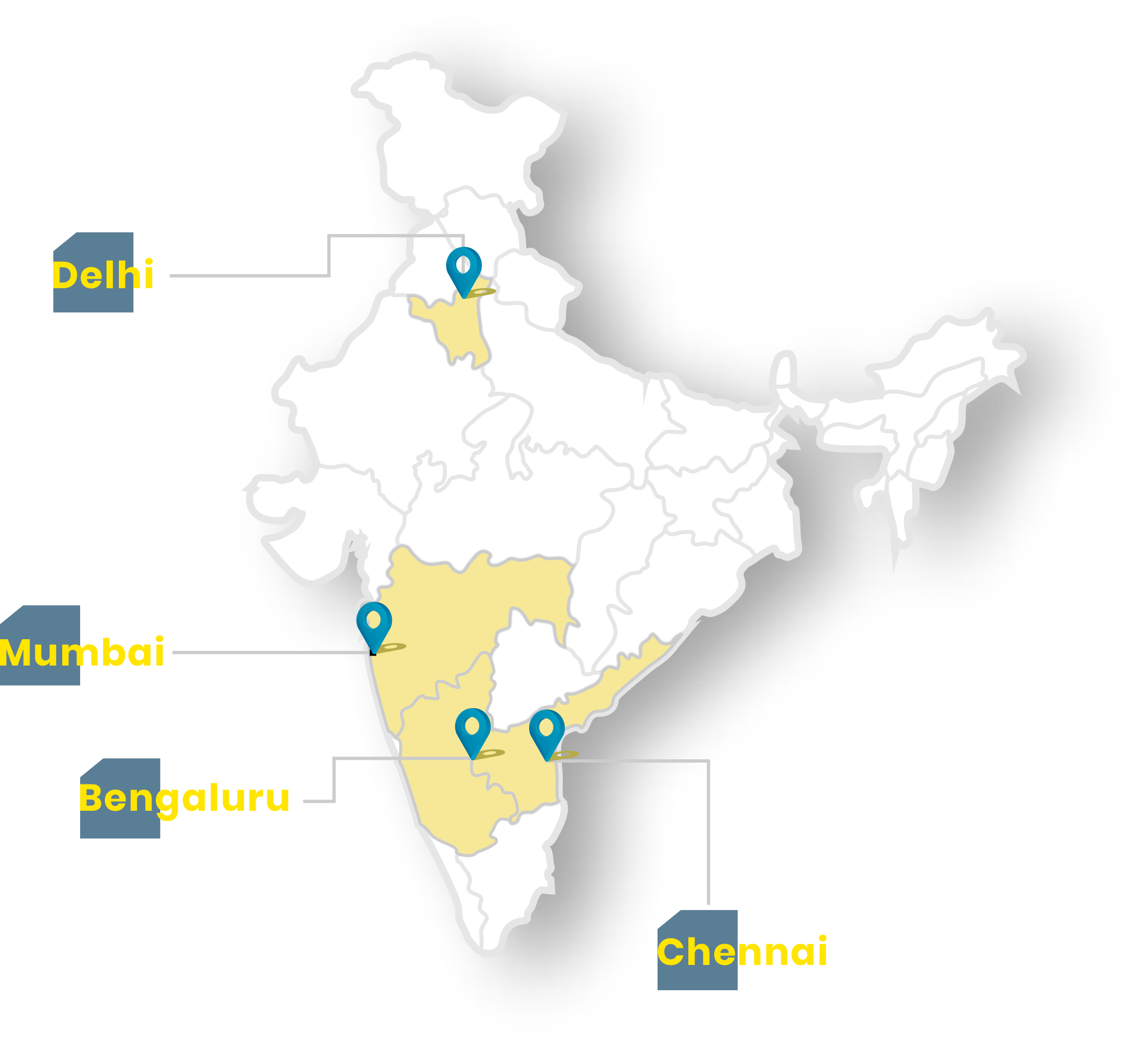
A PoP or point of presence defines a physical location where multiple CDN Edge Servers are present. Multiple PoP present at different geographical locations forms the entire CDN network. Also, the number of PoPs of a CDN provider has a direct and huge impact on expanding the global reach. PoPs play an important for storing and caching the static content. The static content can be easily cached as compared to the dynamic content.

Rather than the user placing his request to a distant data center (PoP), he can easily do it with localized PoPs, having a much shorter distance. By feeding requests to the localized PoPs, there is a significant decrease in the RTTs (Round Trip Times), resulting in better performance of applications.

PoP 1
ESDS’ Enlight CDN PoPs in India

CDN providers like ESDS have deployed their multiple PoPs across India for delivering the fastest & cost-effective CDN Solution to their localized users.

Defining CDN Solutions

A CDN depicts a network of data centers along with proxy servers that are geographically distributed. A CDN solution’s core aim is to offer end-customers with localized servers, known as PoPs (points of presence), to reduce latency and enhance load balancing. Low latency in content delivery in real-time results in an improved and faster user experience. CDN providers like ESDS are playing an important role in the Internet domain by offering enhanced user experience. The advanced technologies adopted and applied by these CDN providers are focused on enhancing customer experience using numerous techniques.

How Do CDNs Benefit Websites and Other Online Platforms?

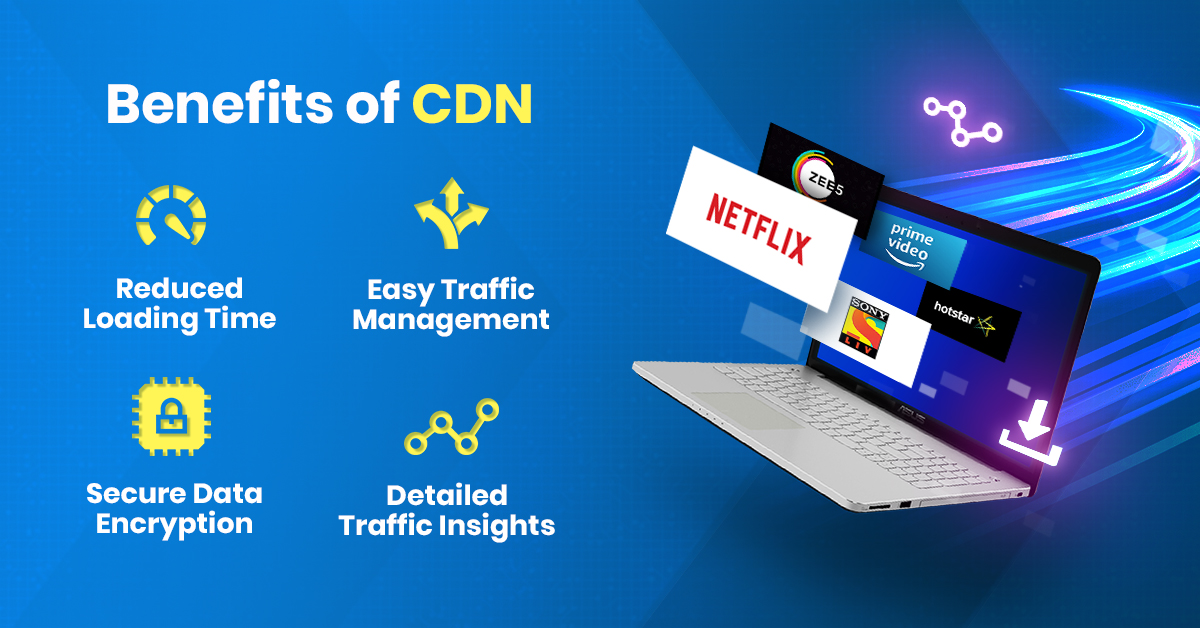
For any CDN Solution, the ultimate benefit they offer is enhanced user experience by reducing latency in fetching real-time data. Other added benefits of a CDN solution includes

CDNs Benefit Websites
Benefits of CDN

1. Reduced Loading Time and Latency

Geographical locations play an essential role in download speed and latency since the CDN will receive and distribute traffic to the nearest available PoP. Hence, a strong CDN network helps reduce webpage loading time and increases the data transmission rate. Nowadays, CDN providers are also using other methods for faster data transmission. They are using advanced technologies for managing the caching servers. The cached content gets distributed as per demand, making it readily available to the user. CDN providers can also increase the user’s incoming requests’ response speed with the caching content placed closer to the customer.

Read More>>

Tuesday, 13 April 2021

India’s own Banking Community Cloud


Indian Banks are experiencing a colossal change in their banking processes due to rapid evolution of technology in their vertical. Banks of all sizes in India have understood the importance of cloud based banking services and how these services can aid their issues. Earlier banks had to contact an IT personnel to provide additional applications and compute power which was very time consuming and would delay the decision making process. Hence, now-a-days IT is no longer seen as a complex scenario and the banks have started recognizing the opportunity and scope in cloud computing services.

ESDS introduced the world with the concept of Community Cloud which includes common concerns of a particular industry like security, compliance and service norms. The World’s First Banking Community Cloud is presented exclusively to the financial sector by ESDS which comprises of all the cloud based services for the industry. Indian banks have taken it up a notch to enter the IT field and adopt Cloud Computing and benefit from its matched services. SaaS is supported as a part of Banking Community Cloud which provides ready to use Core Banking Solutions, Payment Solutions, Mobile Banking and many more services. With a mix of PaaS, we have various Independent Software Vendors who cater to their own banking customers where they deploy the same software and continuously update through the management portal offered by us. ESDS along with its widespread network of partners has formed India’s first Application Service Providers (ASP) model to offer solutions to banks for their each and every kind of need.

ESDS has expertise in working with over 280+ banks which includes private, PSUs, district co-operatives, apex banks, scheduled and other financial institutions and organizations. The Banking Community Cloud has been developed by keeping in mind the smallest of concerns raised by banks. The three main issues which are generally faced by banks are; security of their data, complying with industry standards and finally having control of their data and applications. When banks choose to adopt the community cloud, they receive benefits like: secured services, efficient utilization of resources, flexibility in business and a reduction in total cost of ownership because they are relieved of purchasing any physical hardware or software licenses. We provide everything from basic IT infrastructure to hosted payment platform and digital banking services to optimum security for your bank’s website through VTMScan. Banks who wish to migrate to our Community Cloud receive end-to-end support for infrastructure management and colocations services.

Read More>>