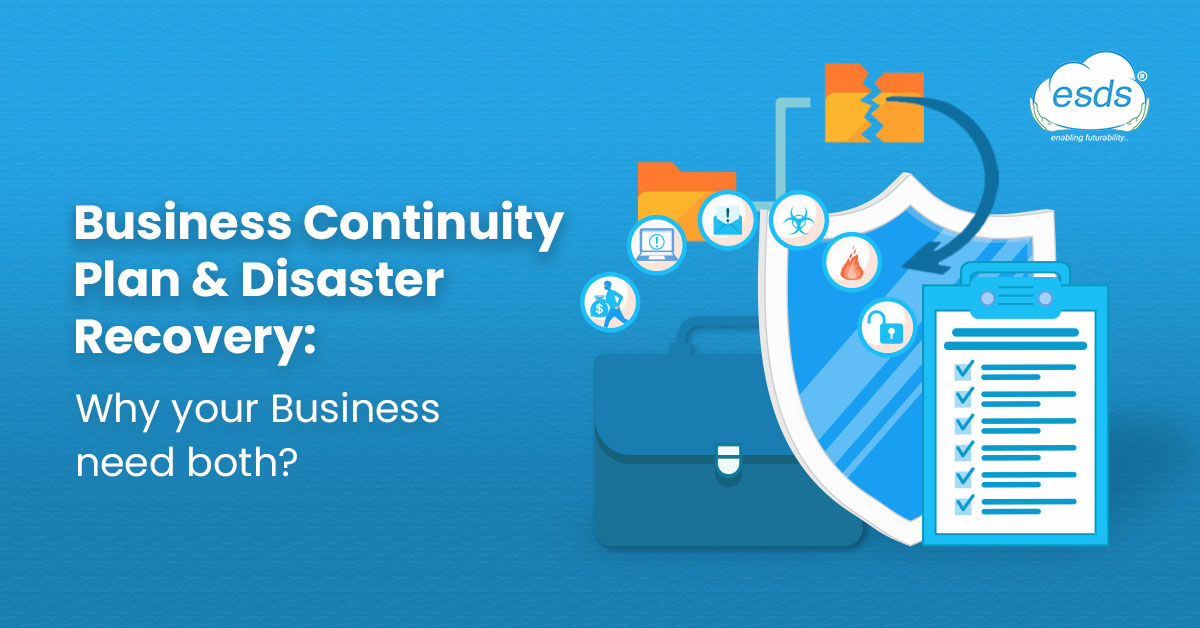
In today's hyper connected world, where downtime translates into lost revenue and damaged reputation, the importance of disaster recovery cannot be overstated. Businesses that fail to prioritize disaster recovery risk financial losses and jeopardize their existence. In such a scenario, having a robust disaster recovery strategy is not just prudent; it's imperative for business survival. Disaster Recovery as a Service (DRaaS) is a game-changing solution offered by ESDS Software Solutions. In this blog, let's understand the significance of DRaaS and how ESDS empowers businesses to fortify their disaster recovery capabilities

Understanding the Essence of Disaster Recovery
Disaster recovery stands as the cornerstone of any resilient business strategy. It encompasses the processes and technologies to restore critical systems and data in the aftermath of a disruptive event. Whether a cyberattack compromises sensitive information, a natural calamity disrupts infrastructure, or inadvertent human errors cause data loss, and a robust disaster recovery plan ensures businesses can swiftly bounce back, minimizing downtime and mitigating financial losses.
Introducing ESDS DRaaS Solutions
ESDS, a leader in IT solutions, offers a suite of DRaaS solutions designed to meet the diverse needs of businesses across industries. Leveraging the power of the cloud, ESDS DRaaS enables organizations to replicate and recover their vital data and systems seamlessly, ensuring business continuity in the face of adversity.
Why Choose ESDS DRaaS?
Reliability:
- ESDS DRaaS solutions are built on a foundation of robust infrastructure designed to withstand even the most challenging circumstances. The
underlying infrastructure is carefully engineered to ensure high
availability and reliability, providing organizations with confidence in
their disaster recovery capabilities.
- High availability means that the DRaaS solutions are accessible and
operational whenever they are needed, without experiencing significant
downtime or disruptions. This reliability is crucial during critical
moments, such as during a disaster or recovering from an incident, where
every second counts.
- ESDS employs redundant systems, failover mechanisms, and continuous
monitoring to maintain the reliability of its DRaaS solutions, ensuring
that organizations can rely on them to protect their critical data and
systems when it matters the most.
Scalability:
- One of the critical advantages of ESDS DRaaS solutions is their
scalability. These solutions are designed to adapt to the evolving needs
of businesses, allowing for seamless expansion or contraction of resources
as required.
- As businesses grow or experience changes in demand, their disaster
recovery needs may also change. ESDS DRaaS solutions can scale up or down
accordingly, ensuring organizations have the resources needed to maintain
effective disaster recovery capabilities without overprovisioning or underutilizing
resources.
- Whether adding new applications, increasing storage capacity, or expanding geographic coverage, ESDS DRaaS solutions offer flexibility and agility, allowing organizations to tailor their disaster recovery strategies to meet their specific requirements.
Cost-effectiveness:
- ESDS DRaaS solutions leverage cloud-based technologies to eliminate
the need for costly hardware investments, making disaster recovery
accessible to businesses of all sizes.
- Traditional disaster recovery solutions often require significant
upfront investments in hardware, software, infrastructure, ongoing
maintenance—and management costs. In contrast, ESDS DRaaS solutions
operate on a pay-as-you-go model, where organizations have to pay only for
the resources they use.
- By outsourcing disaster recovery to ESDS DRaaS, organizations are significantly reducing their capital expenditures and operational expenses associated with maintaining an in-house disaster recovery infrastructure. This cost-effectiveness makes disaster recovery more affordable and accessible, allowing organizations to allocate resources more efficiently and invest in other business areas.
The Key Features of ESDS DRaaS
ESDS DRaaS solutions come packed with
a plethora of features tailored to enhance disaster recovery capabilities:
1. Seamless Replication: ESDS
DRaaS facilitates real-time replication of data and applications to secure
cloud environments, ensuring data integrity and minimizing the risk of loss.
2. Automated Failover: With automated failover
mechanisms, ESDS DRaaS enables a swift and seamless transition to backup
systems in a disaster, minimizing downtime and ensuring uninterrupted
operations.
3. Customizable Recovery Plans: ESDS
allows businesses to tailor recovery plans according to their specific needs,
ensuring critical systems and applications are prioritized for swift
restoration.
4. Continuous Monitoring and Testing: ESDS
DRaaS solutions have robust monitoring and testing capabilities, allowing
businesses to proactively identify & address potential vulnerabilities
before they escalate into full-blown disasters.
Role of Disaster Recovery in Business
Continuity
Disaster recovery plays a pivotal
role in ensuring business continuity, which is an organization's ability to
maintain functions and operations during and after a disruptive data event. In
today's digital age, businesses rely heavily on technology to deliver products
and services; any interruption to IT systems or data availability can have
severe consequences, including financial losses, reputational damage, &
loss of customer trust. This is where Disaster Recovery as a Service (DRaaS)
solutions, such as those offered by ESDS, come into play.
Investing in ESDS DRaaS solutions
provides organizations with a proactive approach to safeguarding their
operations against unforeseen contingencies. Here's how:
1. Minimizing Downtime: With ESDS DRaaS,
organizations can reduce downtime by ensuring swift recovery of critical IT
systems and data during a disaster. Whether it's a cyberattack, hardware
failure, and natural disaster, or human error, DRaaS solutions enable
businesses to resume normal operations quickly, thus reducing the impact of
disruptions on productivity and revenue generation.
2. Ensuring Data Integrity: Data
is the lifeblood of modern businesses, and any damage or corruption can have
far-reaching consequences. ESDS DRaaS solutions ensure data integrity by replicating critical data and
applications to secure cloud environments in real time. This guarantees that
organizations can access clean, up-to-date data even during a disaster,
enabling them to make informed decisions and maintain business continuity.
3. Preserving Customer Trust: In
today's competitive business landscape, maintaining customer trust is
paramount. Any disruption to service delivery or data security can erode customer
confidence and damage reputation. By investing in ESDS DRaaS solutions,
organizations demonstrate their commitment to reliability and resilience.
Customers are reassured, knowing that their data is secure and that the
organization has measures to ensure uninterrupted service delivery, even in the
face of adversity.
4. Meeting Regulatory Compliance: Many industries have stringent regulatory requirements regarding data protection and business continuity. Non-compliance can result in hefty fines and legal repercussions. ESDS DRaaS solutions help organizations meet regulatory compliance by providing robust disaster recovery capabilities, ensuring that critical systems & data are protected and accessible at all times.
Conclusion:
In conclusion, disaster recovery is not just a contingency plan; it's a strategic imperative for businesses operating in today's volatile environment. With ESDS DRaaS solutions, organizations can strengthen their resilience against unforeseen disruptions, ensuring uninterrupted operations and preserving business continuity. By embracing the power of ESDS DRaaS, businesses can confidently navigate turbulent times, knowing that their critical data and systems are safeguarded against the unexpected. So, don't wait for disaster to strike; fortify your defenses with ESDS DRaaS and stay ahead of the curve in an increasingly uncertain world.